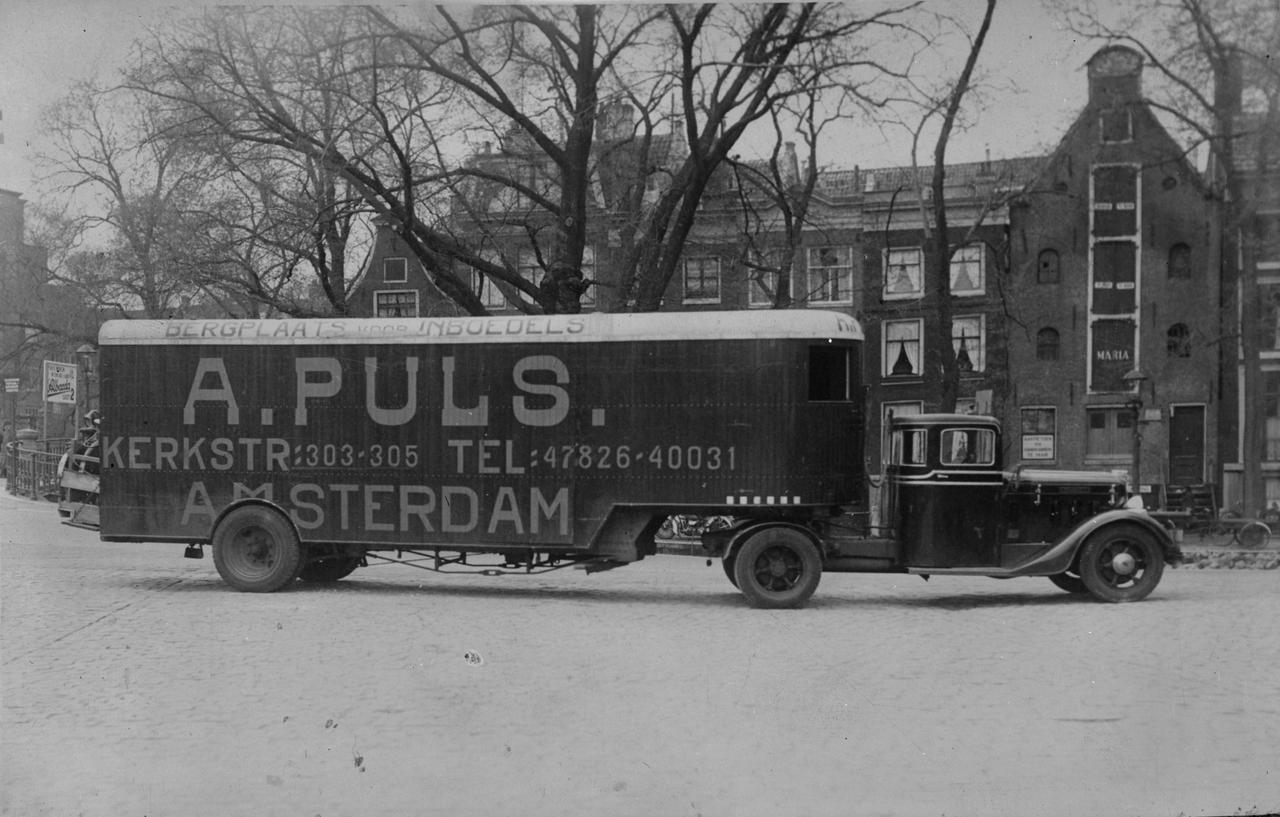
A. Puls
We are now at Kerkstraat 303, where the moving and transport company of Abraham Puls operated. The building looks unremarkable, but during the war it was part of a large-scale expropriation of Jewish homes in Amsterdam.
Puls, a member of the NSB since 1934, received from the German occupation forces the exclusive right to empty the homes of deported Jews. His company, with over 60 employees and 14 trucks, carried out what became known as “pulsen”: furnishing, artworks, books, and personal effects were removed to warehouses and then shipped to Germany. According to historian Loe de Jong, over 29,000 properties were emptied, including the Anne Frank House after her arrest.
Puls and his employees kept valuables for themselves or sold them. Neighbors often took items once homes were vacated. What began as a business in relocation became organized theft under Nazi oversight.
After liberation, Puls was arrested on May 7, 1945. On June 4, 1947, he was sentenced to death for collaborating and collecting bounties for handing over Jews. In 1949 the verdict was commuted to life imprisonment, and in 1959 reduced to 24 years. He was released in 1961 and died in 1975.
Any feedback for this story?