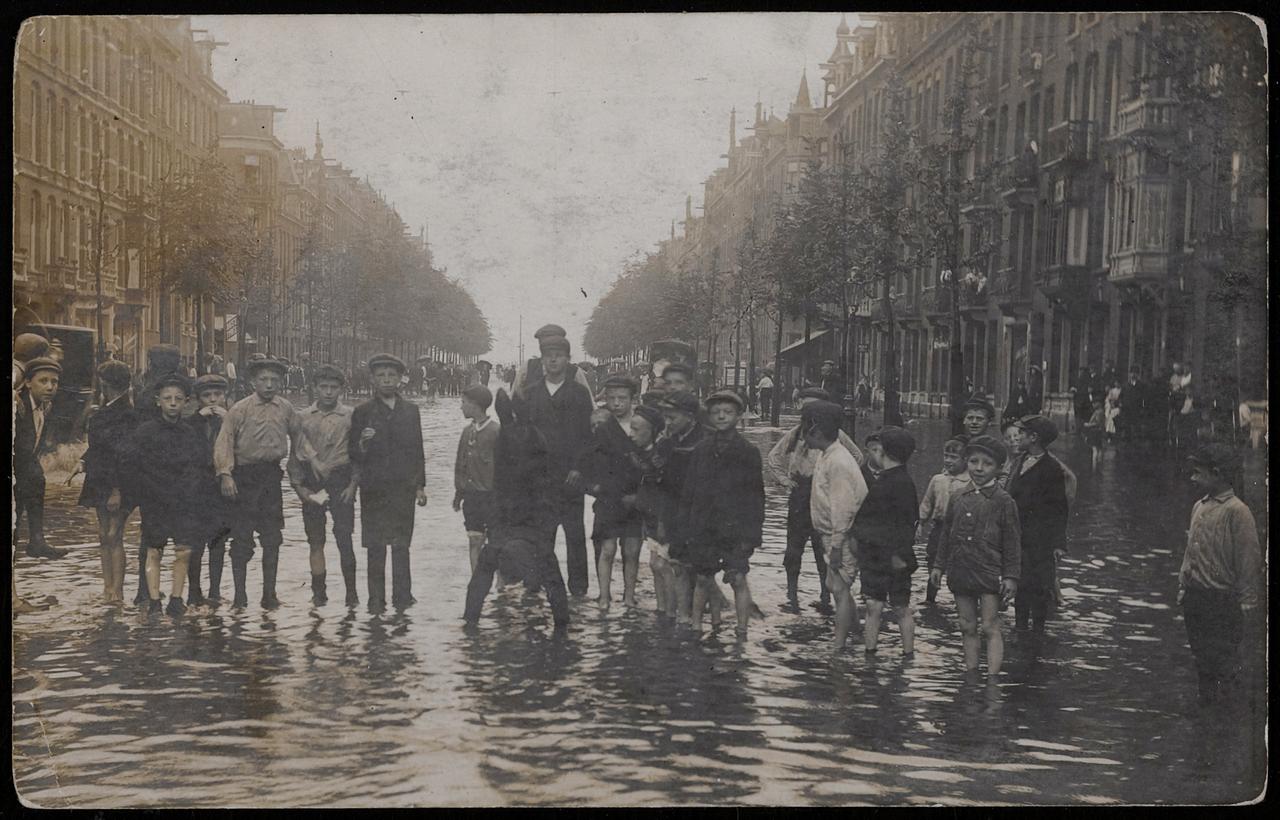
Amsterdam loves water
Amsterdam and water are inextricably linked. The city originated in a marshy area and has developed over the centuries into a global city, partly thanks to its unique relationship with water.
In the 12th century, the reclamation of the marshy land south of the IJ began. This is where the settlement of Amestelle was founded, which would later grow into Amsterdam. Around 1275, the city was granted city rights, and the construction of dykes and dams – such as the Dam in the Amstel – provided protection against the ever-present threat of water. However, the danger remained. In 1514, a dike breach destroyed a large part of the village north of Amsterdam, leading to the establishment of Nieuwendam. Later, storm surges and floods caused severe damage, which in turn led to new waterworks.
During the Golden Age in the 17th century, Amsterdam experienced explosive growth. To manage this growth, the famous canal belt was constructed: a network of semi-circles with the Herengracht, Keizersgracht and Prinsengracht as its main arteries. The canals were not only functional for drainage and defence, but also formed the backbone of trade. Goods from all over the world were transported via the canals to the imposing warehouses and merchants' houses on the waterfront. The city became an economic hub, made possible by the water.
However, the water also remained a threat. In 1651, the Zeeburgerdijk broke through and water flooded into the city via the east side. In 1675, new dike breaches followed during storms on the IJ and the Zuiderzee. In response, flood defences were reinforced, and dikes such as the Haarlemmerdijk and the Zeedijk were erected as lines of defence against the sea.
Today, Amsterdam's canals are world famous. They are cherished as heritage and still function as the city's lifelines. Water quality has improved significantly in recent years, houseboats are connected to the sewer system and regular cleaning campaigns are organised.
Any feedback for this story?