Anabaptist Riot
In the year 1535, on 10 May to be precise, a crucial chapter in religious history took place in Amsterdam: the Anabaptist revolt. This riot aimed to spread the doctrine of the Anabaptists, as had previously been the case in the German city of Münster.
The Anabaptists, also known as 'Anabaptists', professed a faith that vehemently opposed outward religious rituals, especially those of the Catholic Church. They regarded baptism as a personal confession that could only be made in adulthood, unlike the usual baptism of newborns in the Catholic tradition. This led to a direct confrontation with the Catholic Church.
Emerging Protestantism, as a reaction against the established Roman Catholic Church, was the breeding ground for the Anabaptist movement. The established church still enjoyed the support of certain rulers, and dissenting religious views were vigorously condemned and suppressed. This interference particularly displeased the Anabaptists. They sought a new society based on the Bible and, in particular, the observance of the Ten Commandments.
The Anabaptists' following was especially found among peasants and the lower middle classes, who suffered heavily from persistent unemployment and the resulting poverty. They sought support from a movement that promoted equality and community of goods as basic principles of a just society.
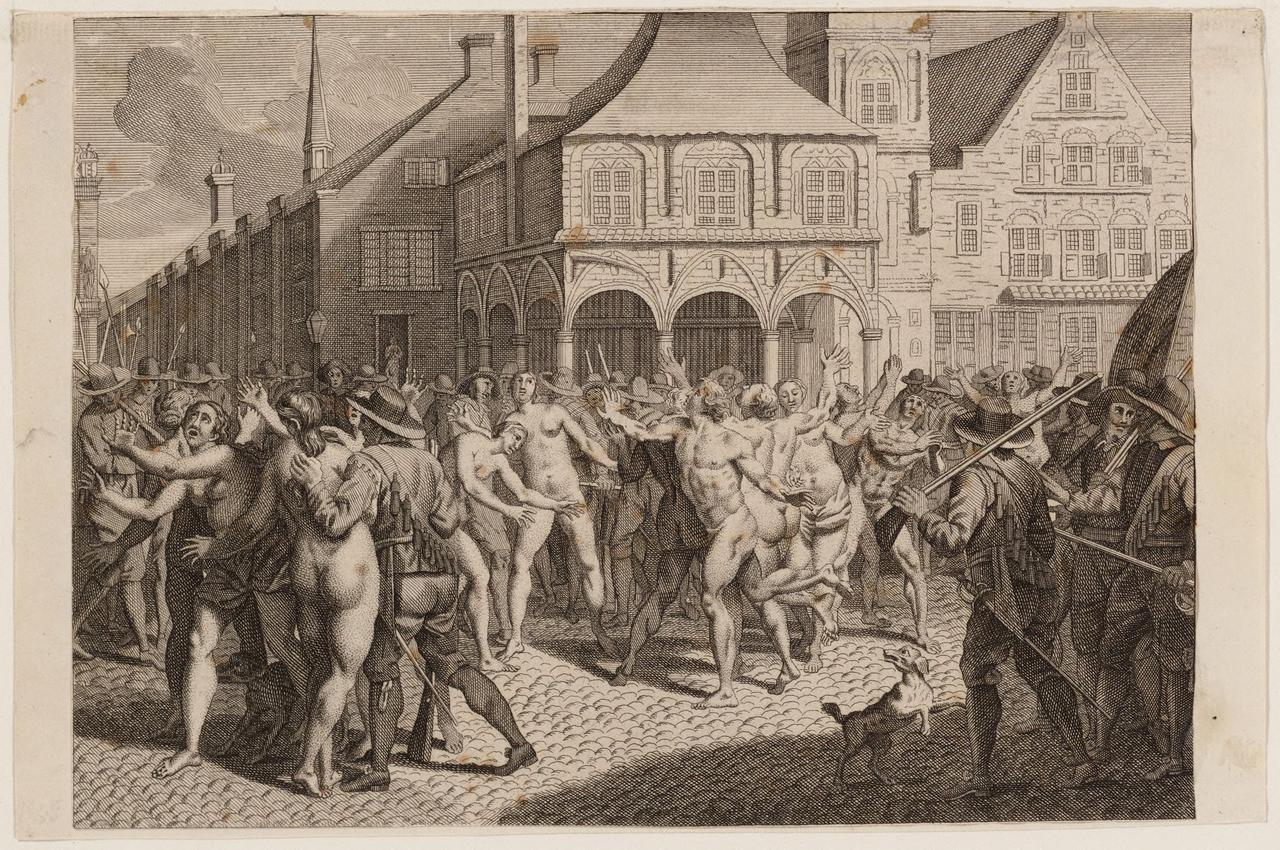
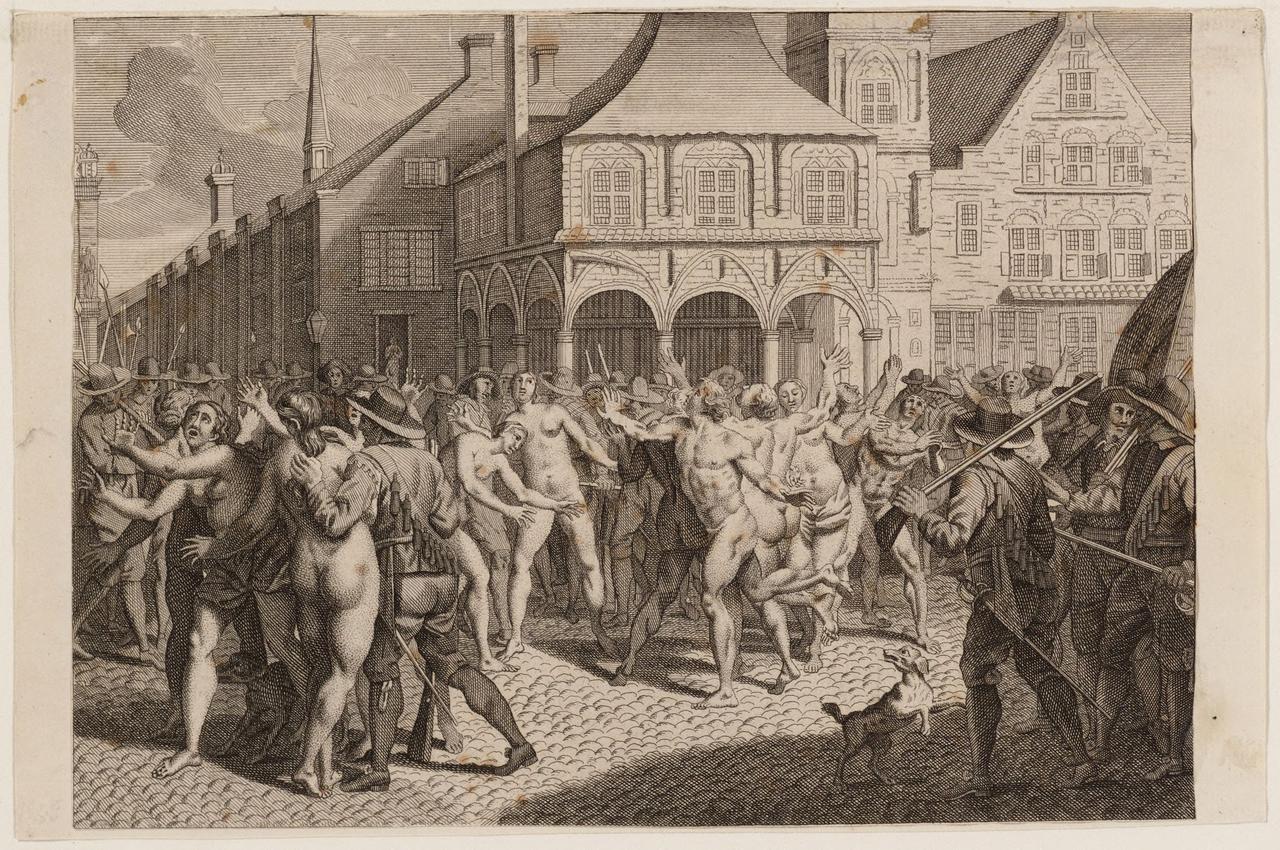
The run-up to the riot began on 11 February 1535 during a meeting of Anabaptists. During prayer, one of the attendees demonstratively took off his clothes and threw them on the fire, chanting "Woe, the wrath of God". The group then stormed the streets naked, believing that nakedness was a symbol of divine justice.
On 10 May 1535, the actual riot erupted under the leadership of Jan van Geel. Amsterdam's city hall was occupied, with even the mayors narrowly escaping during their meal. The Anabaptists hoped for support from the citizenry, but this failed to materialise.
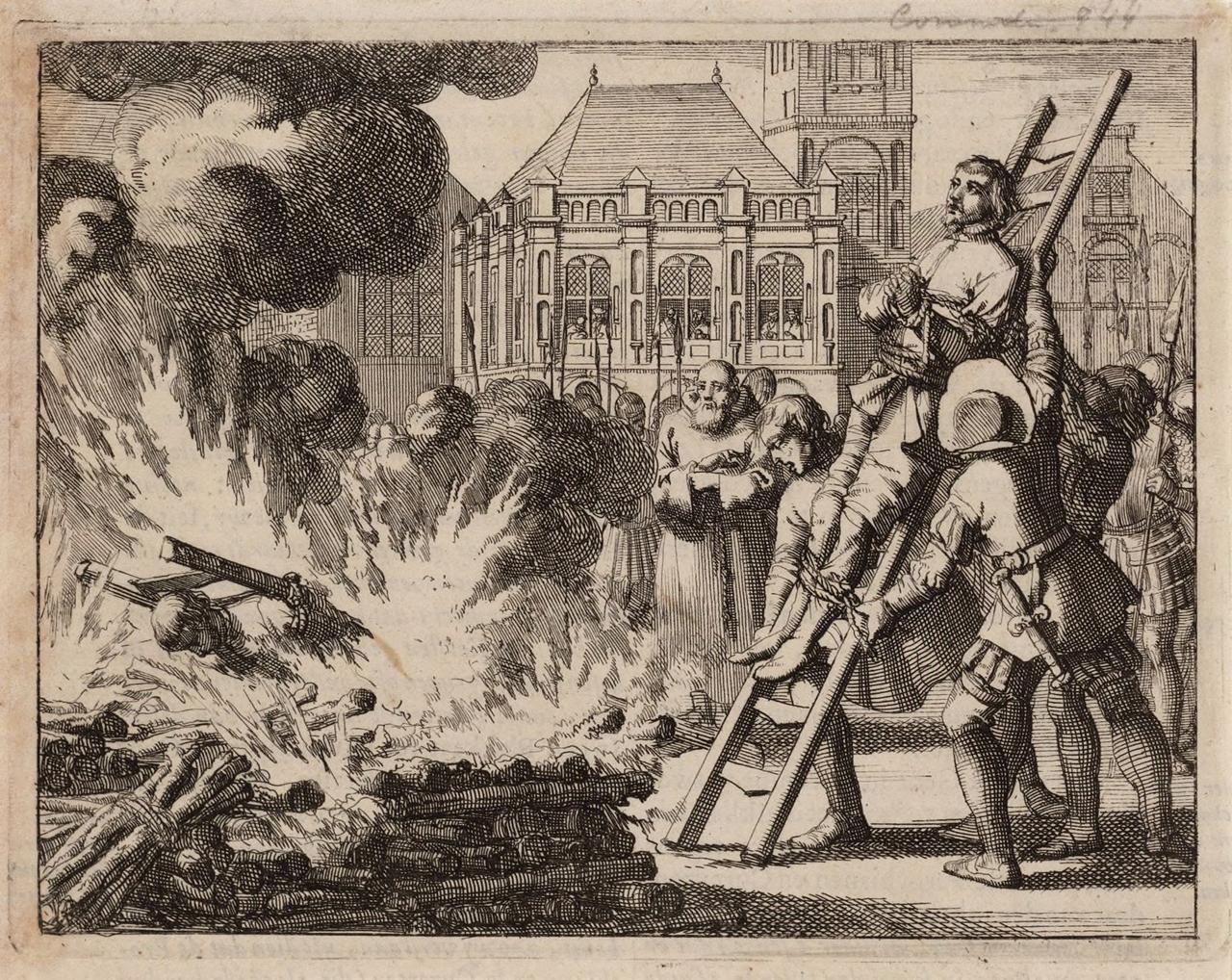
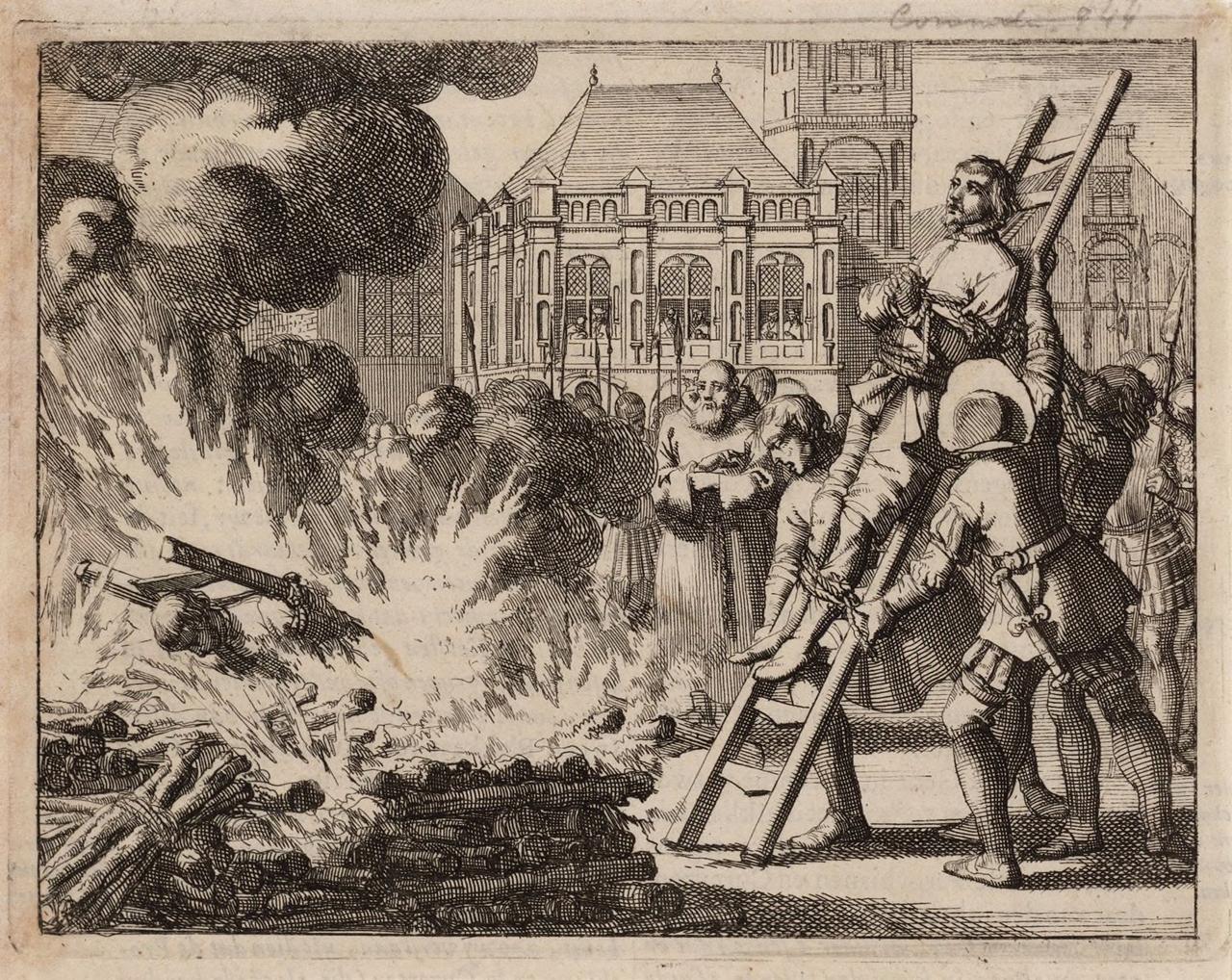
That same day, the authorities launched a counter-offensive, killing 19 civilians and 18 Anabaptists. Other supporters were arrested, publicly humiliated and executed. As a deterrent, the severed heads of the Anabaptists were placed on stakes at the city gates. The Anabaptist revolt in Amsterdam is now known as a crucial episode in religious history, a time when the struggle for religious renewal was often bloody and brutal.
Any feedback for this story?