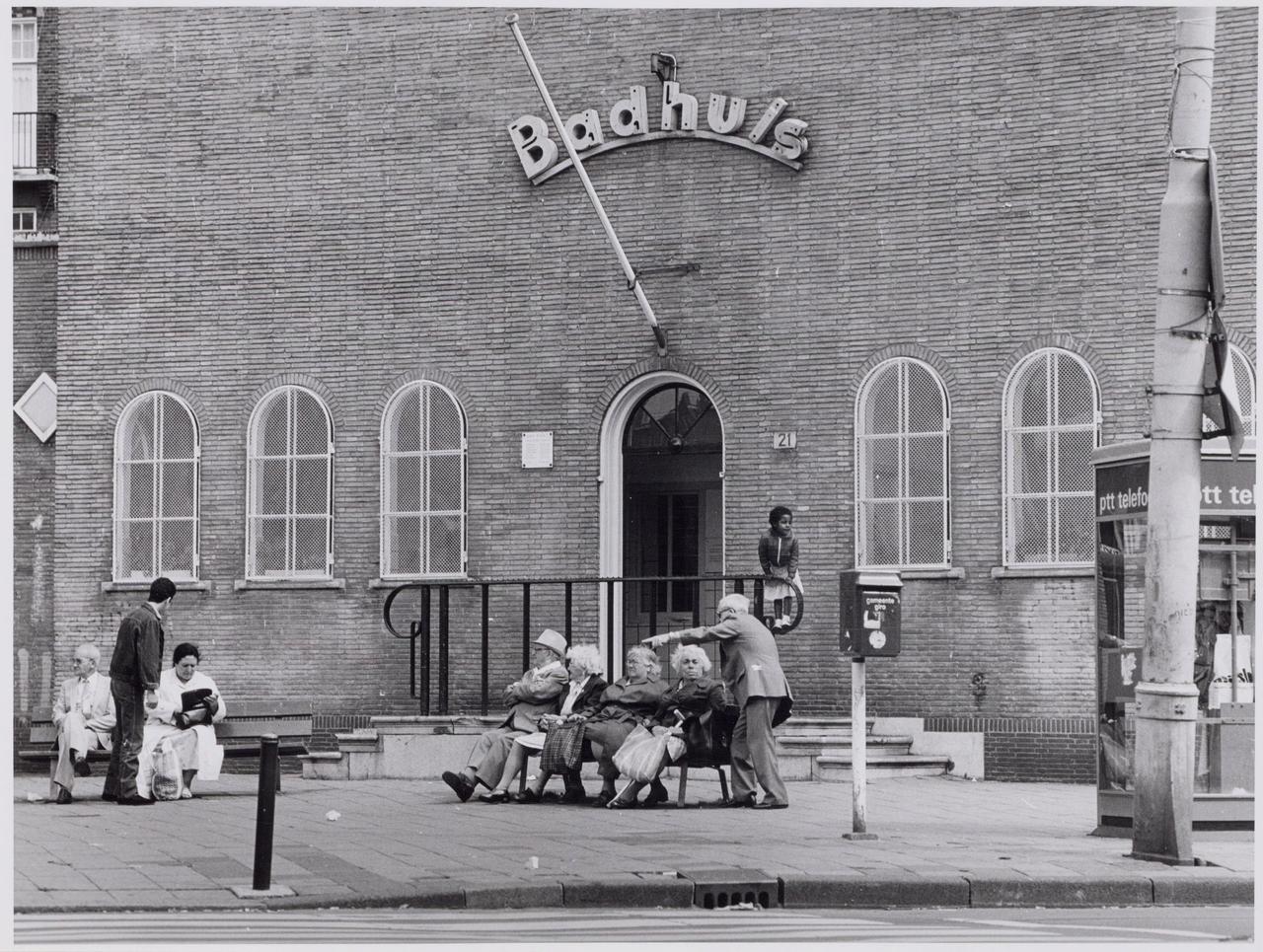
Bathhouses
At the end of the nineteenth century, Amsterdam looked very different in many places than it does today. The densely built working-class neighborhoods often lacked basic home amenities. No shower, a hole in the ground as a toilet, sometimes not even running water. For personal hygiene, one had to make do with a tub in the kitchen - if there was room for it at all. It was in this context that the first bathhouses appeared on the scene.
Here on Javaplein, in front of the former bathhouse that is now a café, you can imagine how local residents used to line up there. For a small fee you could take a bath or shower there, usually on a fixed day of the week. Not for relaxation, but out of necessity. In the early twentieth century, the city council had no less than 21 such bathhouses built, spread throughout the city. The idea was simple: better hygiene meant fewer infectious diseases and thus a healthier population.
You find them in several places, sometimes still clearly recognizable on the facade, sometimes hidden behind a new function. In Amsterdam-Noord, for example, where the building is now part of the Amsterdam Noord Museum. Or on Albert Cuypstraat, where the former 'Badhuys' is now a restaurant.
What you often see in the homes of these old neighborhoods is that the bathrooms that are there today were built in later. The original houses were not designed with room for a bathroom. When one did become necessary later, a small cubbyhole was often placed between two rooms or crammed into a corner somewhere. Sometimes it felt like showering in a closet. But such a compact bathroom did represent a big step forward: for the first time, you could wash at home, any time of day.
The arrival of these bathrooms marked the end of the bathhouse as an everyday use building. Yet the old bathhouse buildings still bear the traces of their past. If you look closely, you can often still see the function of the past in the architecture and layout. And those standing in front of the door are standing in a place where generations of Amsterdam residents literally came to clean house.
Any feedback for this story?