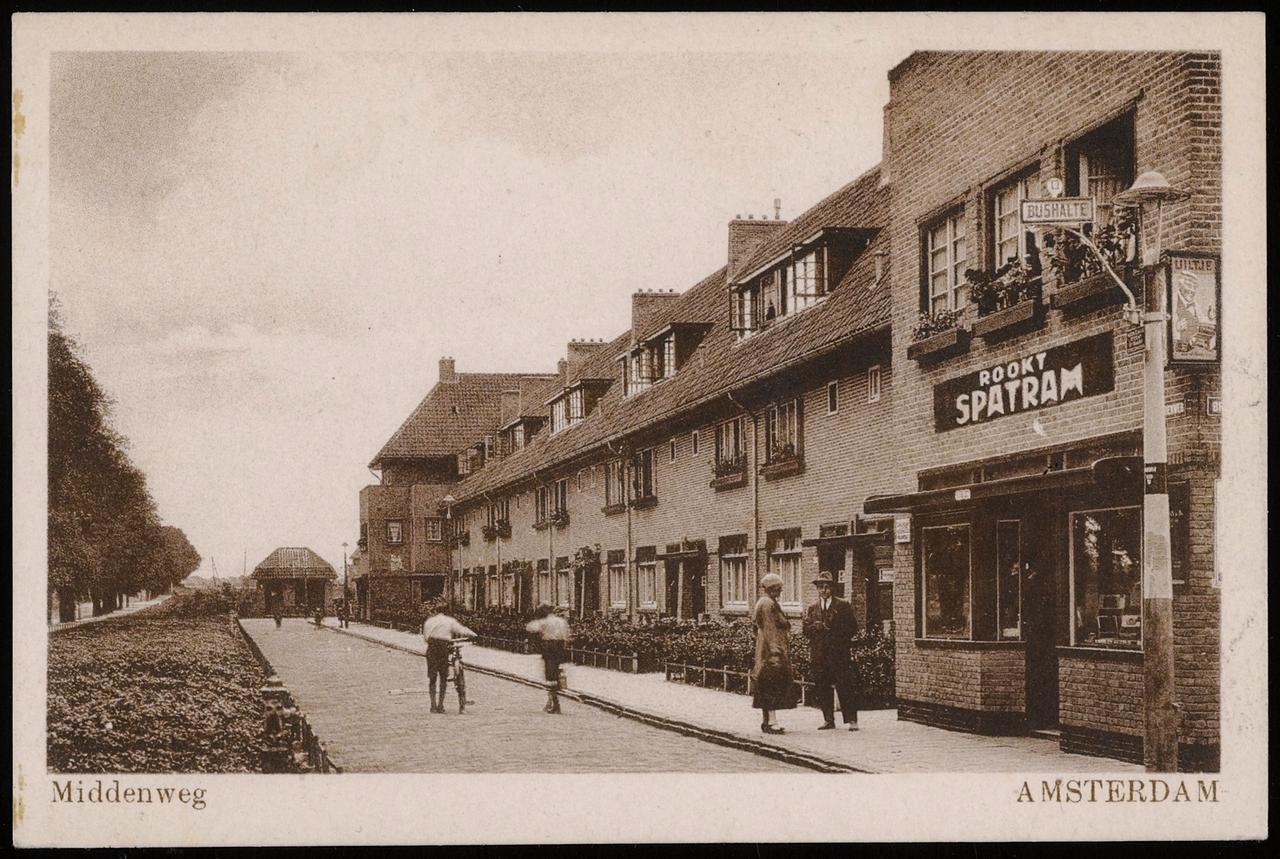
Betondorp
On the eastern edge of Amsterdam, just behind the Ringvaart canal, is a neighborhood that differs in everything from the classic city neighborhoods: Betondorp. Today it looks like a quiet residential neighborhood with white facades and clean lines, but if you look closely, you can see the experiment - and the idealism - with which this neighborhood was built a hundred years ago.
In the 1920s, Amsterdam struggled with enormous housing shortages. The city was growing rapidly, but good, affordable housing for workers lagged behind. Betondorp, officially Tuindorp Watergraafsmeer, was an answer to that need. It was one of the first neighborhoods in the Netherlands to be built largely in concrete - at the time, a modern and relatively inexpensive material. Architects like Dick Greiner designed homes in a sober, expressive style, with elements of the Amsterdam School. The houses were given flat roofs, right angles and white facades: sleek, efficient and progressive.
But Betondorp was more than an architectural experiment. It had to become a model neighborhood - a "villa district for workers," as it was called. Space, tranquility and a sense of community were central. With schools, stores and lots of greenery in the area, the village grew into a close-knit community, a kind of miniature city.
That community was put to the test during World War II. Betondorp was somewhat isolated from the city, which made it vulnerable to surveillance and raids, but also allowed for hiding and silent resistance. Several residents caught Jewish people in hiding or helped with food stamps. At the same time, there were also NSB members in the neighborhood - as in many other neighborhoods - and there was sometimes gossip, snitching and betrayal. The war exposed the vulnerability and strength of Betondorp.
After the war, the neighborhood changed slowly. Many houses have been renovated, some renewed, but the structure and original character have been preserved. The village feel still exists - among the straight streets and quiet courtyards.
And then, of course, there is that other famous story: the young Johan Cruijff, who grew up here, learned to play soccer in the squares, and grew from Betondorp into a world star. And that story, too, can be heard in the Roods app.
Any feedback for this story?