Dam Square Shooting (7 May 1945)
On 7 May, there was a festive atmosphere on Amsterdam's bustling Dam Square. Thousands of people had gathered to celebrate the expected arrival of Canadian liberators. The sounds of ‘Draaiorgel Het Snotneusje’ filled the air and people danced exuberantly. Despite the festive spectacle, the city was still littered with armed German soldiers and members of the Internal Armed Forces.
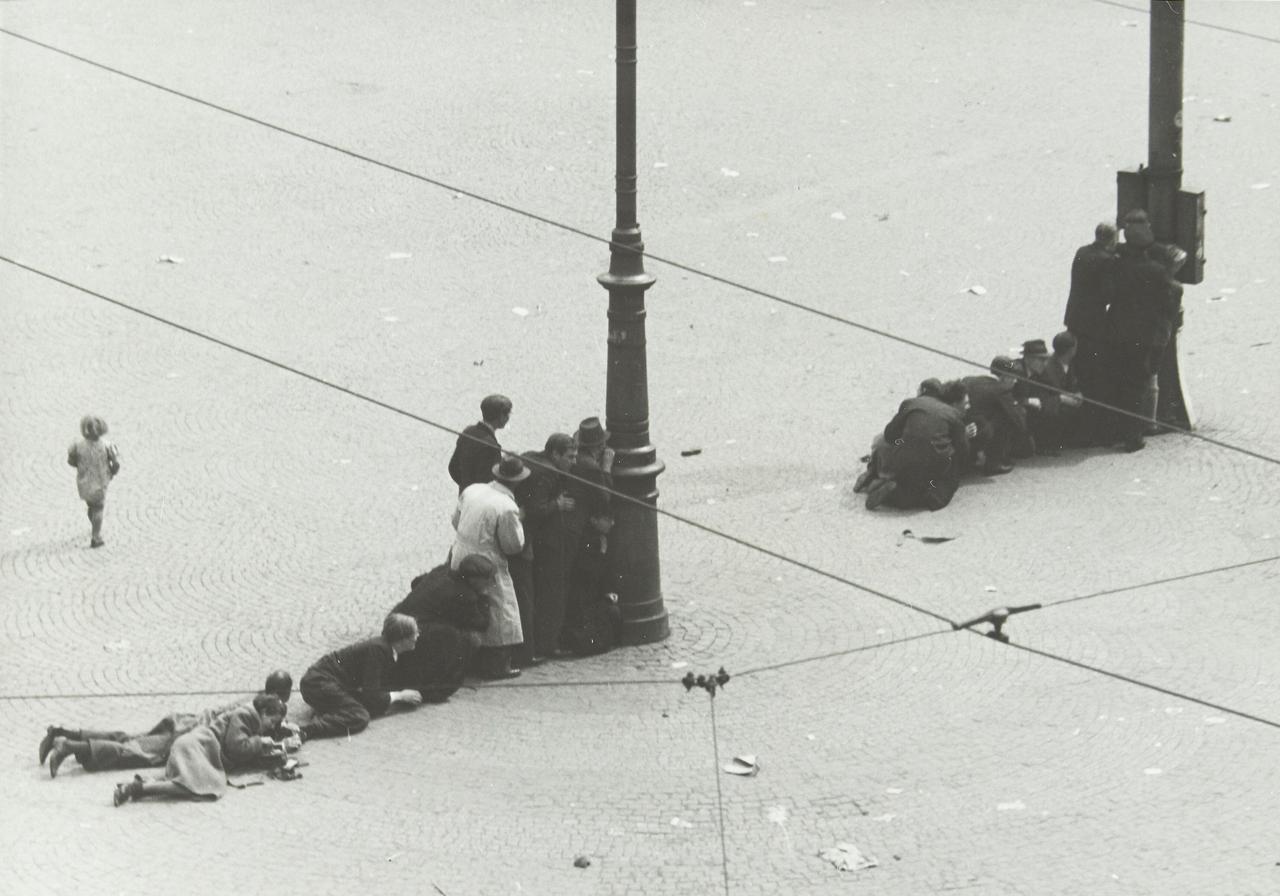
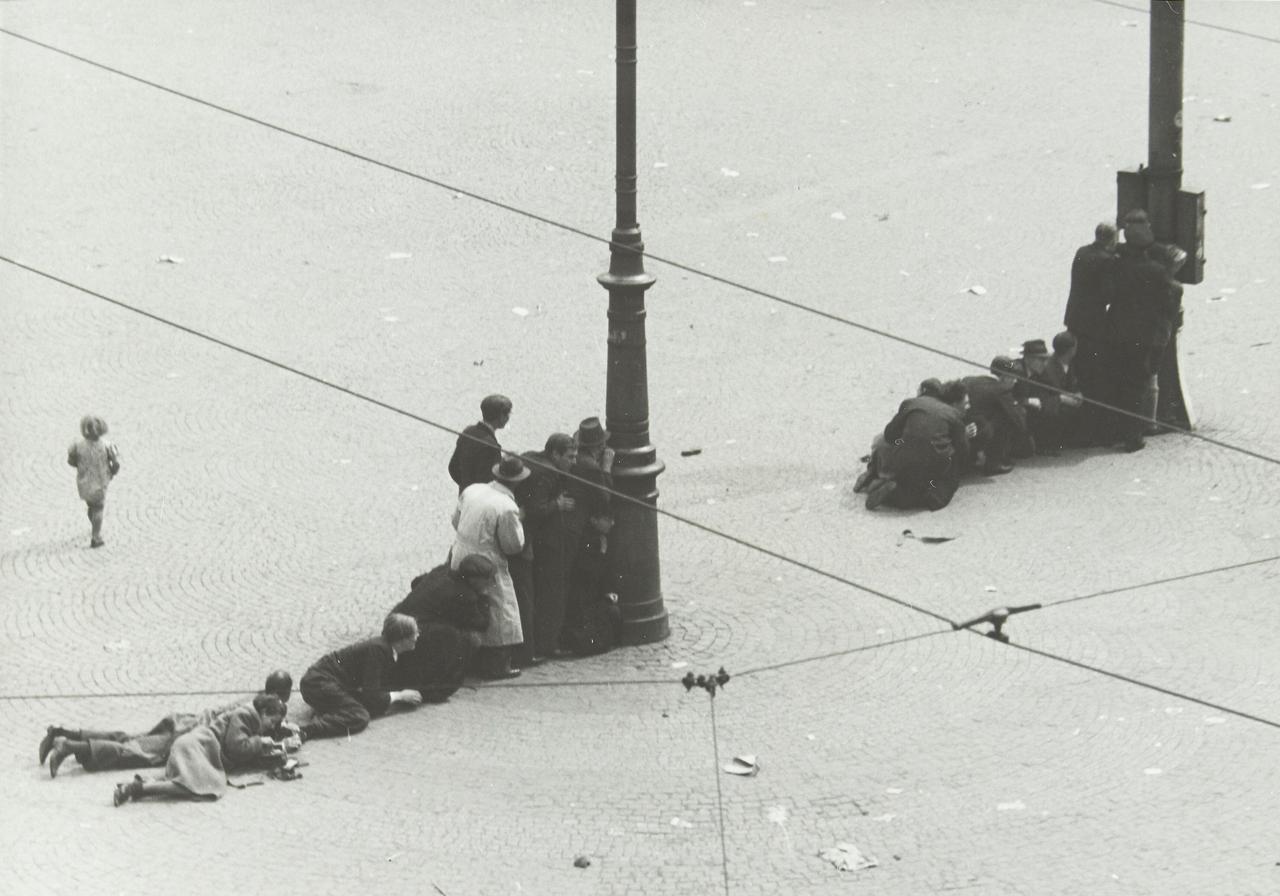
What began as a joyful gathering suddenly turned into terrifying chaos when shots were fired from De Groote Club, located next to the royal palace. Around 3 p.m. on that fateful day, German soldiers of the Kriegsmarine opened fire on the crowd on Dam Square. The crowd panicked and civilians ran in all directions to escape the deadly danger. Many sought refuge behind lampposts, two small kiosks and even behind the barrel organ.
The tragic event resulted in a significant number of casualties. According to historical sources, which are mainly based on newspaper articles from that time, there were twenty-two deaths. However, there are varying reports citing numbers between nineteen and even forty victims. Recent revelations from 2013 suggest, however, that the number of victims was at least 32, with possibly more undocumented deaths. The exact number of injured is also unknown, but newspaper reports speak of 100 to 120 injured.
The shooting lasted about two hours, resulting in a tragic event that left deep scars in the history of Amsterdam. In tribute to the victims, monuments were unveiled by the mayors of Amsterdam on 7 May 1947 and again on 7 May 2016. In 1947, this was a plaque, and in 2016, paving stones with the names of the victims were added to the memorial. The barrel organ Het Snotneusje, which served as a hiding place for many during the shooting, has since become a symbol of this tragic incident. In 2020, to commemorate 75 years of Liberation Day, the barrel organ underwent restoration and played again on Dam Square in tribute to the victims of that fateful day.
Any feedback for this story?