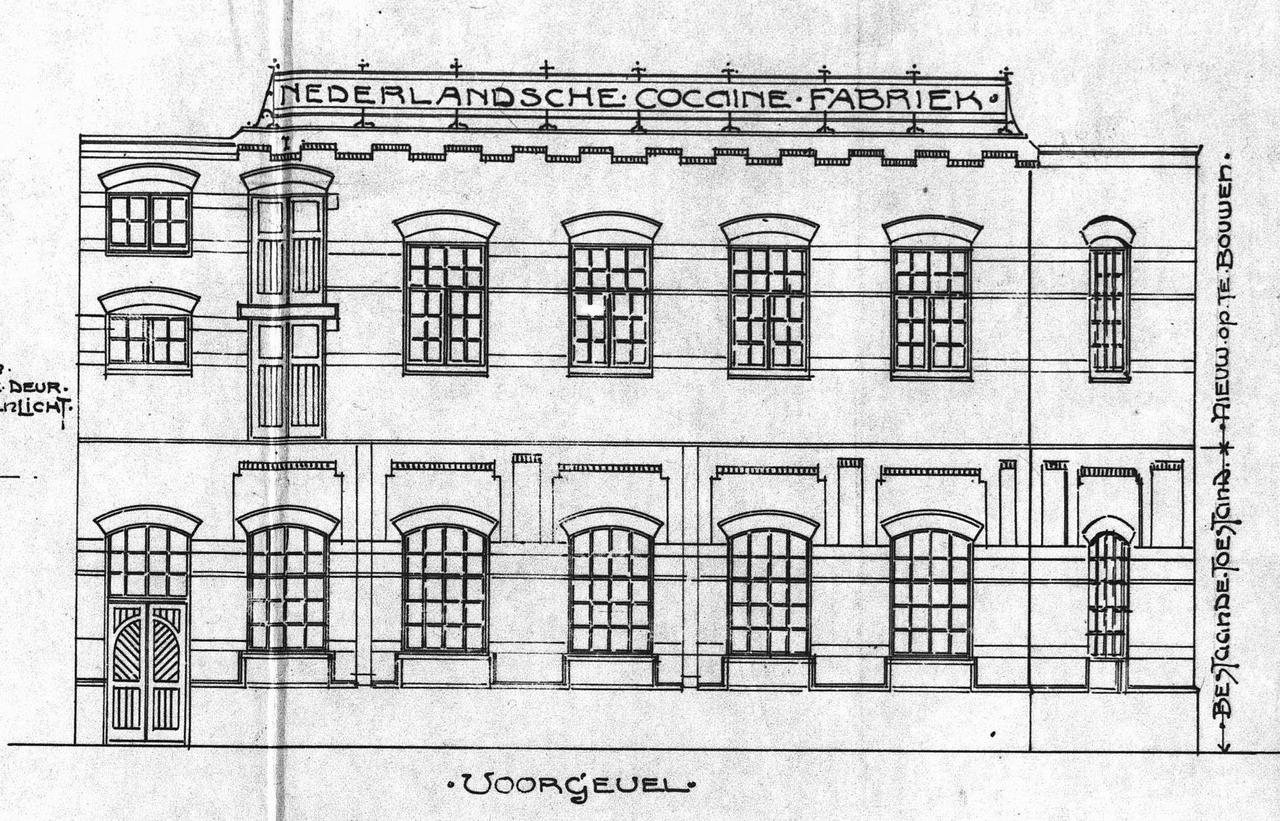
Dutch Cocaine Factory
On the spot where you are standing now, from 1900 to 1997 stood the Nederlandsche Cocaïnefabriek. What now seems an ordinary location was once the center of an industry that made the Netherlands a world player in the production of cocaine. Here, for years, a substance that would later become the symbol of the international drug trade was legally produced.
The factory was founded in 1900 and grew to become one of the largest suppliers in the world. At that time, cocaine was still an accepted drug. Doctors used it as an anesthetic, and it was sold freely in pharmacies. During World War I, it was even provided to soldiers to stay alert and suppress their anxiety. The factory operated at full capacity, using raw materials from the Dutch East Indies, where large quantities of coca leaves were grown in Java and shipped to Amsterdam.
Although more and more countries began to restrict the use of cocaine, the Nederlandsche Cocaïnefabriek still managed to operate legally for decades. It was not until the 1960s that production was banned and the Netherlands began to view the substance as a dangerous and addictive drug. The factory finally closed in 1963, but remained in use for other pharmaceutical products until 1997.
Yet cocaine did not disappear from the Netherlands. Today it is one of the most widely used illegal drugs in the country. Large quantities of cocaine arrive through the port of Rotterdam, smuggled between containers of fruit, metal or other trade goods. The trade in this lucrative drug leads to violent conflicts between rival gangs, vying for control of the market. The industry may be gone, but cocaine's impact is still visible in society.
Any feedback for this story?