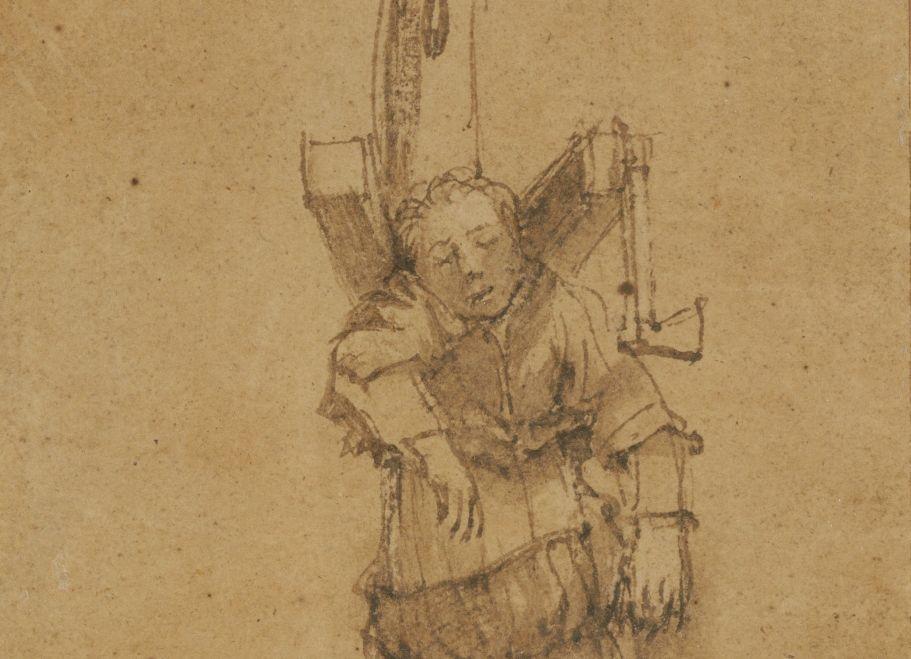
Elsje Christiaens
She was only seventeen. Alone, poor, and a stranger in a city that did not speak her language. In the spring of 1664, Elsje Christiaens came to Amsterdam from Jutland, Denmark. She sought work as a maid, like so many others. But where others might disappear quietly into anonymity, her name would linger in history - horribly.
Soon after her arrival, things went wrong. She barely had any money and was staying with a landlady on the Damrak. When she couldn't pay, a heated altercation ensued. In panic - or anger - Elsje grabbed an axe and struck her landlady. The woman died. Elsje tried to flee, but was quickly apprehended. She confessed to the murder and was sentenced to death.
On May 1, 1664, Elsje was strangled on the scaffold, as was customary for a woman. Her body was then taken across the IJ to the gallows field on the Volewijck - the place where executed criminals were displayed for deterrence. You now stand on the spot where Elsje must have once hung, her young body dangling from the gallows, with the axe, the murder weapon, displayed beside her. Not just as punishment, but as a warning to the city.
That same day, Rembrandt van Rijn also crossed the IJ River. What he saw touched him deeply. He drew Elsje's lifeless body, not as a criminal, but as a tragic figure - a girl derailed in a harsh world. His drawings are raw, understated, but full of compassion. He gave her a face that the city had taken away from her.
Any feedback for this story?