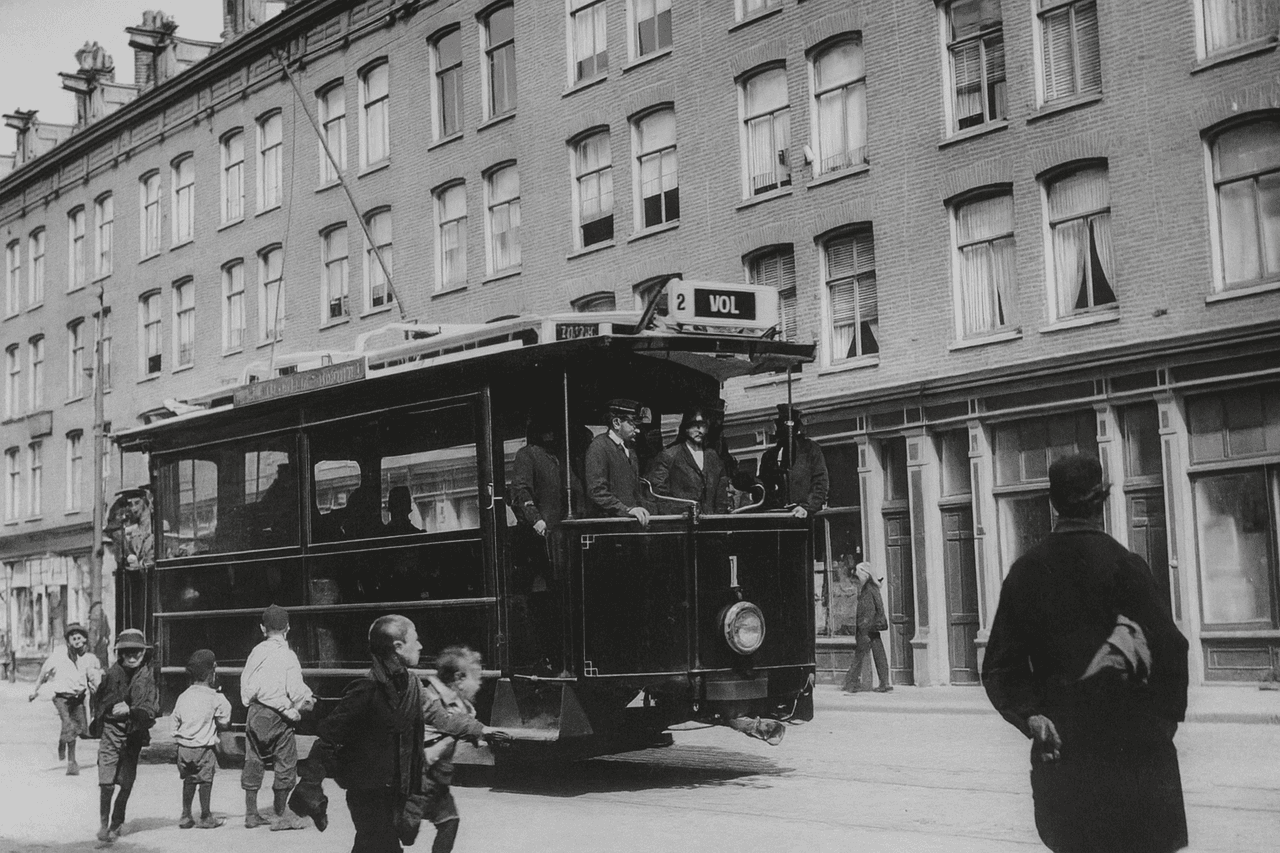
First electric tramway
Welcome to Marnix Street. Nowadays buses, bicyclists and cars race past here, but on August 14, 1900, there was a very different sound here: the hum of electricity, the ringing of a bell, and the sliding of metal wheels on a brand new rail. That day, an electric streetcar rode through the streets of Amsterdam here for the first time.
Until then, the city's streetcars had been pulled by horses. The horses walked the cobblestones day in and day out, pulling heavy wooden wagons and literally working themselves to death. It was slow, expensive and inefficient - especially in a city that was growing rapidly.
The advent of electricity brought change. On Marnixstraat, the very first route was laid with overhead wires and rails suitable for the electric streetcar. The route ran from Nassauplein to Leidseplein - a modest beginning, but it felt like a leap into the future.
The very first electric streetcar was not only faster, but also cleaner and more reliable. No more excrement on the streets, no more tired horses, but a streetcar that ran at set times and followed its route without protest. Amsterdammers stood along the side watching, curious and sometimes even a little afraid of the unfamiliar, humming vehicle that moved without a visible draft animal.
Yet things quickly got used to it. The streetcar became a symbol of modernization, of progress. Not much later, other lines in the city followed. In a few decades, the network grew into a lifeline of the capital.
Today, the electric streetcar has become a matter of course. But it began here - on this spot, on Marnix Street, on a summer day in 1900. A small ride for a vehicle, a big step for the city.
Any feedback for this story?