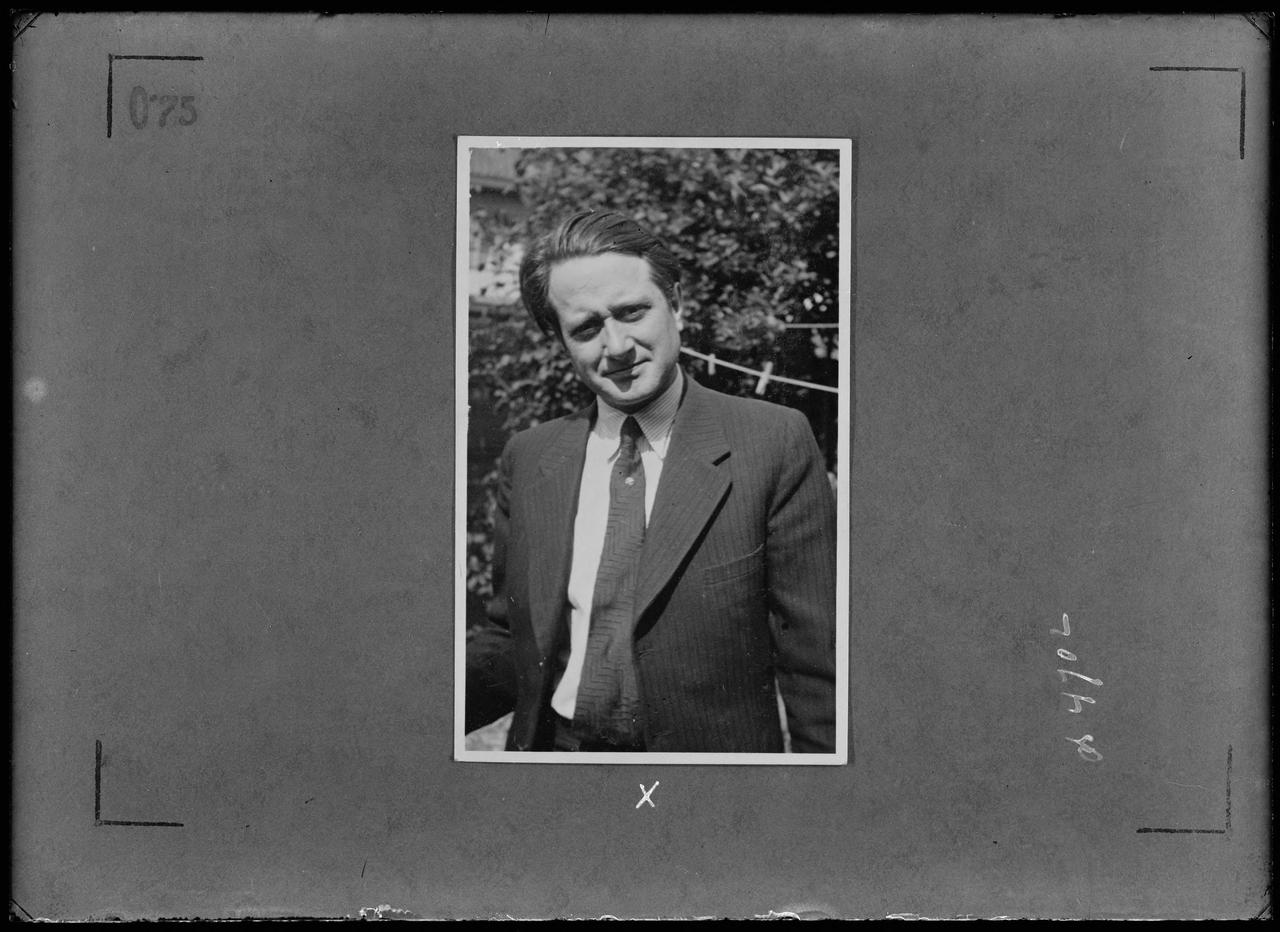
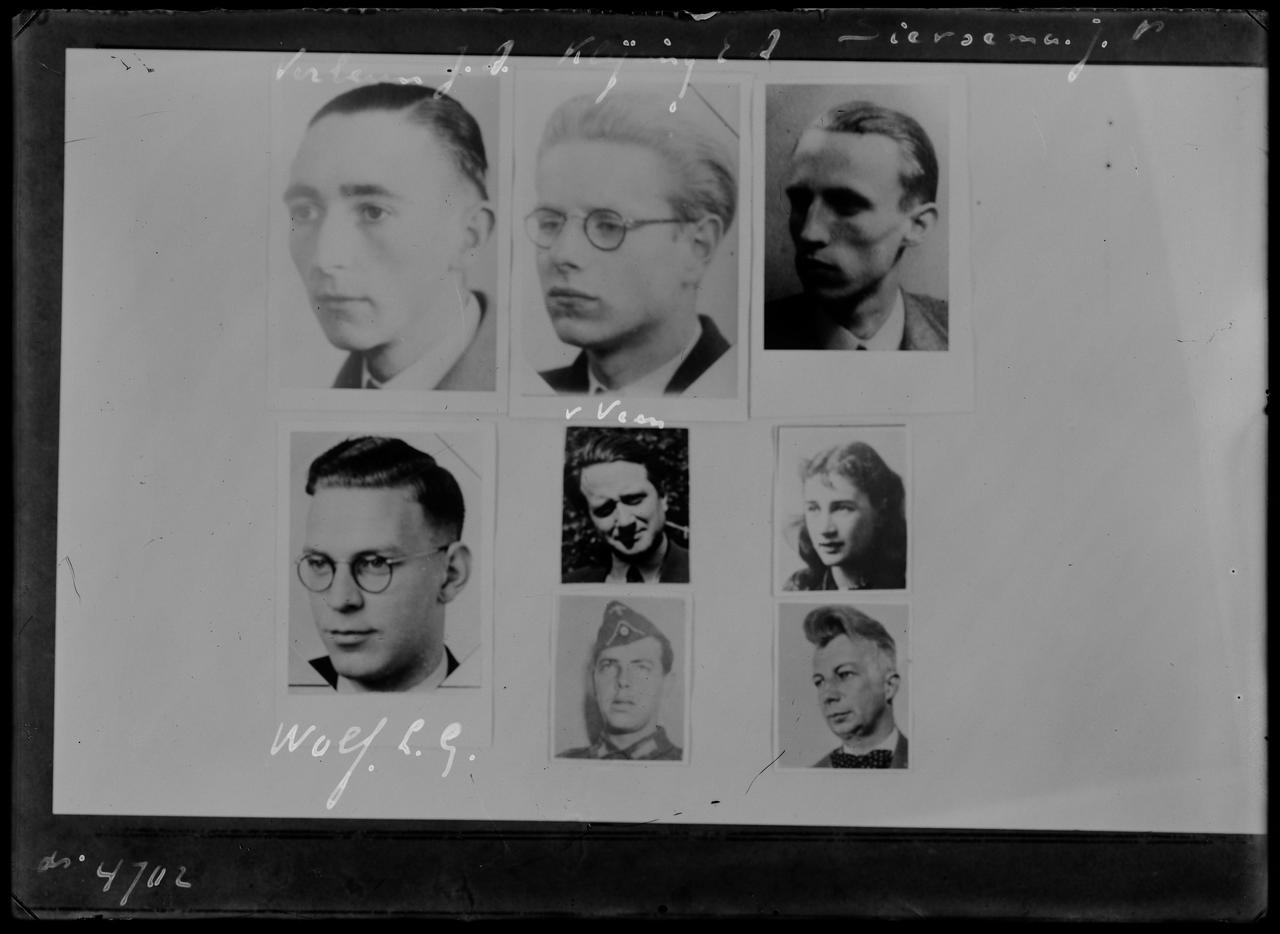
Gerrit van der Veen, the resistance hero
Gerrit Jan van der Veen was born in Amsterdam on 26 November 1902, one of four children of Gerrit Jan van der Veen, a butcher, and Dorothea Lorenz. His life would be marked by art and heroic deeds in times of war.
Van der Veen began his career as a technical draftsman with the Dutch Railways, and later worked as a mechanic with the Batavian Petroleum Company in Curaçao. It was here that he performed his first act of bravery by putting out a fire on an oil tanker, while the rest of the crew had already left the ship.
During World War II, Van der Veen, who was a sculptor as well as a visual artist, refused to join the Kultuurkamer established by the Germans. Indeed, he became a prominent leader in the resistance against this body imposed by the occupiers. This led to his arrest, but after his release he went into hiding. Throughout the rest of the war, he roamed Amsterdam, led an extensive resistance network and was actively involved in numerous resistance activities.
One of his most notable contributions to the resistance was the establishment of the Personal Identification Card Centre, where people could obtain fake personal identification cards. Under his leadership, around 80,000 personal identification cards were forged in Frans Duwaer's printing office. Thanks to these forgeries, thousands of people were able to escape arrest by the German occupiers. Van der Veen was not interested in profit; his goal was to keep as many people as possible out of the hands of the Germans.
In addition, Van der Veen successfully carried out several attacks and robberies on important German targets in Amsterdam. He attacked the Amsterdam population register, together with other resistance fighters raided the Landsdrukkerij in The Hague and tried to free his resistance friends from the House of Detention in Amsterdam.
Unfortunately, his determination led to his arrest on 1 May 1944. Normally an execution took place several weeks after the verdict, but in the case of Van der Veen and his fellow resistance fighters it happened only a few days later. In early June 1944, they were executed in the dunes near Overveen, near Haarlem. Van der Veen and his friends were buried in the honorary cemetery in Overveen.
After the war, the infamous headquarters of the Sicherheitsdienst (SD) on Euterpestraat was converted into a school. Both the school and the street were named after the brave resistance fighter: the school was named Gerrit van der Veen School, later Gerrit van der Veen College, and Euterpestraat was renamed Gerrit van der Veenstraat. Thus, Gerrit Jan van der Veen's memory remains alive and inspiring for future generations.
Any feedback for this story?