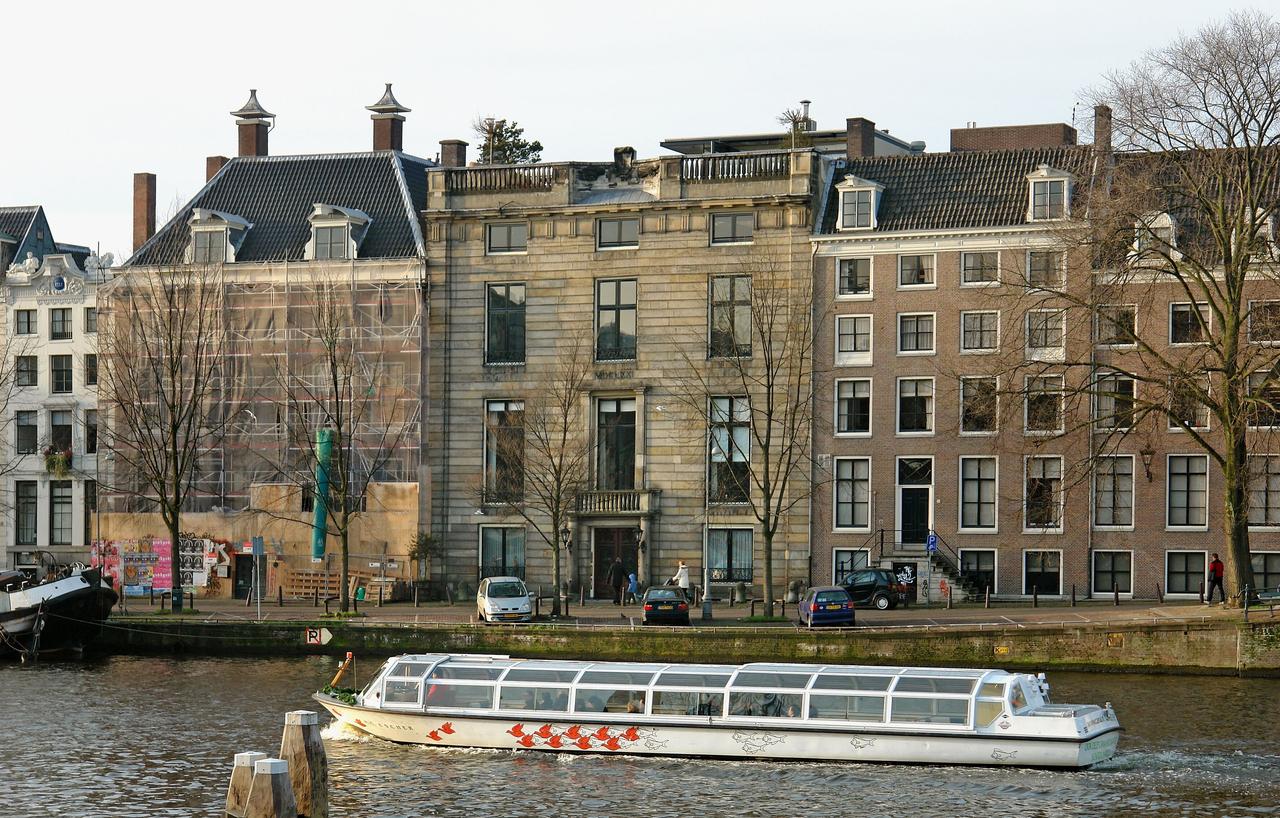
House with bloodstains
On the Amstel, at number 216, stands a stately canal house with a sinister nickname: the House with the Bloodstains. If you look closely, you can still see vague traces on the facade of symbols, signs and words that were supposedly applied to the wall here with blood in the late 17th century - by none other than former mayor Coenraad van Beuningen.
Van Beuningen was no ordinary city administrator. Born in 1622, he was brilliant, well-read and influential. He served as a diplomat at various European courts, maintained contact with kings and thinkers, was administrator of the Dutch East India Company for years and was mayor of Amsterdam several times. But behind that public role was a man with inner turmoil.
In 1684 he bought the house on the Amstel. Shortly thereafter, he married his much younger neighbor, Jacoba Bartolotti - a marriage that soon turned into a chilly two-story cohabitation. Meanwhile, Van Beuningen also began to lose ground financially, including through unfortunate investments in VOC shares. These setbacks, combined with personal tensions and an increasingly confused mind, caused him to collapse.
In a psychosis, he cut open his arms and described the outer walls of his house with his own blood. Kabbalistic signs, Hebrew words, mysterious names - a cryptic manifesto of a man who moved further and further away from the world. Despite cleaning attempts, parts of his message are still visible three centuries later. His legacy is literally carved into the wall.
And Van Beuningen may have died penniless and forgotten in 1693, but his presence is still felt here. Those who walk past the house at night sometimes feel a chill. In 2004, Het Parool reported that neighborhood residents are awakened at night by a sharp, mocking laughter that seems to come from nowhere. And a remarkable number of minor traffic accidents take place right in front of the property.
Any feedback for this story?