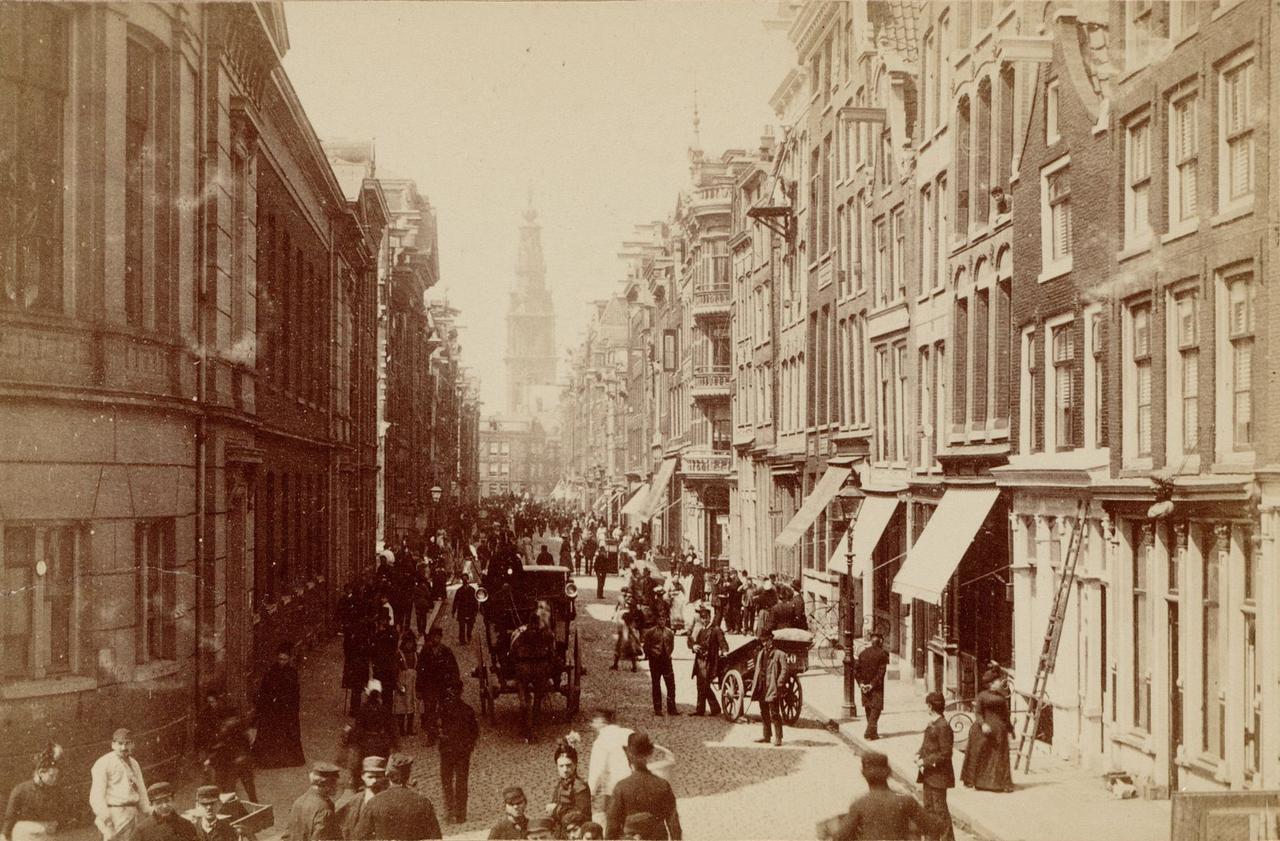
Jodenbreestraat
You are now standing on Jodenbreestraat - a name that may sound a bit heavy, but once this very street was known for its liveliness, bustle and charm. This was the heart of Jewish Amsterdam, a place where people chatted, traded, ate and laughed daily.
In the 17th and 18th centuries, this was a street full of color and character. Jewish merchants, artisans and artists lived here. One of the most famous residents? Rembrandt van Rijn, who lived and worked here for many years in a house you can still visit today. In his time, the street was called the "Breestraat," a busy artery through the city, with market stalls, merchants, children on the street, and a mix of languages - Yiddish, Dutch, Portuguese, French.
The street changed dramatically during World War II. The Jewish community was almost completely taken away, and the once lively street fell silent. After the war, it was left empty and neglected. In the 1960s and 1970s, the municipality decided on large-scale demolition and modernization. The street was widened, homes disappeared, and the human scale went out of sight.
But Jodenbreestraat has reinvented itself. Today it is a mix of old and new: modern buildings, busy stores, but also reminders of what was once here. You can visit the Rembrandt House, trip over a tripstone, or just be quiet and try to imagine what this street sounded like when it was full of voices.
Any feedback for this story?