Lippmann, Rosenthal & Co.
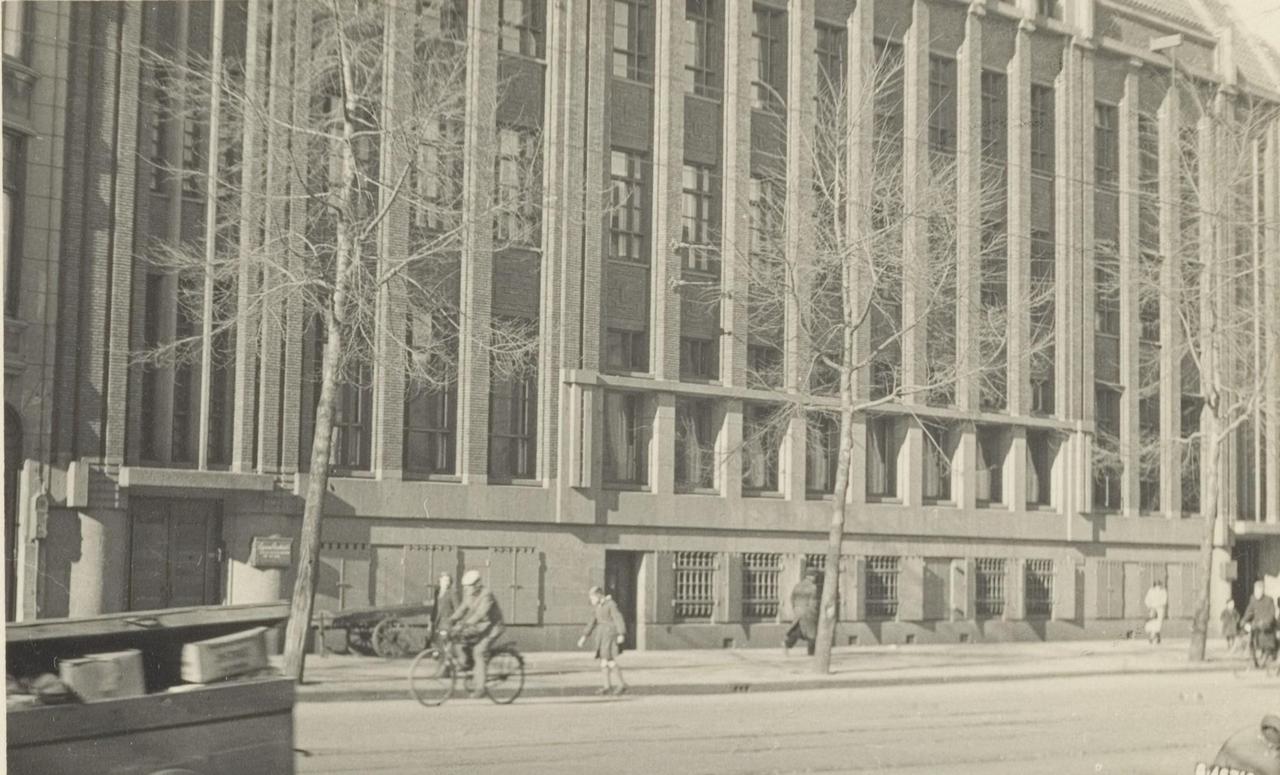
We are now at Sarphatistraat 55, in front of a building that looks entirely ordinary. But during the Second World War, this was the infamous Liro bank, officially Lippmann, Rosenthal & Co.
Here, Jews were forced to hand over all their money, securities, artworks, jewellery, gold, and insurance policies. From August 1941 onward, the so‑called Liro decree was introduced and gradually expanded. At first it targeted wealthy Jews, but eventually everyone had to surrender their valuables. They lost their property and were only allowed minimal withdrawals for basic living.
Although the name sounded familiar and trustworthy, this was no longer a real bank but an instrument of Nazi expropriation. Where the building once served commerce and administration, it became a cog in the machinery of destruction.
At its peak in 1942 and 1943, Liro processed tens of thousands of deposits and managed hundreds of millions of guilders. The stolen funds were used to finance deportations, maintain camps like Westerbork, and even reward informants.
After liberation, the institution was declared hostile and placed under Dutch control. It was renamed Liquidation of Administration Sarphatistraat and attempted to return stolen assets. Much, however, was never recovered.
Any feedback for this story?