Persecution of sodomites
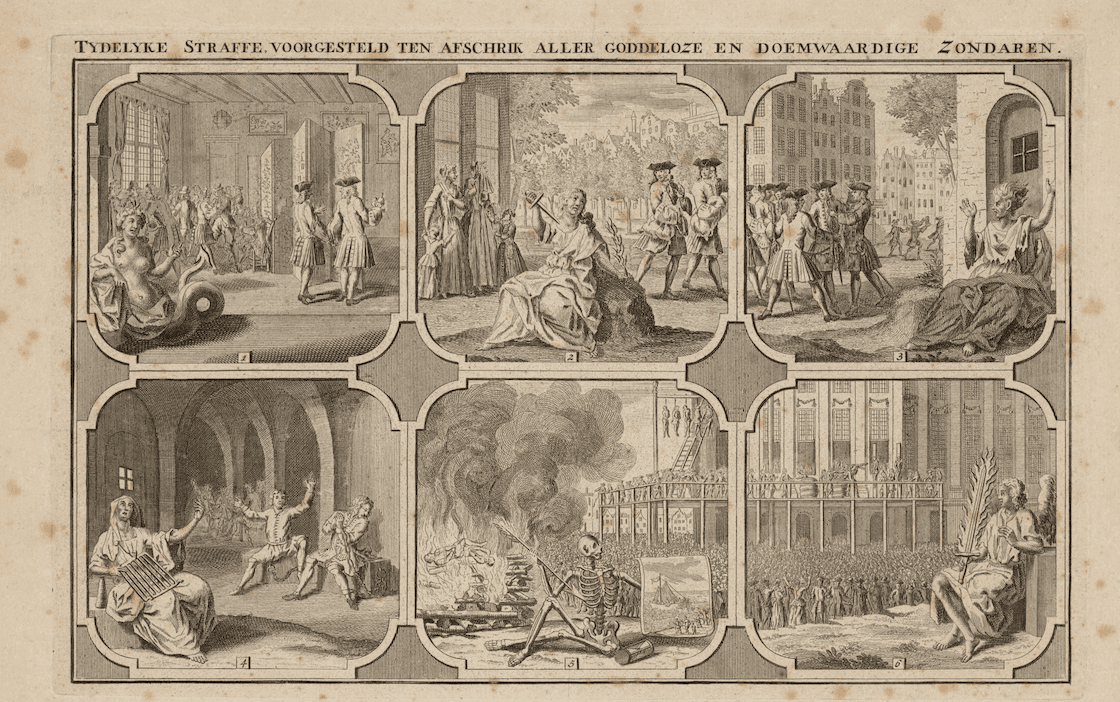
On Dam Square, in the heart of Amsterdam, the poultry seller Willem Leske was executed in 1764. He had a wife, children, and a respected place in the guild—but none of it offered protection. He was accused of sodomy, a term then used for homosexual acts.
In the eighteenth century, men suspected of sodomy were arrested and tried. Between 1730 and 1811, there were hundreds of court cases. In just the years 1764 and 1765, dozens of convictions were issued, many ending in execution. Willem Leske was strangled and his body was weighed down with stones and thrown into the IJ. It was meant as a deterrent.
The authorities waged an active “sodomite hunt.” Men were betrayed, interrogated, and sometimes forced into confessions. The cases were widely spread in pamphlets. In one such pamphlet, a man wrote before his death:
“Who will extinguish my filthy fire and my burning flames?”
It shows how harshly moral and religious rules were enforced at the time. What we now consider private could then lead to the scaffold and the death penalty. The sodomite persecution is a forgotten chapter, but it reminds us how dangerous it is when a society decides who may and may not exist.
Any feedback for this story?