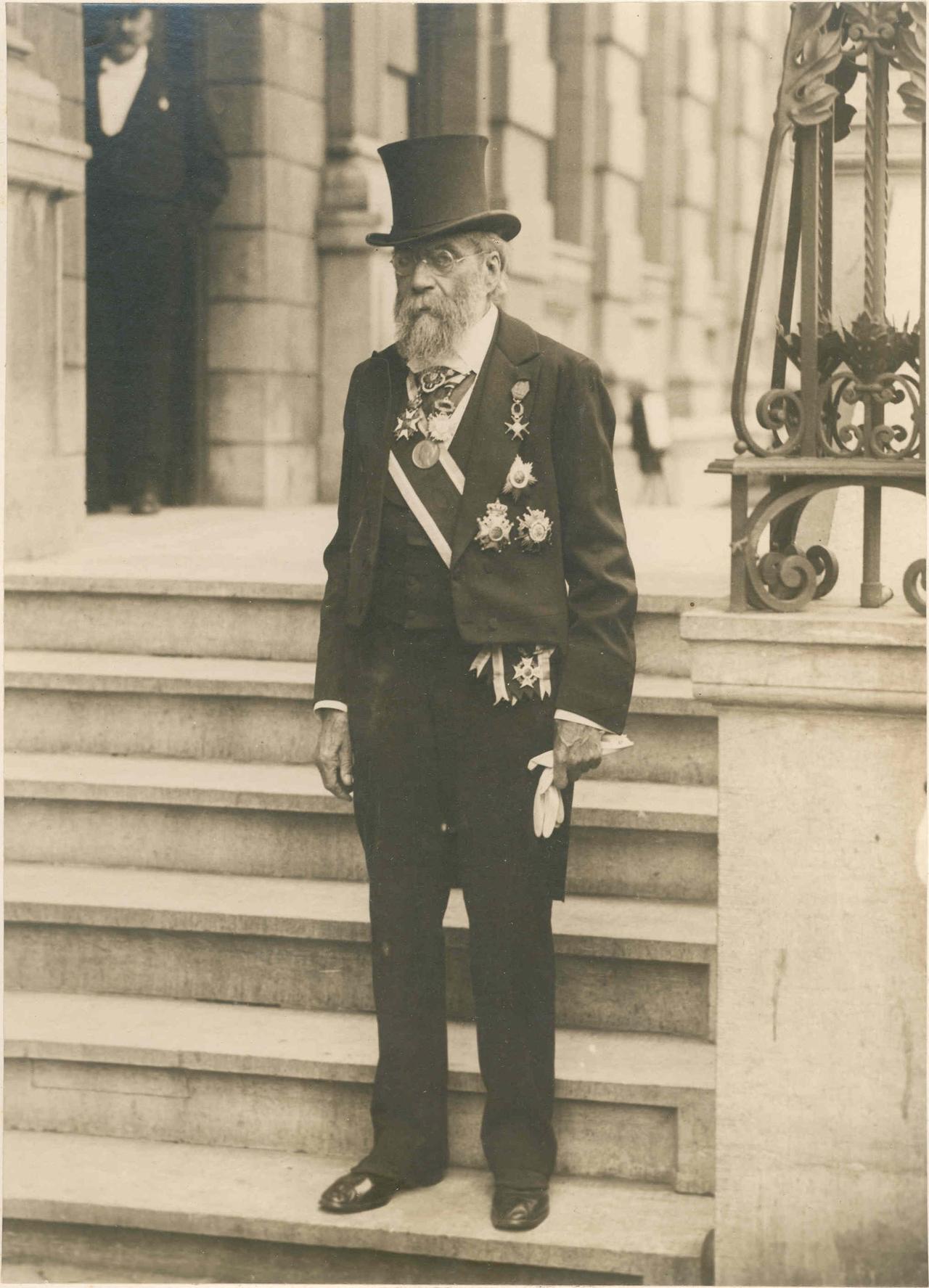
Pierre Cuypers
Pierre Cuypers, a Dutch architect who lived from 1827 to 1921, left an indelible mark on Dutch architecture. His name is inextricably linked to Amsterdam's Central Station, for which he designed the innovative and tiered transport system that is still in use today. Although it has been modified over the years to accommodate advancing and heavier vehicles, the essence of Cuypers' design remains.
Another of his famous designs is the Rijksmuseum, the national museum of the Netherlands. This design combines Gothic and Renaissance styles, with Gothic themes clearly predominating. Cuypers' work was initially inspired by 13th-century French architecture, as well as some writings by J.A. Alberdingk Thijm.
Cuypers designed many churches from scratch, but also paid a lot of attention to restoring churches. Typically, he transformed a dilapidated or potentially dangerously built church into a work of art, often with the help of his son Joseph Cuypers in his later works.
He also designed the railway bridge in Nijmegen, among many other widely used and nationally appreciated structures. Because of his contributions, the year 2007-2008 was declared the 'Cuypers year' in the Netherlands. People celebrated his work with a range of activities and commemorations. Even those who were not directly involved often found their way to his statue in Roermond to pay their respects. Cuypers' legacy in Dutch architecture is unquestionable, as witnessed by the enduring appreciation of his pioneering designs and his influence on architecture in the Netherlands.
Any feedback for this story?