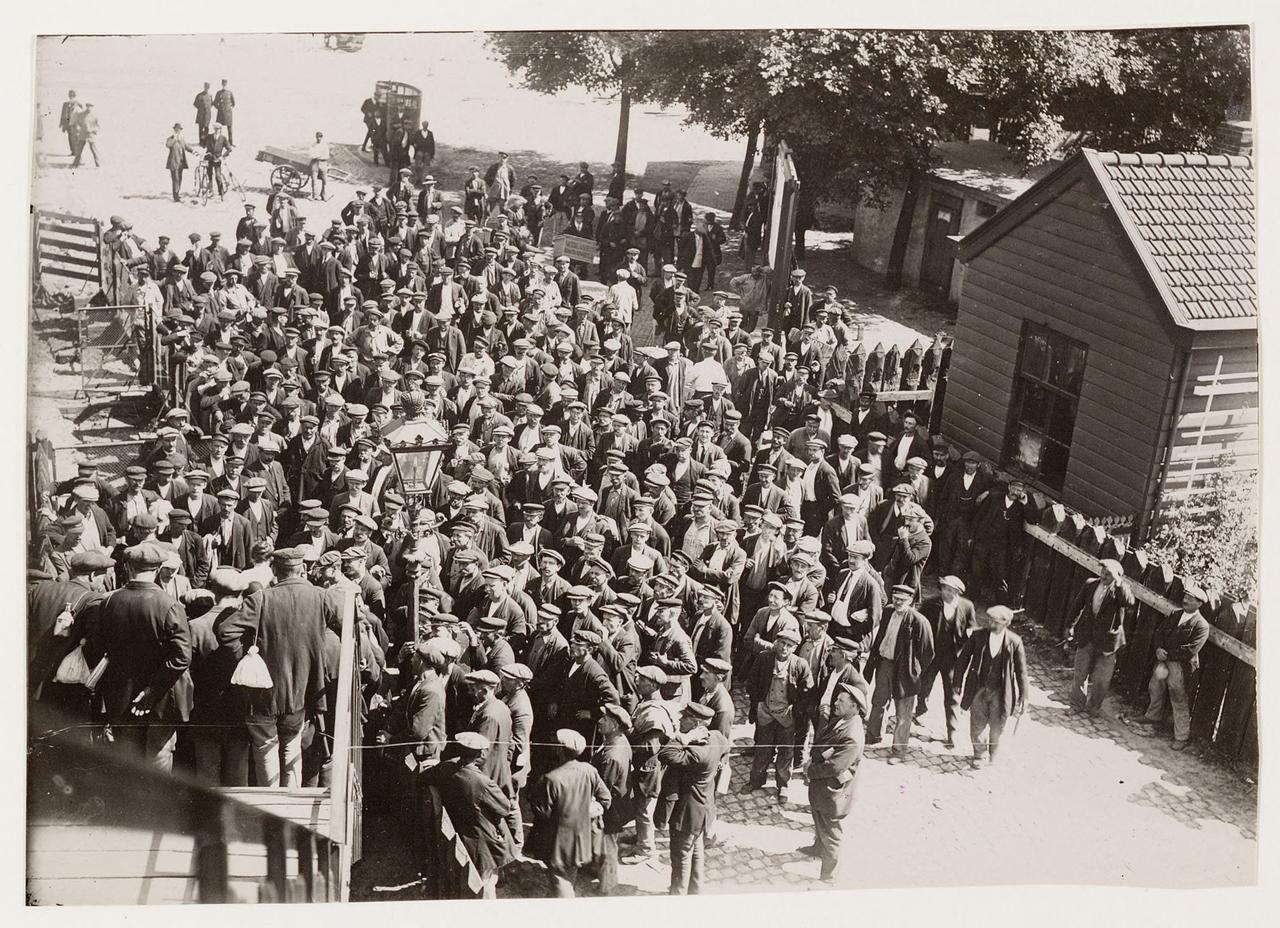
Potato Riot 1917
The year 1916 brought the palpable effects of World War I in Amsterdam. Although the Netherlands remained neutral during the conflict, there was an acute food shortage in the city. Potatoes, in particular, the main staple food, became increasingly scarce. Ironically, potato exports continued unabated. This situation led to growing discontent, which eventually resulted in protests and looting. The climax of this unrest followed in late June 1917 and is known as the Potato Riot.
On 28 June 1917, working-class women tried to gain access to potatoes originally intended for military use. The police intervened, leading to a riot. The women then decided to go to the city hall, where they met alderman Wibaut. The latter assured them that sufficient new potatoes would be available within a few days.
However, when the new crop of potatoes finally arrived in Amsterdam, they turned out to be unaffordable for ordinary workers. Rich ladies snatched them away from the noses of working-class women. Alderman Josephus Jitta offered the women an extra supply of rice, but one of them replied bluntly: 'If I put that in front of my husband, I'll get smacked upside the head!'
On Monday 2 July, protesters marched to the vegetable market on Marnixstraat, located between Elandsgracht and Rozengracht. There, they stormed barges laden with cauliflower and potatoes. The police intervened and opened fire on the marauding mob. That same evening, a mob moved to the Rietlanden, where wagons of potatoes were looted. Again shots fell.
The Amsterdam police were reinforced by military and military police, who fired sharply at the protesters. As a result of these violent clashes, nine people were killed and 114 injured.
Any feedback for this story?