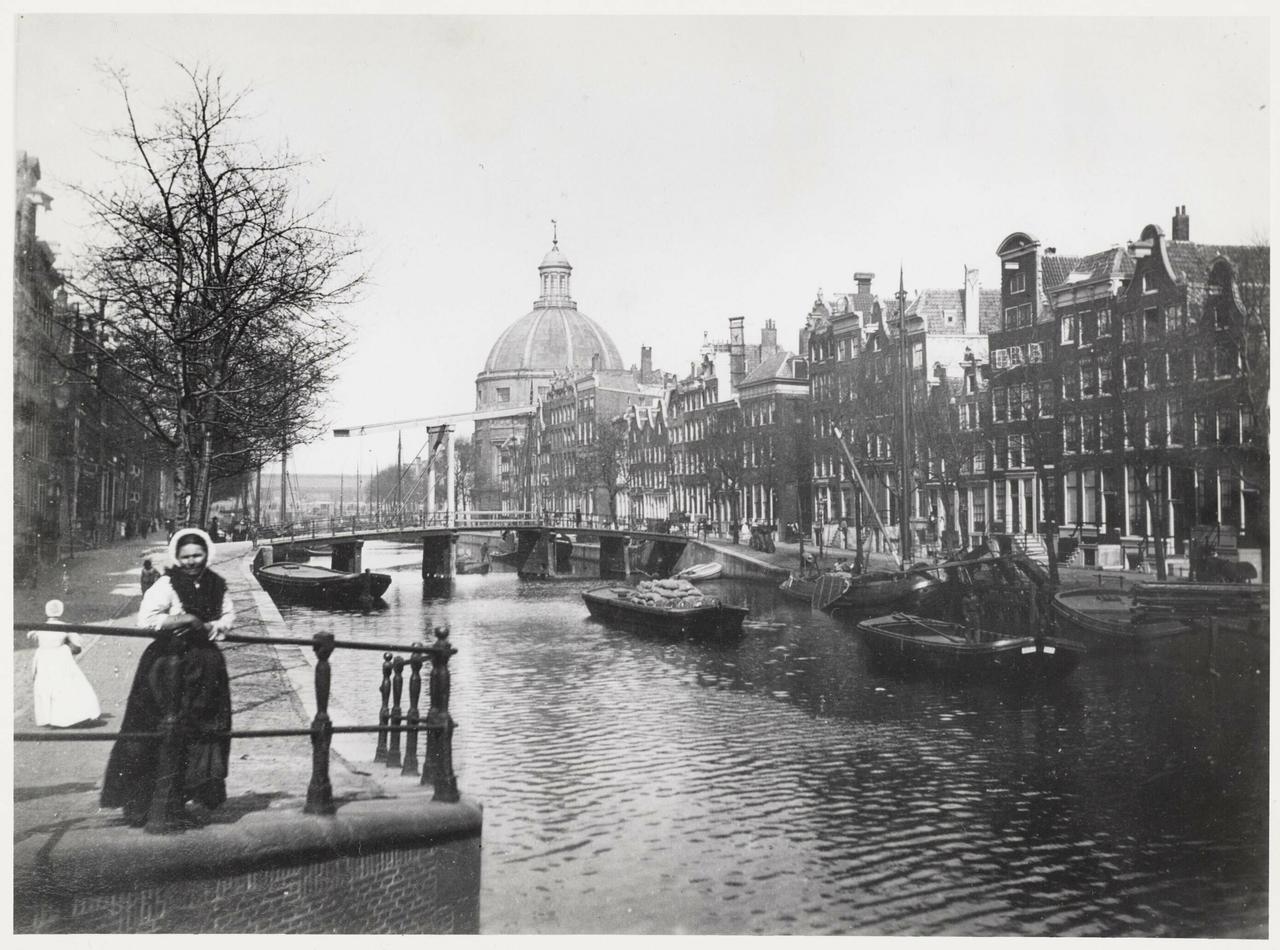
Singel
We are on the Singel, a famous canal in Amsterdam. The history of this canal has played an important role in the city. Although the name ""het Singel"" may sound strange to Dutch-speaking listeners, that is how the canal is commonly known. In this excerpt and others, we refer to it as the Singel. This beautiful waterway stretches from the IJ to Muntplein, where it merges with the Binnen Amstel.
In earlier times, around 1428, the Singel was dug from the IJ to the Boerenwetering. Later, around 1450, the remaining part was built up to the Amstel. Before the city expansion of around 1585, the Singel served as the western boundary of the city.
During the 15th century, the earthen wall of the Singel was replaced by an imposing stone wall and was named ""Stedegracht"". This Stedegracht, which still exists today, includes not only the present Singel, but also the Kloveniersburgwal and Geldersekade. In the 17th century, the Singel was temporarily renamed ""Koningsgracht"" in honour of King Henry IV of France, an important ally of the Republic. A reminder of this period can still be found in the form of the Koningsplein.
Today, the Singel is a popular tourist attraction, enjoyed by visitors and locals alike. Along the canal, numerous historical buildings can be admired, including some of Amsterdam's oldest and most impressive mansions. And let's not forget that the world-famous flower market can also be found here! A colourful spectacle not to be missed.
Enjoy your walk along the Singel and be enchanted by the beauty and stories of this historic canal.
Any feedback for this story?