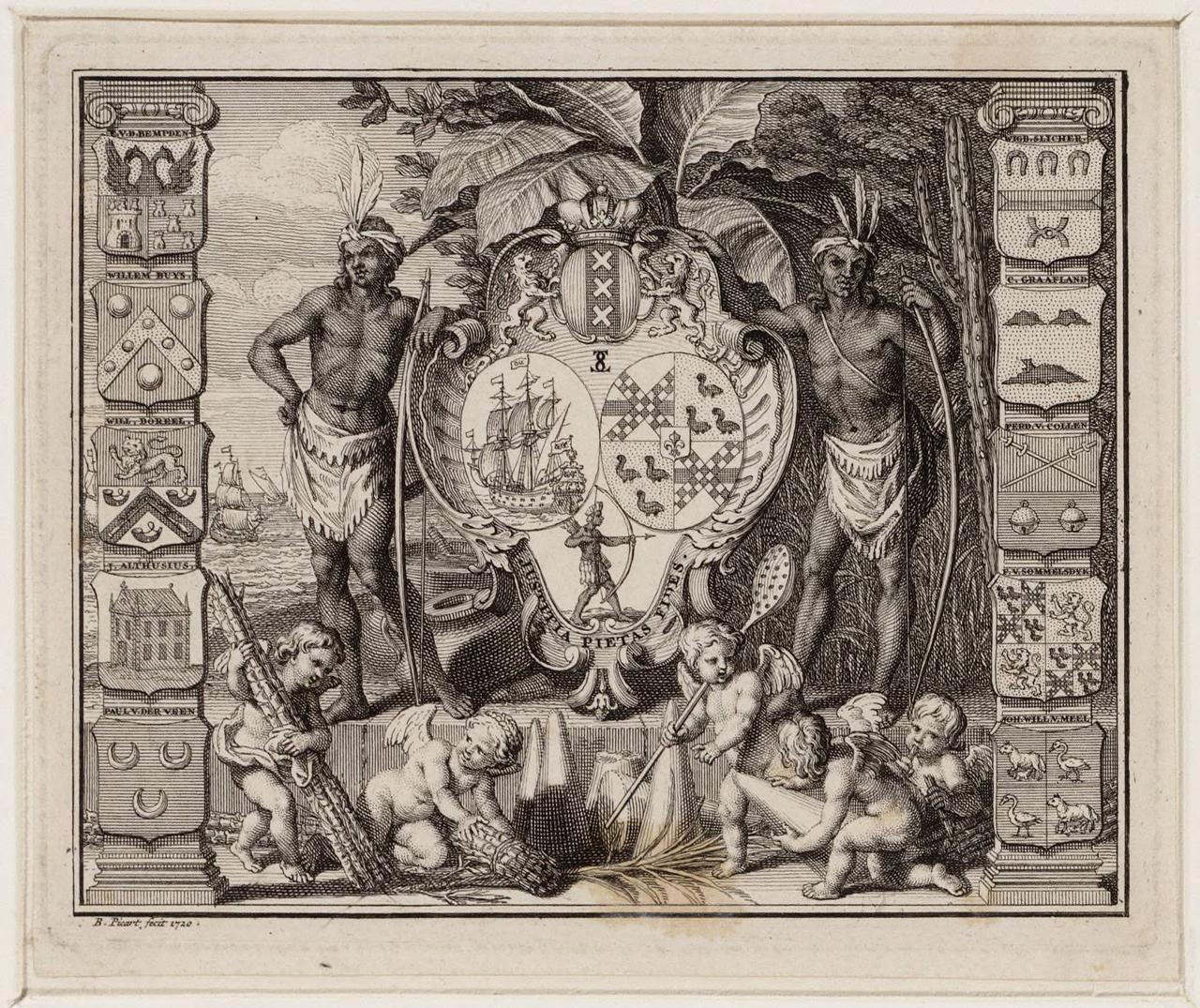
Society of Suriname
In 1683, the colony of Suriname in South America was administered by De Sociëteit van Suriname, a private Dutch company founded by Cornelis van Aerssen and Phillip van Hulten. This initiative, inspired by the ideas of a French politician, saw the West India Company (WIC) and the city of Amsterdam as equal partners. The aim of the Society was profitable management of the colony. Cornelis van Aerssen, in his role as governor, requested an orphanage pastor to send dozens of children to Suriname to work on the sugar cane plantations, as part of a larger system under which the WIC would ship around 2,500 slaves from Africa to Suriname annually in exchange for sugar. The value of a slave was estimated at around 5,000 pounds of sugar.
In addition to this trade, the Society made money by taxing foreign traders who wanted to sell slaves to Suriname, a lucrative venture that encouraged an influx of labour and increased profits. The success of the colony attracted many Amsterdammers to Suriname, seeking fortune or a new life. Some of them were criminals, who were sent to the colony to become 'honourable people', a practice reminiscent of the British deportation of criminals to Australia.
This period of Dutch history is also commemorated in Amsterdam itself. The mayor's official residence at Herengracht 502 harbours a dark past. Until 1690, this was the home and workplace of Paulus Godin, a slave trader, administrator of the WIC and director of the Society of Suriname. A commemorative plaque at the property recalls this black page in Amsterdam's history.
Any feedback for this story?