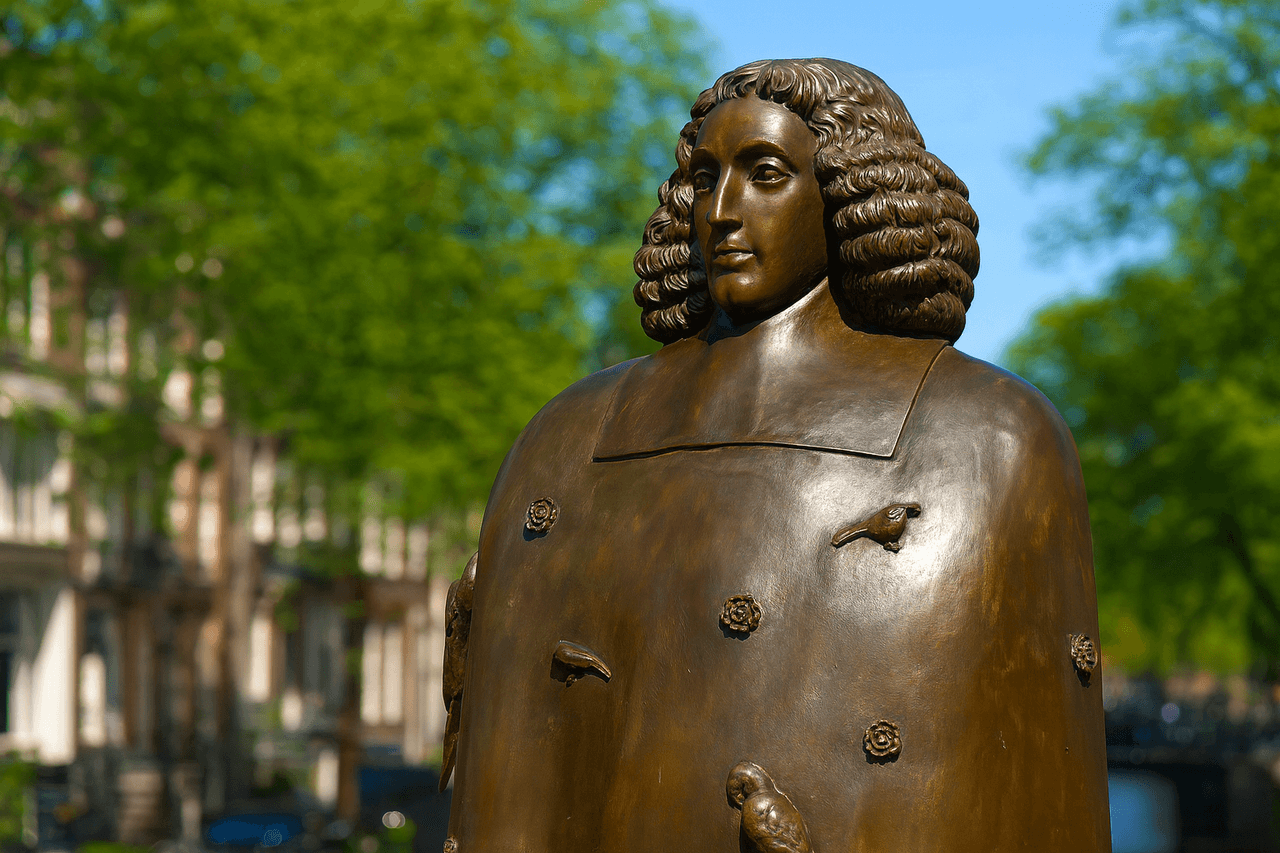
Spinoza Monument
Welcome to this monument, a tribute to the famous Dutch thinker Spinoza. Designed by artist Nicolas Dings, the monument stands here in Amsterdam as a symbol of tolerance. The monument bears one of Spinoza's most famous statements: 'The purpose of the state is freedom.'
Spinoza is remembered in Dutch history for his influence on philosophy and the formation of our culture. He was a strong advocate of freedom of speech and freedom of religion. In his time, this was revolutionary, given the strongly religious society of the Dutch Republic, of which Amsterdam was the capital.
The philosopher spent most of his life here in Amsterdam and was inspired by the city and its people. He was especially known for his ideas on nature and the human spirit. His work had a huge influence on the philosophy, politics and science of his time and his thinking remains relevant to this day.
The thinker was not always loved in Amsterdam. He harboured controversial ideas that went against the established powers. In 1656, he was attacked by an unknown man with a dagger, presumably because of his ideas. This incident forced him to flee to Oudekerk aan de Amstel. He was later exiled from Amsterdam because of his radical views and the charge of heresy.
This monument stands just a stone's throw from the house where Spinoza lived and where he wrote his most important work, the 'Ethics'. Amsterdam honours this philosopher with this monument because he not only played an important role in shaping the Netherlands, but was also a key figure in the development of European philosophy.
Any feedback for this story?