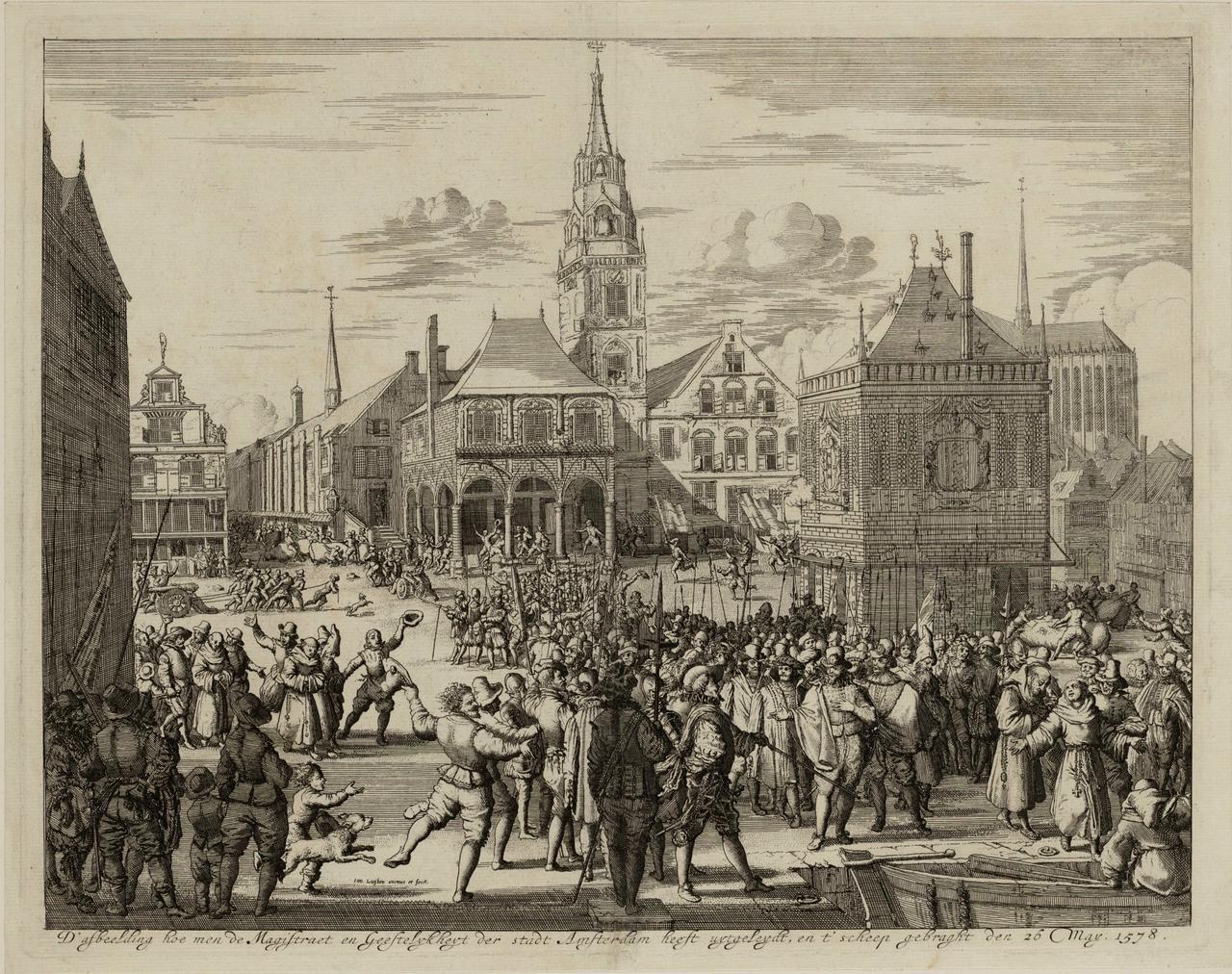
The Alteration of Amsterdam
On 26 May 1578, something remarkable happened in Amsterdam. The Catholic city council was simply replaced by a new one, made up of 30 Calvinists and just 10 Catholics. No battles, no bloodshed, no dramatic standoffs in the street. Just a quiet but radical transfer of power. This event is known as the Alteration of Amsterdam. So what exactly was the Alteration? It was Amsterdam's way of joining the broader Reformation sweeping through Europe, where Protestant ideas were challenging the authority of the Catholic Church. Amsterdam, always with one eye on its wallet, also feared being left out of the lucrative trade networks forming around Protestant cities.
Better to switch sides peacefully than watch the profits sail away to Rotterdam. The consequences were far-reaching. Churches were handed over to Protestant congregations, monasteries were converted into orphanages and prisons, and practicing Catholicism openly became outright forbidden. Catholics had to get creative, setting up hidden churches in private homes, schools and backrooms of shops. One of the most famous of these secret churches is right here at the Begijnhof, and we'll be sending you there shortly. Remarkably, Catholics had to worship in secret for over two centuries, until Napoleon's arrival finally brought religious freedom to the Netherlands.
Any feedback for this story?