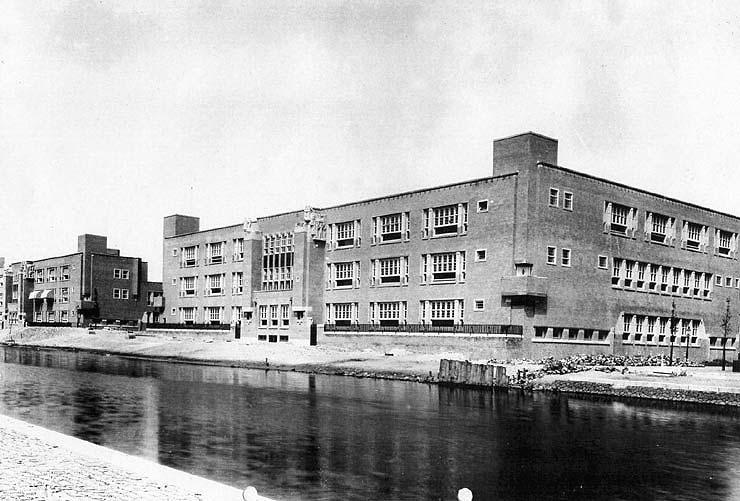
The Amsterdamse School
The Amsterdam School is an architectural movement that emerged between 1910 and 1930, with Amsterdam as its birthplace. The style is characterised by the expressive use of brick, elegant brickwork, undulating forms, wooden details and stained glass windows. Designers were inspired by, among other things, the English Arts and Crafts movement, Art Nouveau, the expressionism of architects such as Bruno Taut, and Eastern cultures – especially those of the former Dutch East Indies.
What made the architects of the Amsterdam School special was their social commitment. They believed that beauty was not just for the elite, but for everyone – including workers. Art and aesthetics should enrich the daily lives of all people.
The style was not limited to buildings: letterboxes, furniture, fabrics, jewellery, stamps and even fonts were designed in the spirit of the Amsterdam School. During this walk, you will encounter many examples of this.
The most famous architects are Michel de Klerk, Piet Kramer and Joan van der Meij. However, more than a hundred architects were needed to design Plan Zuid and other expansion districts of Amsterdam.
About the walk
This route takes you to one of the most beautiful and famous examples of the Amsterdam School: De Dageraad. Along the way, you will pass other impressive buildings and objects in the same style. You will notice that each architect gave their own interpretation to the Amsterdam School, but that the most important characteristics recur throughout.
The walk not only tells you about architecture, but also shows you the impact that the Second World War had on this neighbourhood.
Starting point
The walk starts on the Berlage Bridge, near Amstel Station. You can easily get here by tram 12 or by bus 62. Get off at the Vrijheidslaan / Amsteldijk stop. Cross over to the right side of Vrijheidslaan. Walk until you are in the middle of the bridge at the bridge house – that is where your journey of discovery begins.
Any feedback for this story?