The Berlagebrug
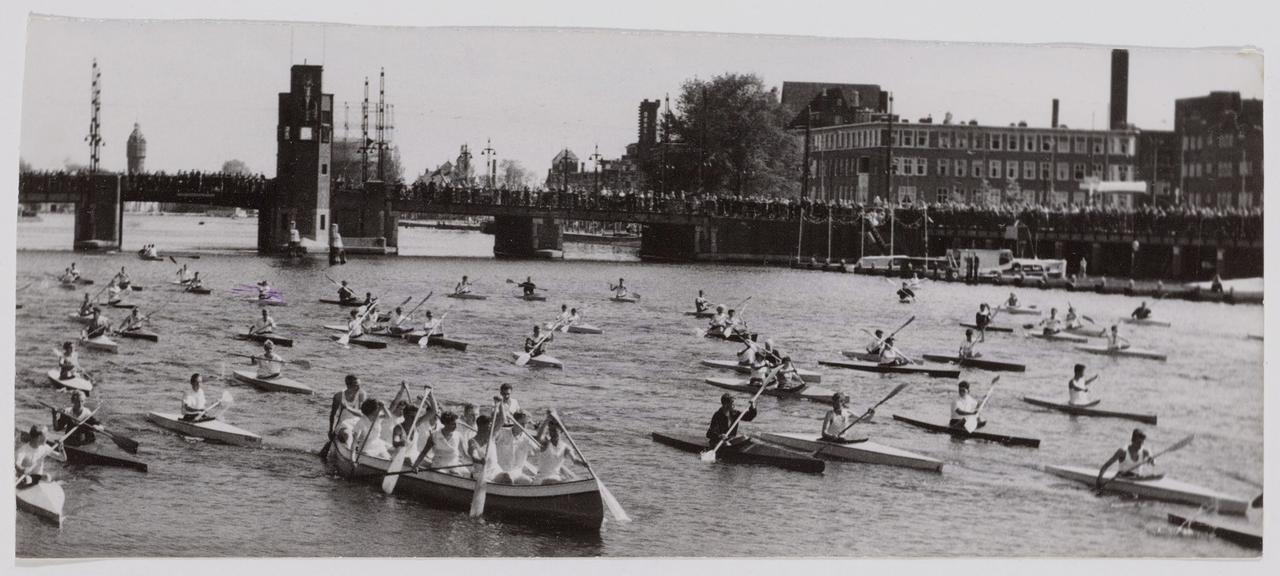
The bridge you are standing on was designed by Hendrik Petrus Berlage and completed in 1932. It literally and figuratively marks the entrance to a new city and a new way of building.
Take a good look around you: at the clean lines of the railing, the sober but elegant lampposts, and of course the bridge house. Note the shapes, the colours, the use of materials. Stylish and well thought-out, but sleek and understated – this is definitely not an example of the Amsterdam School style. Berlage belonged to the older generation of architects. Although he was a brilliant designer, he had little appreciation for the Amsterdam School style: too frivolous, too playful, he thought.
Now look to the left: between the modern buildings, you can just catch a glimpse of the old water tower from 1911. And if you look to the right, the historic centre of Amsterdam unfolds, with its busy, narrow streets and alleys.
Berlage was more than an architect – he was also an urban planner. Commissioned by the municipality of Amsterdam, he designed the expansion plan for Amsterdam-Zuid, known as Plan Zuid for short. His vision differed greatly from that of the old city. The new neighbourhoods had to be light, spacious and green – with the allure of cities such as Paris and Barcelona. You can immediately see this pursuit of grandeur and openness when you look ahead, down Vrijheidslaan.
The wide avenue spreads out calmly before you, designed to guide city traffic in an orderly manner. At the beginning of the avenue, you see two tall, imposing buildings. They stand like gatekeepers on either side of the city and give you a feeling of protection.
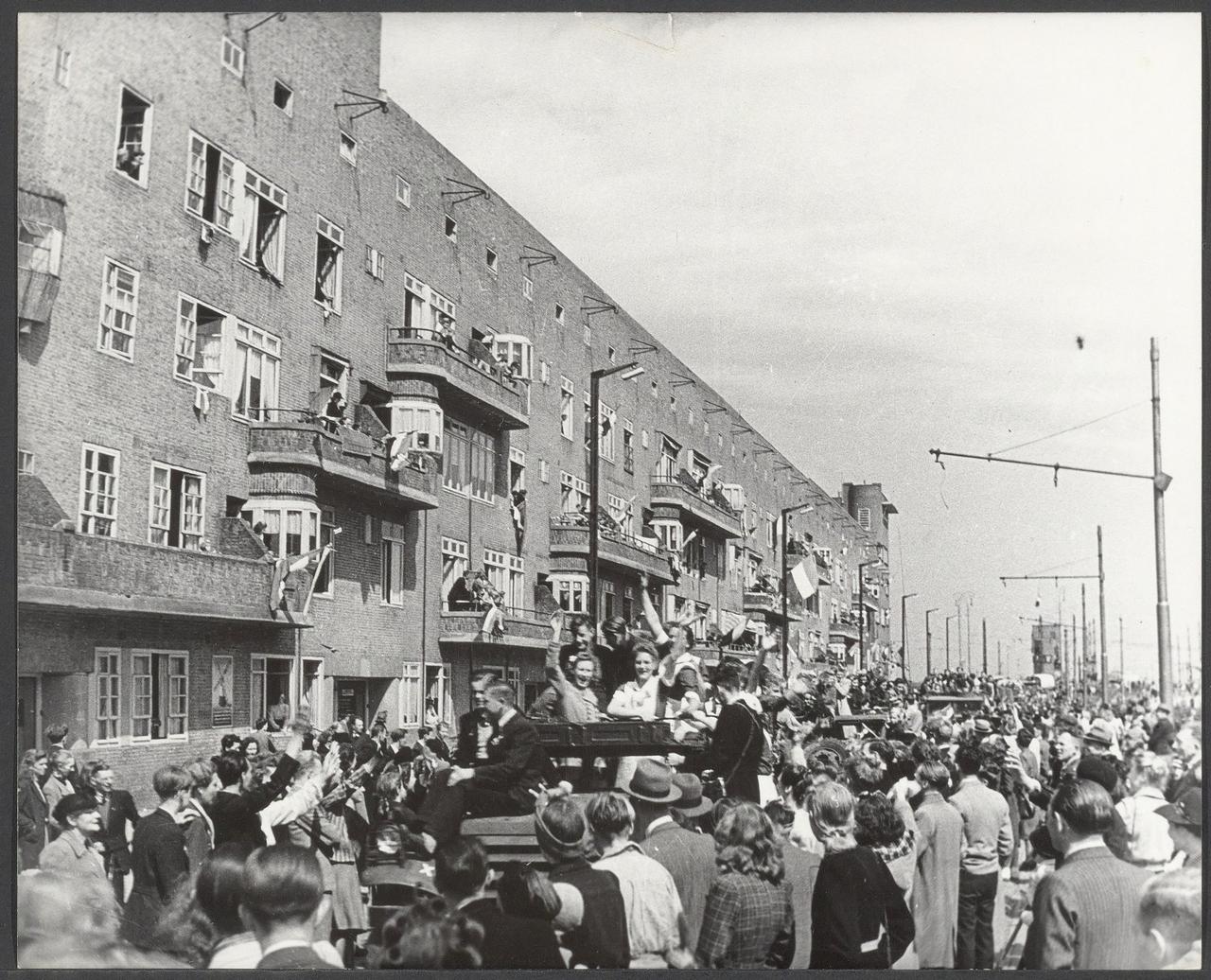
That feeling of protection was no luxury during the Second World War. On 15 May 1940, German troops marched into Amsterdam across this bridge. Almost five years later, on 8 May 1945, the Canadians crossed the same bridge to liberate the city. Their route to Dam Square was lined with a frenzied crowd of more than half a million Amsterdammers.
For years, this liberation was commemorated with a parade along exactly the same route. The same Canadians, in the same vehicles, were cheered by the population every year. That tradition has now come to an end – the ages of both the liberators and the original bystanders no longer allowed it.
Any feedback for this story?