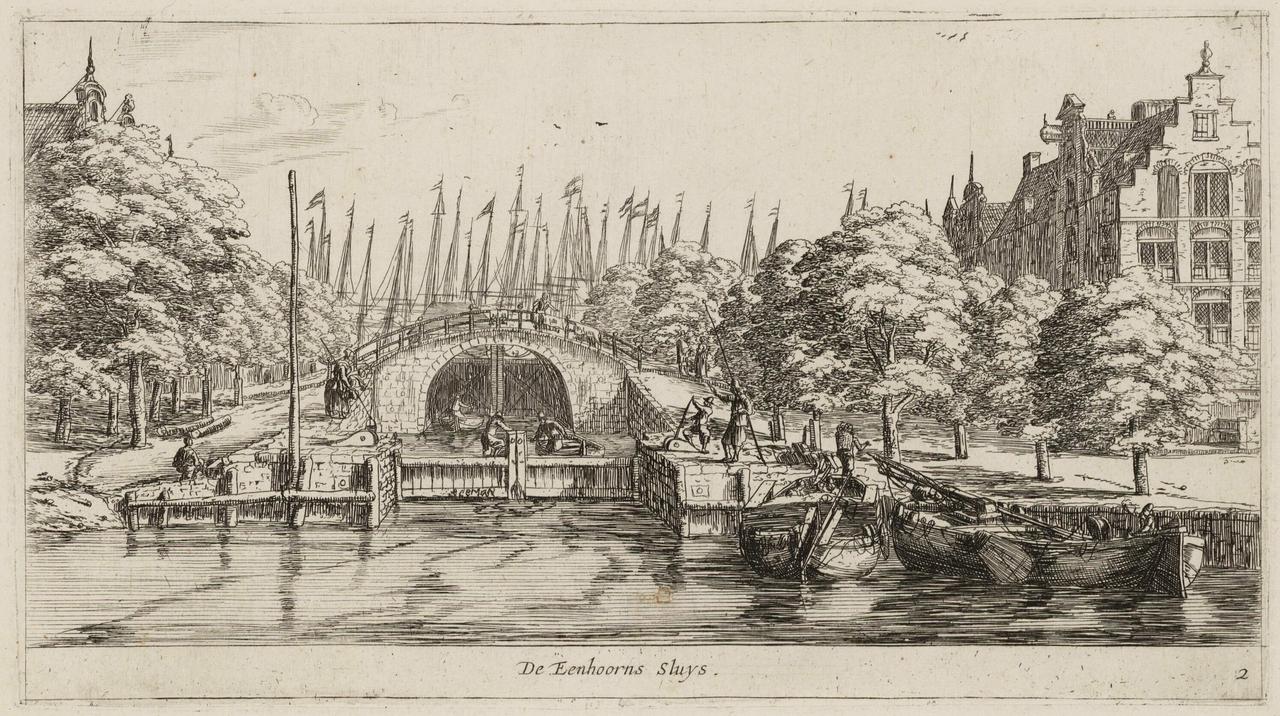
The Eenhoornsluis
At the beginning of Prinsengracht is the Eenhoornsluis lock, one of 16 locks built around Amsterdam in the 17th century. The Eenhoornsluis, named after the nearby old brewery of the same name. These locks served several purposes: regulating the water level in the canals and protecting the city from the forces of the Zuiderzee. As an important sea lock, the Eenhoornsluis was a crucial part of Amsterdam as a thriving port city.
The Eenhoornsluis is distinguished by the imposing high flood doors on the outside of the lock, which are even higher than the doors on the city side. These doors provided protection against violent storms and spring tides from the northwest, which regularly caused floods. The last major flood occurred in 1916, severely affecting Amsterdam and other surrounding areas.
To prevent such devastating floods in the future, it was decided to curb the Zuiderzee for good. Construction of the impressive Afsluitdijk began in 1927 and was completed in 1932. This monumental dyke separated the Zuiderzee from the North Sea and ended the threat of floods. However, the completion of the Afsluitdijk also meant the end of the Unicorn Lock as a sea lock.
Today, the Eenhoornsluis has been given a new role and acts as a picturesque passage for small vessels. A vibrant and historic symbol of Amsterdam's maritime history, it offers a fascinating insight into the past. The story of the Eenhoornsluis and its transformation reflects the constant changes and developments of the city of Amsterdam.
Any feedback for this story?