The National Monument
The National Monument on Dam Square in Amsterdam is an impressive symbol of remembrance, reminding us never to forget. This monument is central to the annual National Remembrance of the Dead on 4 May, where we remember all war victims, whether they were civilians or military, within the Kingdom of the Netherlands or anywhere else in the world. We honour those who lost their lives in World War II, the colonial war in Indonesia, and all other war situations and peace operations thereafter.
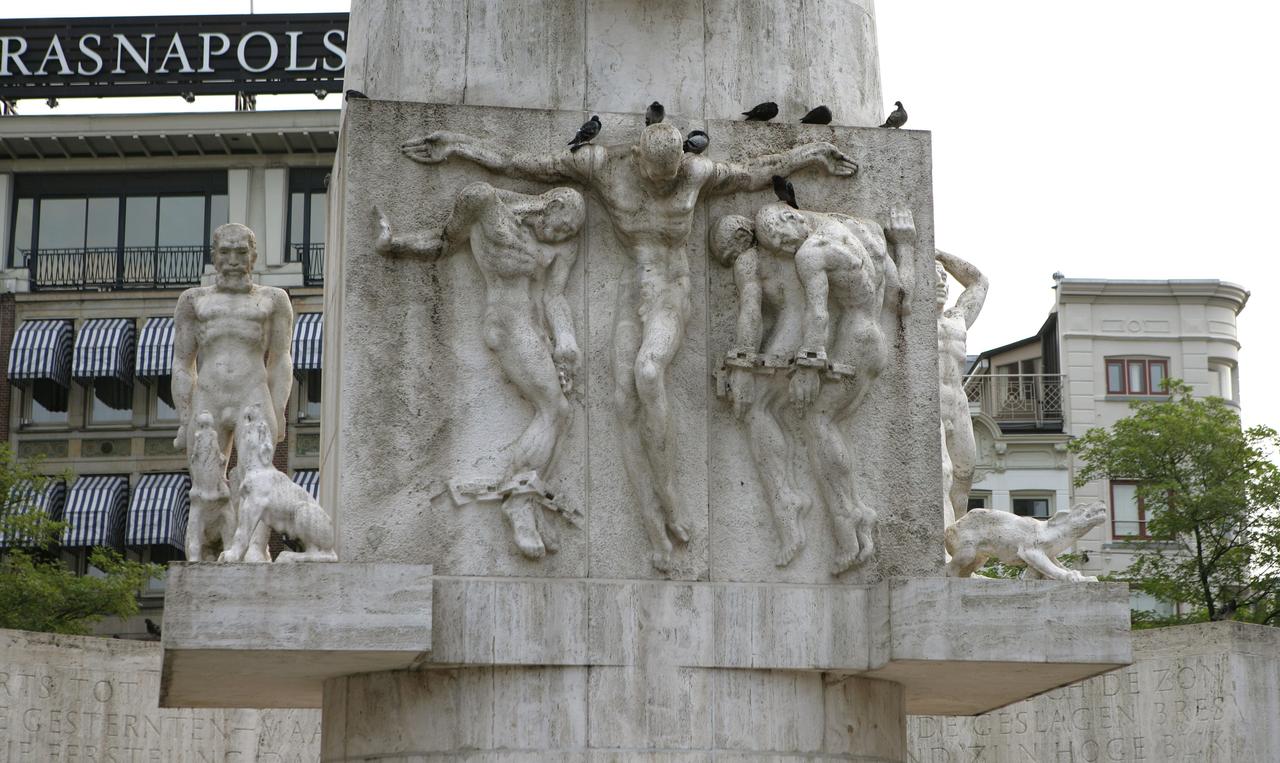
Designed by renowned architect J.J.P. Oud, this memorial is an imposing structure with deep significance. It rises to a height of 22 metres and is made of beautiful Tuscan stone, also known as Travertine. At the front of the column is a penetrating relief of three handcuffed male figures, depicting the sufferings of war. Here we also find a reference to the crucifixion of Jesus Christ, a powerful symbol of sacrifice and suffering. On both sides of this relief are images of men with howling dogs at their feet. These symbolise the resistance of intellectuals as well as workers, while the dogs embody feelings of grief and loyalty.
Above these three men is a grand relief of a female figure, lovingly holding a child on her arm. She wears a wreath around her head and is surrounded by doves, symbolising victory, peace and new life. On the back of the column, we see doves flying upwards, as a sign of liberation. The National Monument is not only an impressive structure, but also a profound memorial to the victims of World War II and the many other conflicts that have marked our country and the world.
The monument bears the text, "Let here where the heart of the fatherland is, the monument that citizens carry inside their hearts, look to the stars of God." These words, freely translated from Latin, remind us of the deep meaning of this memorial. It expresses the importance of peace and freedom for all people and reminds us never to forget.
Any feedback for this story?