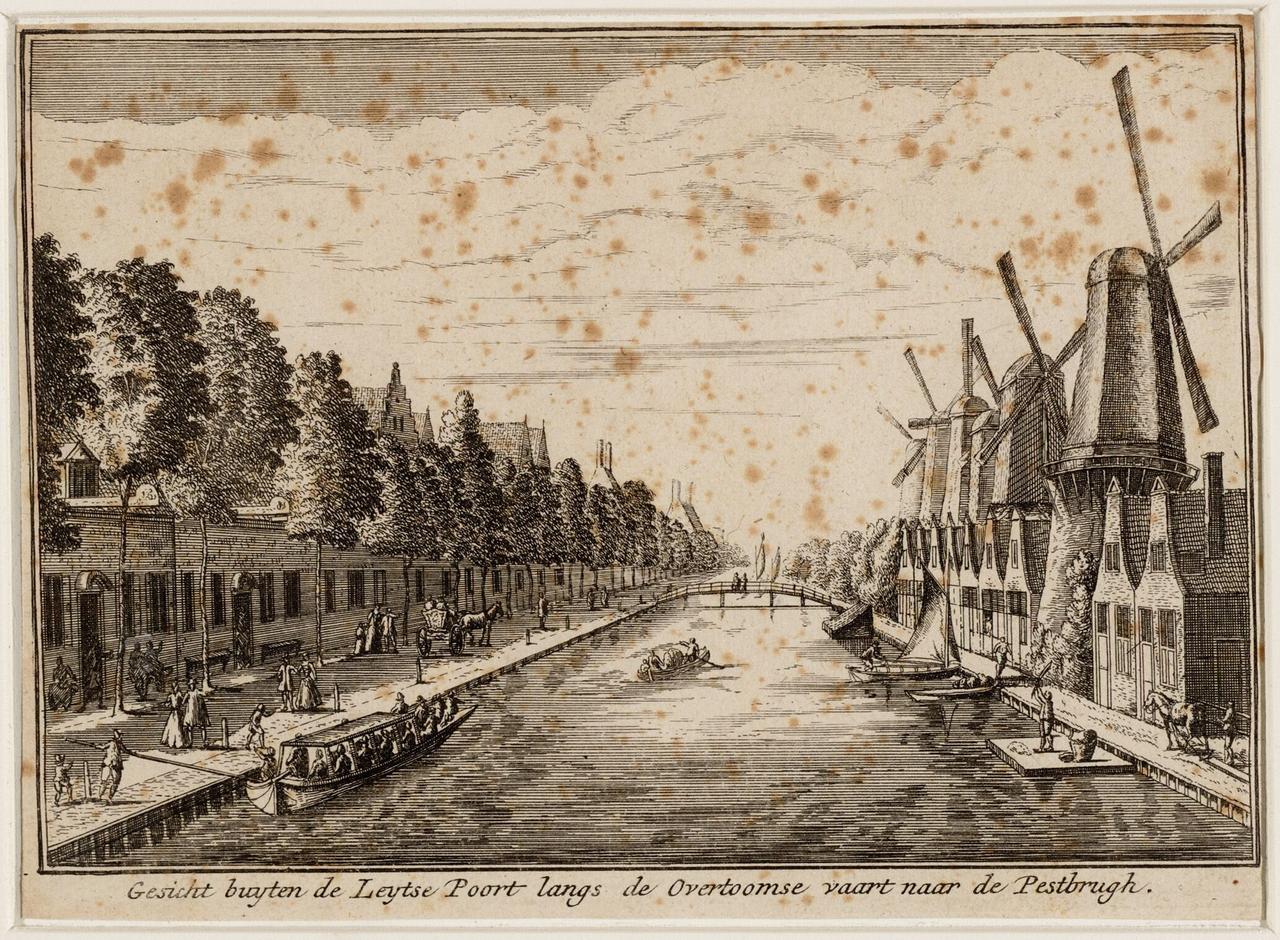
The Overtoom
For centuries, the Overtoom has played a vital role as the main road leading to the heart of Amsterdam. This historic boulevard, with a history dating back to around 1300, connects the present with the past and remains the oldest and most versatile street in Amsterdam. The origin of the name 'Overtoom' carries historical significance, referring to an ingenious mechanism that lifted ships across a bridge between different waterways. This system, known as the 'overtoom', gave its name to the adjacent water, the Overtoomsevaart.
On the dam in the Schinkel, this overtoom or overhaul was placed: a wooden ramp over which ships could be pulled from the Heiligewegsevaart / Kostverlorenvaart to the Schinkel (and vice versa). However, large ships were not allowed here. In the 16th century, farms and lush vegetable gardens characterised this rural area. As Amsterdam expanded to the west, the Overtoom grew into a vital connecting road between the bustling city centre and the emerging suburbs to the west. The year 1903 marked a turning point in the history of this street, when the Overtoomsevaart was filled in to make way for the current shape of the Overtoom.
Today, the Overtoom is known for its diverse mix of residents and activity. Along the south side, the street borders the picturesque Vondelpark, a vast public park that attracts locals and visitors alike. On the north side are a variety of shops, eateries and homes. Not forgetting the striking fact that Villa Betty, Amsterdam's largest and most expensive house, proudly stands at number 241, adding a touch of grandeur to the Overtoom with the Vondelpark as its backyard.
Any feedback for this story?