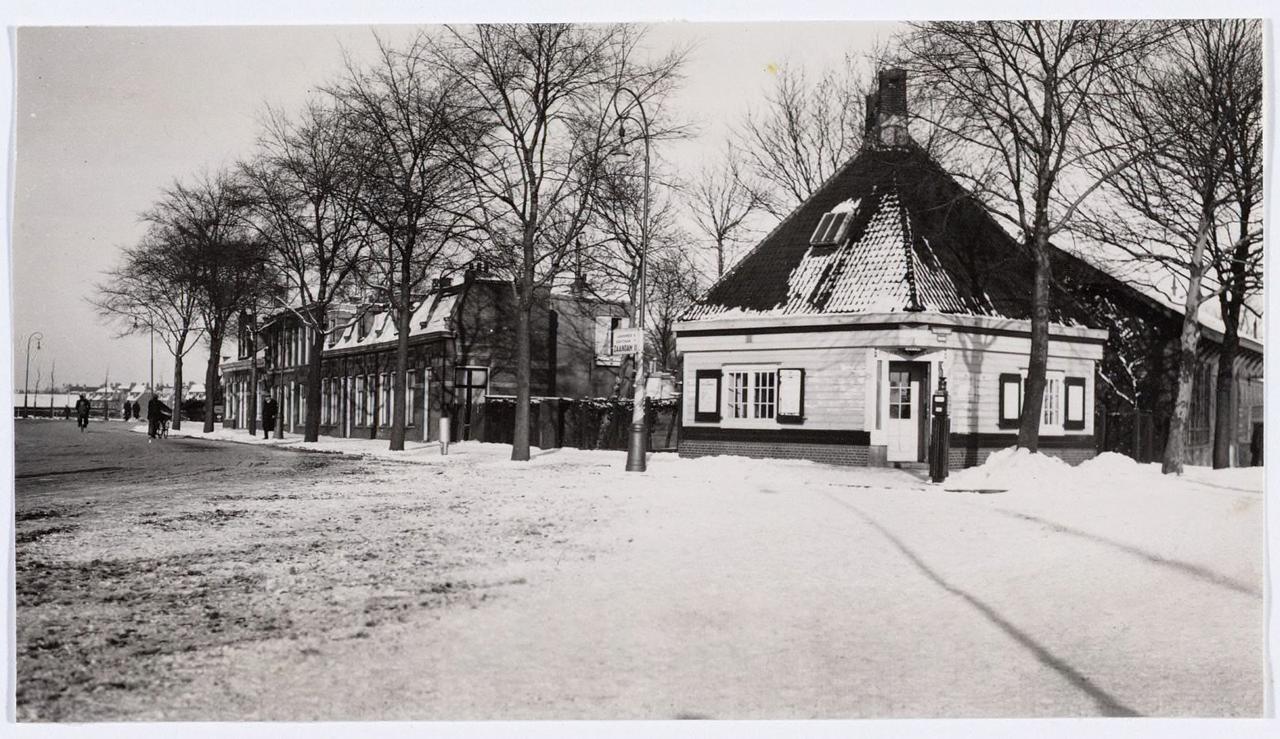
The Police Station
Walking through Buiksloot today, one sees a quiet neighborhood on the edge of Amsterdam North. But once this was an isolated village on the other side of the IJ, which the city struggled to get a grip on. And so in 1866, Amsterdam built something remarkable: its own police station - right in the middle of the village, in the form of a modest white house on Buiksloterdijk. The reason? Buiksloot lay just outside the city, but had not yet been formally annexed.
Amsterdam had little authority there, but watched with sorrow as the other side of the IJ developed - and sometimes derailed. In the eyes of the city government, Buiksloot was a sanctuary for uncontrollable cafes, gambling joints and wanton sailors. It was a place where you could "do anything" without a cop around.
The Buiksloot police post therefore became the symbol of urban influence. Not just a guardhouse, but a forward post of order and civilization - according to Amsterdam, that is. There was no running water, no sewer, but there was an agent of the city who oversaw village life. He dealt with fights, noise pollution, wanton youths and sometimes even measuring floods during high water. Yet the little white house never really became a solid establishment.
The police post was small, isolated, and for years symbolized the distance between town and village, between authority and community. It was not until 1921 that Buiksloot officially became part of Amsterdam, and the police post lost its special status.
Any feedback for this story?