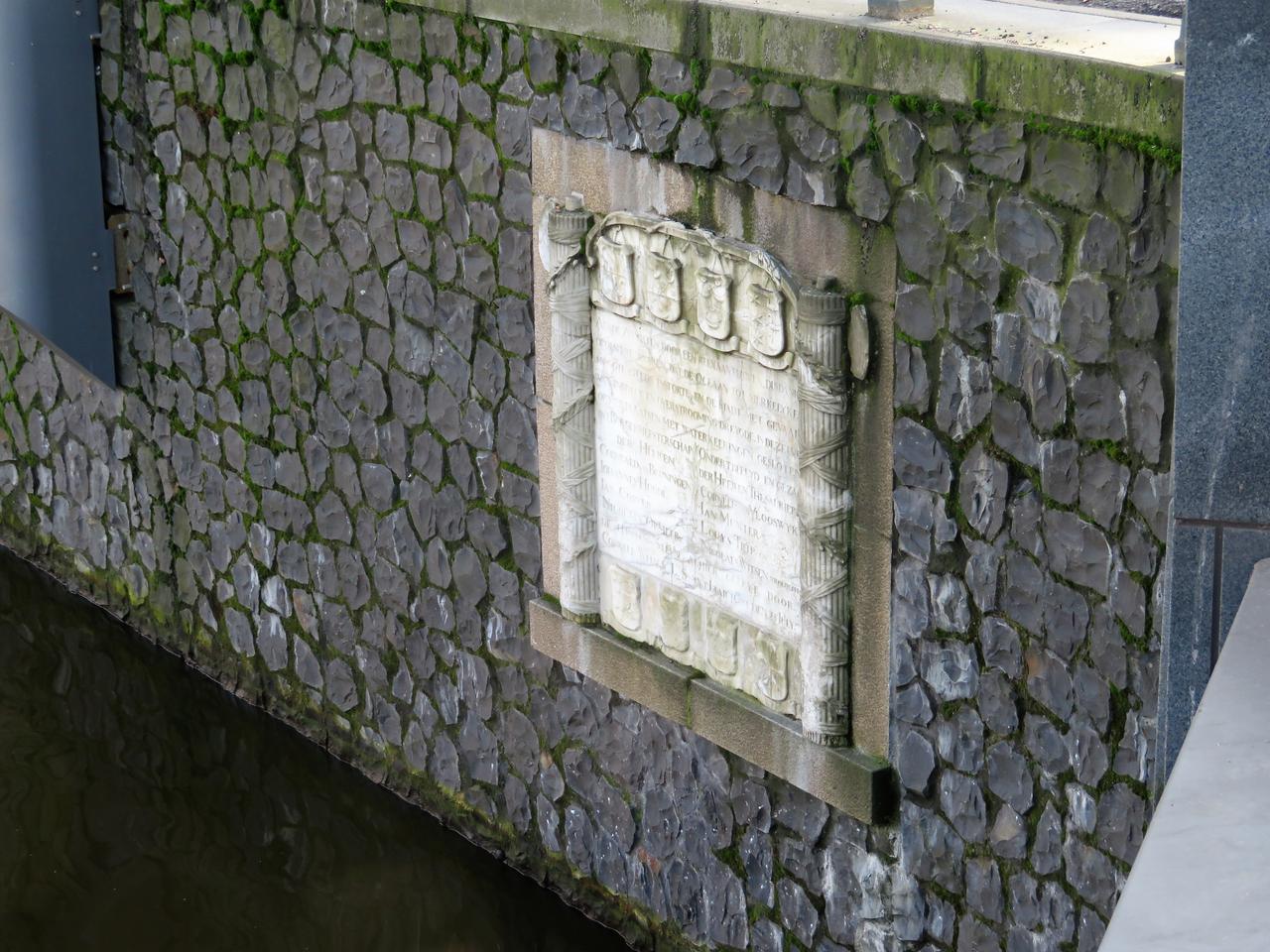
The Stone from Hudde
Behind the imposing lock gate, you will discover a special green-out stone, which was recognised as a municipal monument in 2005. It is a tangible piece of history, placed in 1683 by none other than mayor Joannes Hudde. This clever man devised an ingenious system to measure and control the water level in Amsterdam. The stone itself has a horizontal groove indicating the height of the sea dykes along the IJ.
Did you know that the average high water level of the Zuiderzee at those dykes served as the reference point for the Amsterdam Level? This level was nine feet and five inches (2.676 m) below the datum line. Why? To protect the city from flooding as well as to improve the drainage of polluted canal water. Hudde was a visionary and designed a sophisticated system of locks, watermills and gauge stones. The system aimed to keep feet dry, improve the water quality of the canals and regulate the discharge of polluted canal water.
Of all the nine gauge stones that were bricked into lock walls, only the Eenhoornsluis lock has stood the test of time. Together with the lock, this gauge stone was added to the list of municipal monuments in 2005. The Amsterdam Level, also known as N.A.P. (Normal Amsterdam Level), grew to become an international standard for water and land height measurements, not only in the Netherlands, but also in many other European countries.
Mayor Joannes Hudde was undoubtedly a pioneer in the field of hydraulic engineering. He was responsible for the development of the Nieuwe Vaart canal, an alternative route to drain canal water to the Zuiderzee. Even the famous scientist Christiaan Huygens once accompanied Hudde on a trip to the upper reaches of the IJssel and the Rhine. Together, they investigated whether deepening these rivers could contribute to water control in Amsterdam.
Any feedback for this story?