The Story of Rembrandt van Rijn
You will listen to the fascinating story of the life of legendary artist Rembrandt Harmenszoon van Rijn.
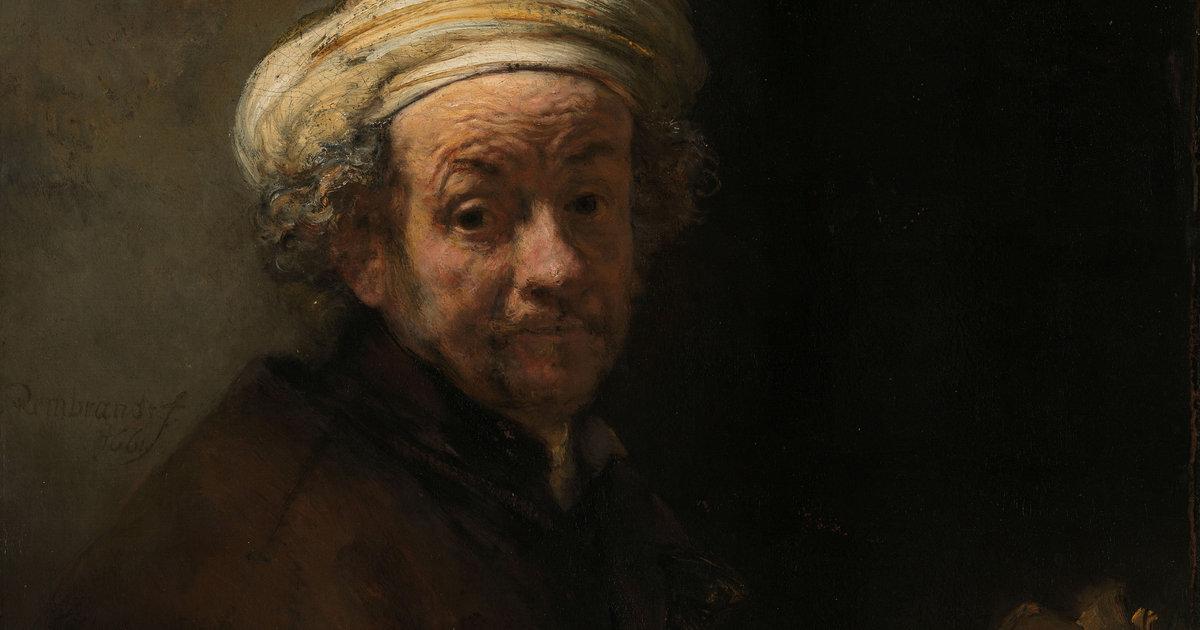
Born on 15 July 1606 in Leiden, Rembrandt became one of the most admired artists of all time. His artworks include not only more than 300 paintings, but also a plethora of drawings and etchings. His unique painting style, belonging to the Baroque period, was distinguished by the masterful contrasts between light and dark, which gave his works a dramatic touch and brought his characters to life.
Baroque art originated in Italy in the 17th century and soon spread throughout Europe. Baroque artists aimed to evoke deep emotions in the viewer by incorporating drama and movement in their works. They achieved this by using bold contrasts between light and shadow, combined with detailed and realistic renderings of people and objects. Rembrandt was a true master at manipulating light and shadow, giving his paintings an intensely dramatic effect and making his characters seem to come alive.
Etching, a method commonly used by Rembrandt, is an art form in which the artist scratches a drawing onto a wax-covered plate, usually made of copper. The plate is then placed in an acid bath, with the acid 'eating' the lines created by the artist in the plate. Ink is then rubbed on the plate, which remains in the grooves. By then pressing the plate onto paper under pressure, the ink is transferred and an impression of the drawing is created on the plate. Rembrandt was a true master of this technique and is rightly considered one of the greatest etchers of all time. His etchings are renowned for their incredible detail, dramatic contrasts and vividness.
As a young artist, Rembrandt received painting lessons from Jacob van Swanenburgh and Pieter Lastman. He soon began teaching his own talents to other promising painters and etchers. In the 1730s, he met Hendrick van Uylenburgh, which led to his increasing stay in Amsterdam. When Rembrandt married a niece of Hendrick's, they moved into a joint residence with the art dealer.
Rembrandt's most successful period was between 1631 and 1642, when he settled permanently in Amsterdam. In 1639, he was commissioned to paint his magnum opus, "The Night Watch", which was finally completed in 1642. In the same year, his beloved wife Saskia died. With the money he earned from his works of art and a mortgage, Rembrandt bought the beautiful Rembrandt House on Sint Anthoniebreestraat, which now houses the museum.
Rembrandt had four children, but tragically three of them died in infancy. His only son, Titus, was born in 1641. In 1649, his relationship with Geertje Dircks, his son's former nanny, came to an end. Geertje was even imprisoned in a penitentiary. Rembrandt was plagued by financial problems and could no longer pay his mortgage, forcing him to sell his beloved house. Despite these difficult times, he produced some of his most famous works, including "The Jewish Bride" and "Self-Portrait as Apostle Paulus".
After the death of his son Titus in 1668, Rembrandt led a lonely existence. On 4 October 1669, he died under mysterious circumstances. He found his final resting place in the Westerkerk. Although his life was not always easy, Rembrandt lives on in his masterpieces, which are still admired by art lovers around the world. His artistic legacy still captures the imagination and remains a source of inspiration for future generations.
Any feedback for this story?