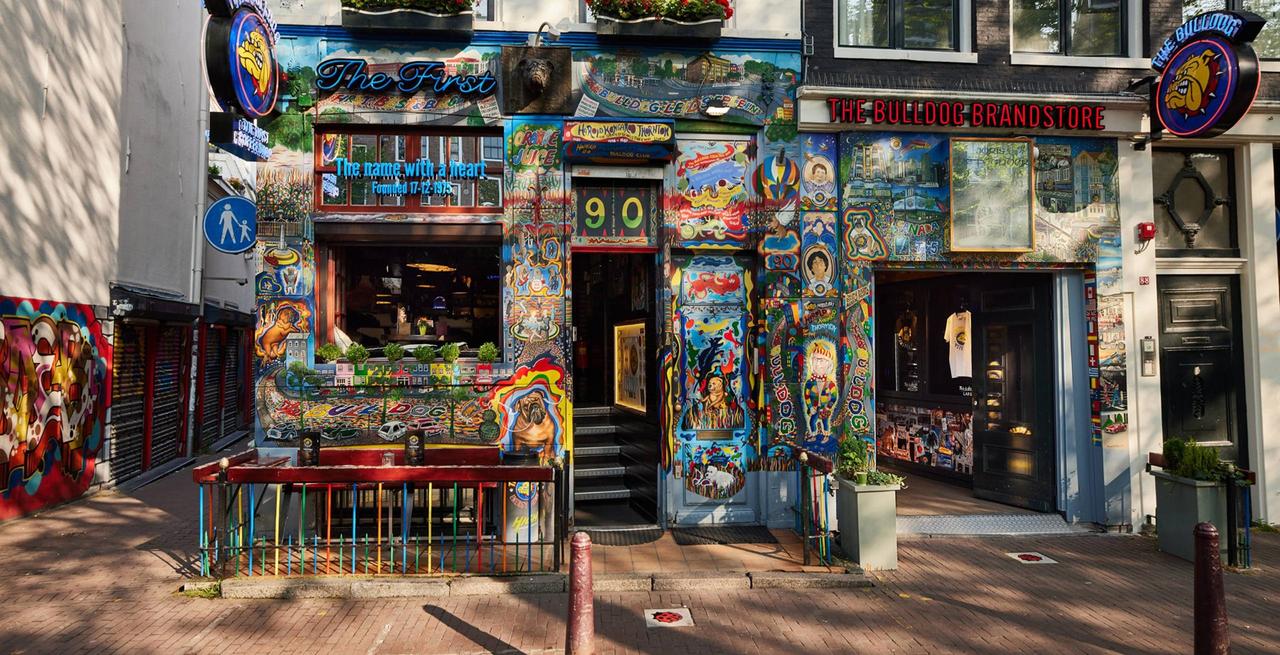
Tolerance Policy and Cannabis Sales
The policy of tolerance surrounding soft drugs in the Netherlands is a topic that has received a lot of attention for quite some time, both nationally and internationally. We are going to talk about the sale and use of soft drugs, such as hash and weed. But what exactly does this policy entail?
Looking back to the past, until 1953, hashish and marijuana were relatively unknown in the Netherlands and there was no need to ban drugs. There were occasional reports of North African and Arab dealers being found smoking a joint, but the drug did not yet have a wide distribution in society.
After World War II, policies towards hashish and marijuana changed. Rotterdam and Amsterdam in particular were cities where drug use steadily increased. In 1953, possession and production of these hallucinogenic plants was criminalised. However, this had little effect, and from the 1960s drug use only increased. In 1972, the first coffee shop was even opened in Amsterdam.
The tolerance policy means that the sale and use of small quantities of soft drugs are not legal, but are tolerated under certain conditions. It is therefore a kind of tolerance construction. Coffee shops can sell soft drugs to their customers based on this construction, provided they follow specific rules. For instance, they are not allowed to stock more than five hundred grams of hashish or weed and sales to minors are strictly prohibited. The tolerance policy applies only to soft drugs; hard drugs are absolutely prohibited in the Netherlands.
Significant quantities of soft drugs are sold in the Netherlands every year. The exact number is difficult to determine because a large part of the sales take place through the so-called 'back door'. This means that coffee shops obtain their supply of soft drugs illegally. It is estimated that between 200 and 500 tonnes of soft drugs are sold annually.
The legalisation of the sale of hash and weed took place in 1976. This step was taken because of the increasing crime associated with the illegal trade of soft drugs. By tolerating the sale of soft drugs, it was hoped to reduce crime and gain more control over the sale and quality of soft drugs.
The tolerance policy has since evoked both positive and negative reactions. Supporters of the policy emphasise that it contributes to public health and that there is less crime surrounding the trade in soft drugs. Opponents, on the other hand, believe that the tolerance policy actually leads to more drug use among young people and that the quality of soft drugs cannot always be guaranteed.
Moreover, the full legalisation of soft drugs is regularly debated. This would allow more control over the quality and side effects of the drugs, as well as taxation, something that does not happen at present.
Any feedback for this story?