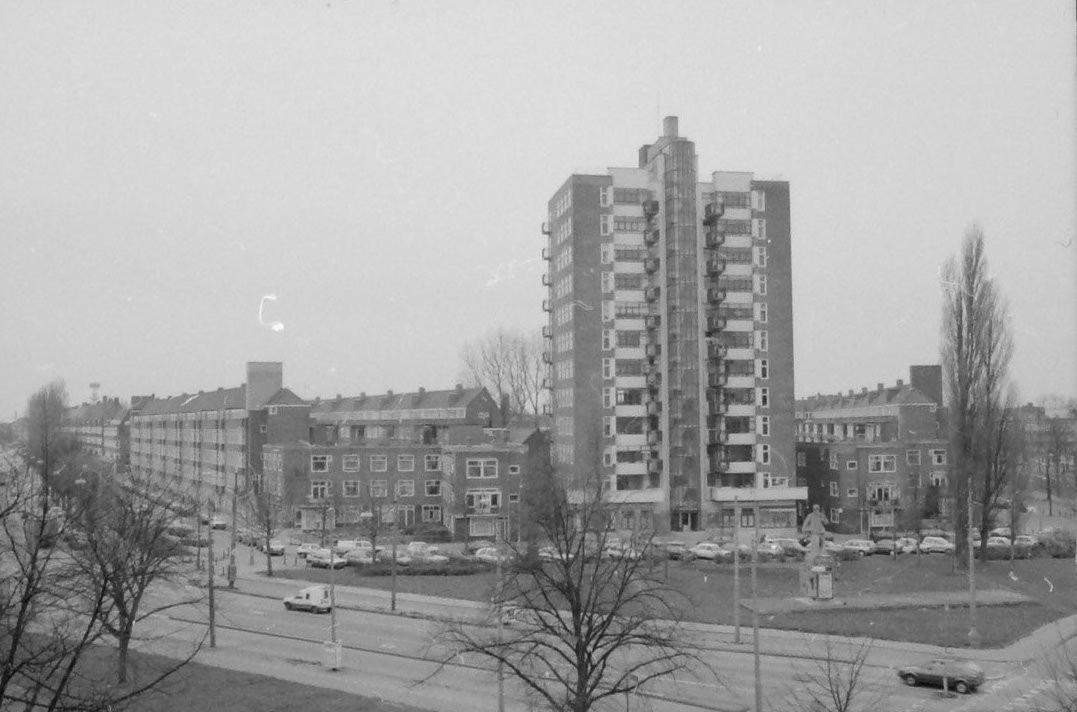
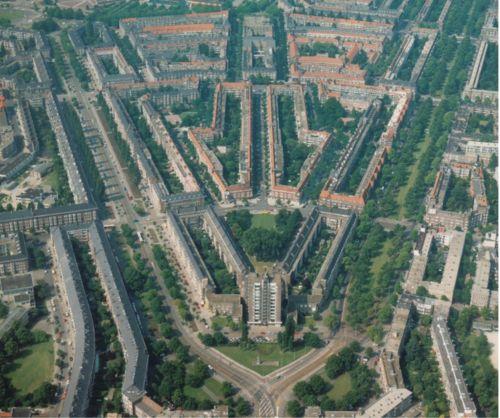
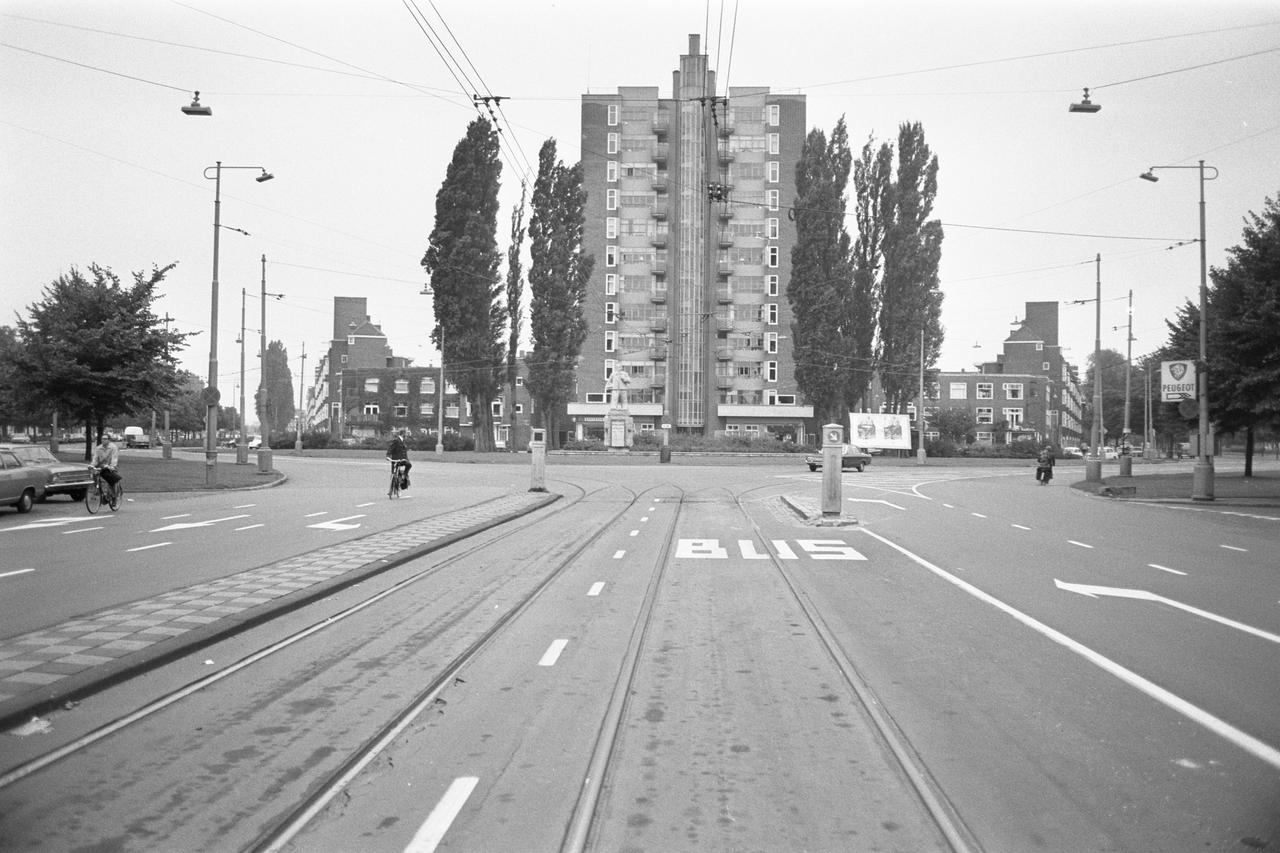
Victorieplein
You are now on Victorieplein. As you may have noticed, the names in this part of the city are quite distinctive. Streets such as Rooseveltlaan, Churchilllaan and Vrijheidslaan sound different from the rest of the Rivierenbuurt, where almost all streets are named after rivers.
Until 1945, that was also the case here. The current Vrijheidslaan was then called Amstellaan, Churchilllaan was Noorder Amstellaan and Rooseveltlaan was Zuider Amstellaan. This square was named Daniël Willinkplein, after a 17th-century poet and writer. However, after the liberation, it was decided to rename the main access roads and this square in honour of the Allied leaders who played a role in ending the Second World War.
Amstellaan was initially renamed Stalinlaan, after the Soviet leader Joseph Stalin. But in 1956, after the brutal suppression of the Hungarian uprising by the Soviet army, this name was changed again in protest. Since then, the street has been called Vrijheidslaan (Freedom Avenue). The square was also given a new name: Victorieplein (Victory Square) – a name with more meaning for the neighbourhood than that of a distant poet.
Yet this place is not only imbued with an atmosphere of victory. Between July 1942 and the end of 1943, an estimated 10,000 Jewish residents from the Rivierenbuurt neighbourhood were gathered here. From this square, they were taken by tram line 8 of the Municipal Transport Company to Muiderpoort or Amstel station, from where they were transported on to Westerbork camp. This was followed by transports to extermination camps such as Auschwitz and Sobibor. Most of these people never returned.
What makes this history particularly poignant is what happened after their departure. A large part of the neighbourhood looked the other way, and some residents took over the homes and possessions of their disappeared neighbours. When the few survivors returned after the war, they were often not welcomed. This painful reality later earned the Rivierenbuurt the nickname “the guilty neighbourhood”.
Any feedback for this story?