Waterlooplein - Vlooienburg
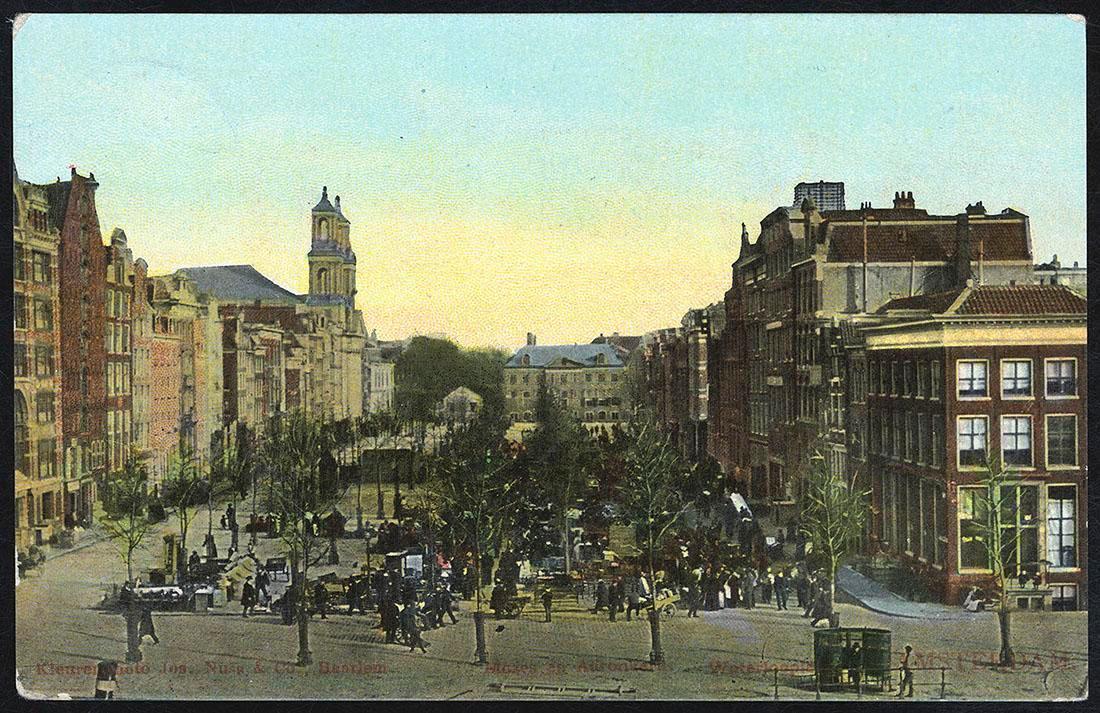
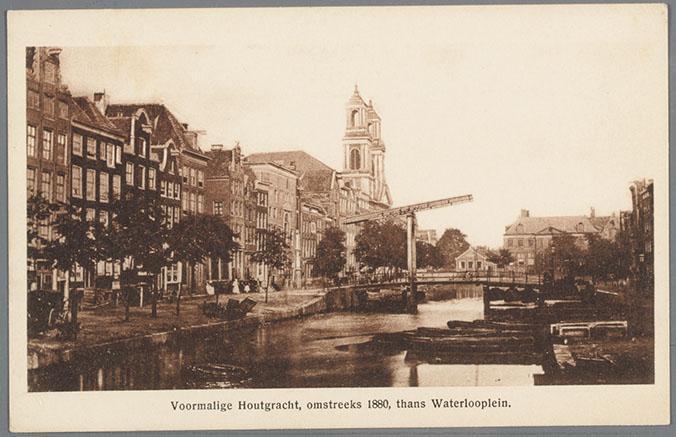
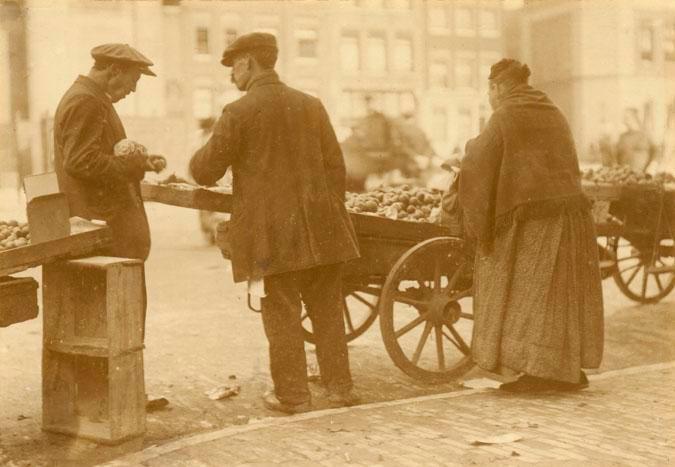
Where you now find the Stopera and the Waterlooplein, there was once a city island: Vlooienburg. The island was quickly built at the then edge of the city in the late 16th century. The goal: to house the large influx of immigrants, including the first Portuguese Jews. The Waterlooplein was formerly a canal, the Houtgracht. On both sides of the canal were the earliest synagogues. The heart of the Jewish quarter was the Jodenbreestraat and the Jonas Daniël Meijerplein, formerly called the Deventer Houtmarkt.
From the 17th century onward, Jewish life also expanded to the islands of Rapenburg and Uilenburg. In this area were well-known Jewish institutions and monuments: many synagogues such as the Ashkenazi synagogue complex where the Jewish Museum is now housed, the Portuguese Synagogue with the Ets Haim library, and the Uilenburgersjoel. On the Rapenburgerstraat was the Jewish girls' orphanage, where Cafe Waterlooplein 77 is now located in the old regents' room.
The flourishing diamond trade was also visible in this part of the city. In 1879, the Boas brothers established the Boas diamond polishing factory, a real factory, on the Nieuwe Uilenburgerstraat. Around 1900, the neighborhood became increasingly impoverished, and a large part of the Jewish population lived in dire poverty. The city decided to redevelop the neighborhood. Some residents moved to the east, and a small minority who managed to escape poverty moved to the new neighborhoods in Amsterdam-South.
During and after World War II, the neighborhood changed even further. The vast majority of Jewish residents were deported and murdered. So much was stripped from the vacant homes that many became ruins. In the 1970s, even more homes were demolished for the construction of the metro. Jewish life is now only limitedly visible in the neighborhood, but it has certainly not disappeared. The Jewish Cultural Quarter is located here, with the Jewish Museum and its junior section, and the Portuguese Synagogue can be visited and is still in use as a house of prayer. On Uilenburg, the Gassan diamond polishing factory is housed in the former Boas factory, and a few doors down the Uilenburger Synagogue still stands.
The Holocaust is also remembered, in the National Holocaust Museum and the Hollandsche Schouwburg, as well as at various monuments including the Shadow Quay, the National Holocaust Names Monument, and the Auschwitz Monument.
Any feedback for this story?