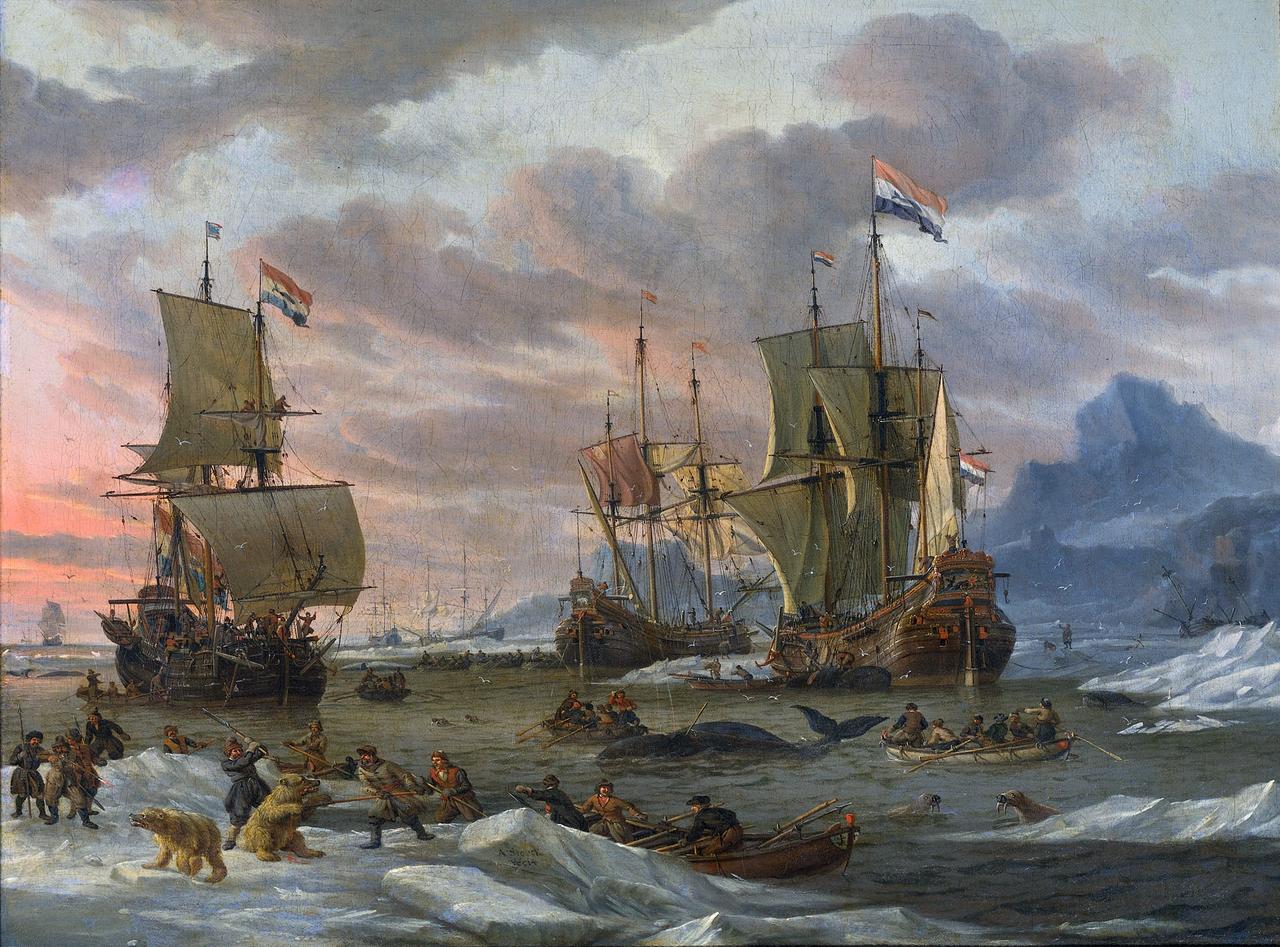
Whale hunting
In the early seventeenth century, on the eve of Amsterdam's economic boom, the city began to focus on whaling. In addition to the Dutch East India Company and the Dutch West India Company, the Northern Company was established to profit from whaling. The Greenland whale, a giant animal that can grow up to 20 metres long and live for around 200 years, was particularly valuable because of its many usable parts.
In 1612, the Amsterdam shipwright Willem Cornelisz. van Muyden set sail for Spitsbergen, inspired by Willem Barentsz's stories about the abundance of whales in the north. During this voyage, Van Muyden founded a settlement on an uninhabited island, which he named ‘Amsterdam’. This settlement, later known as Smeerenburg, became a centre for whale processing, particularly for boiling whale blubber into blubber oil, which was used for lamps, soap and candles. Due to the stench, blubber boiling houses were often located outside the city walls, for example in Amsterdam-Noord and on Kattenburg. Kattenburg was located opposite the Scheepvaartmuseum, on one of the eastern islands that had been specially constructed for shipbuilding.
Whaling was a dangerous business. At temperatures of -15 degrees Celsius, hunters set out in small boats armed with harpoons. Many were seriously injured or drowned in the icy water. Nevertheless, whalers were respected for their courage and daring.
Virtually every part of the whale was used: the fat for oil, the baleen for umbrellas and corsets, the bones for posts and glue, and the liver as a delicacy. Some whale bones were even used to decorate government buildings, although the exact reason for this is unknown.
The Netherlands remained active in whaling until well after the Second World War. The Amsterdam company Vinke & Co, located at De Ruyterkade 107, played a role in this. It was only later that whaling was banned, partly due to growing concerns about animal welfare and declining whale populations.
Any feedback for this story?