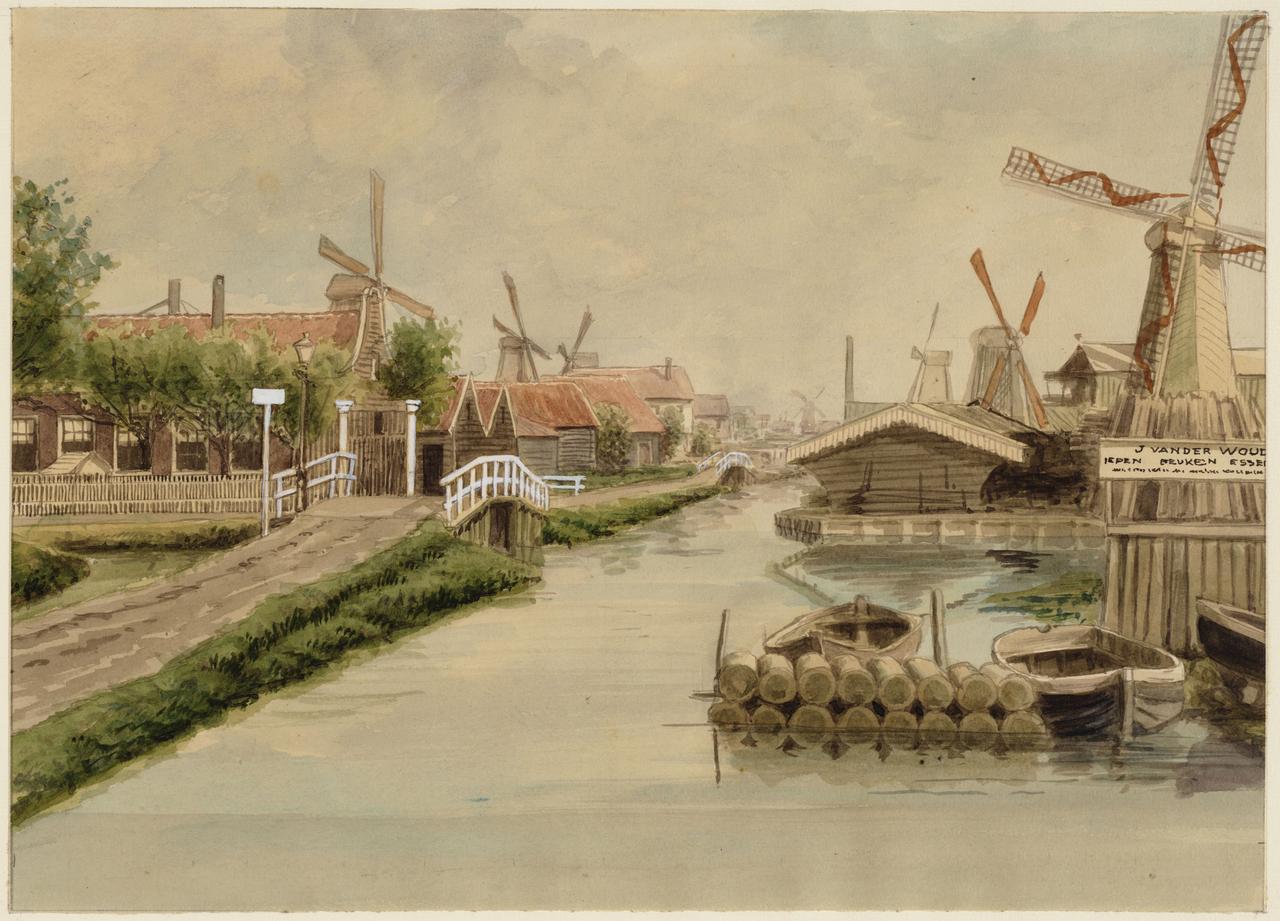
Zaagmolenbuurt
Welcome to the Saw Mill neighborhood. Things used to look completely different here than they do now.
In the seventeenth century, this was not a quiet residential area, but a bustling zone on the outskirts of Amsterdam, full of wooden structures, spinning blades and the constant sound of saws turning logs into planks. This was where the wood that the city needed was cut - and there was a lot of it. Amsterdam was booming, and wood was essential: for houses, warehouses, bridges and especially ships.
That huge demand was fueled by an intensive trading relationship with Norway. Logs came to the capital by ship from the Scandinavian forests. They were brought ashore and placed in water to soak for weeks. Only then were they suitable for sawing - and that happened here, on this spot.
Along the IJ were dozens of sawmills, built on tall bases to catch as much wind as possible. Between those mills, wooden rafts, piles of logs and planks lay drying. It smelled of resin and wet wood, and the air was filled with dust and the rhythmic hacking of saws.
The workers who worked here lived in simple homes close to the mills. The work was hard and monotonous, but it kept the town running. Everything was about production, about trade, about progress.
Toward the end of the nineteenth century, that picture changed. Steam engines took over the work of the wind. The mills were torn down, the timber disappeared, and the city continued to grow over this area. Houses, streets, schools came.
Now only the name "Sawmill Neighborhood" and the well-preserved mill "The Otter" recall those days.
Any feedback for this story?