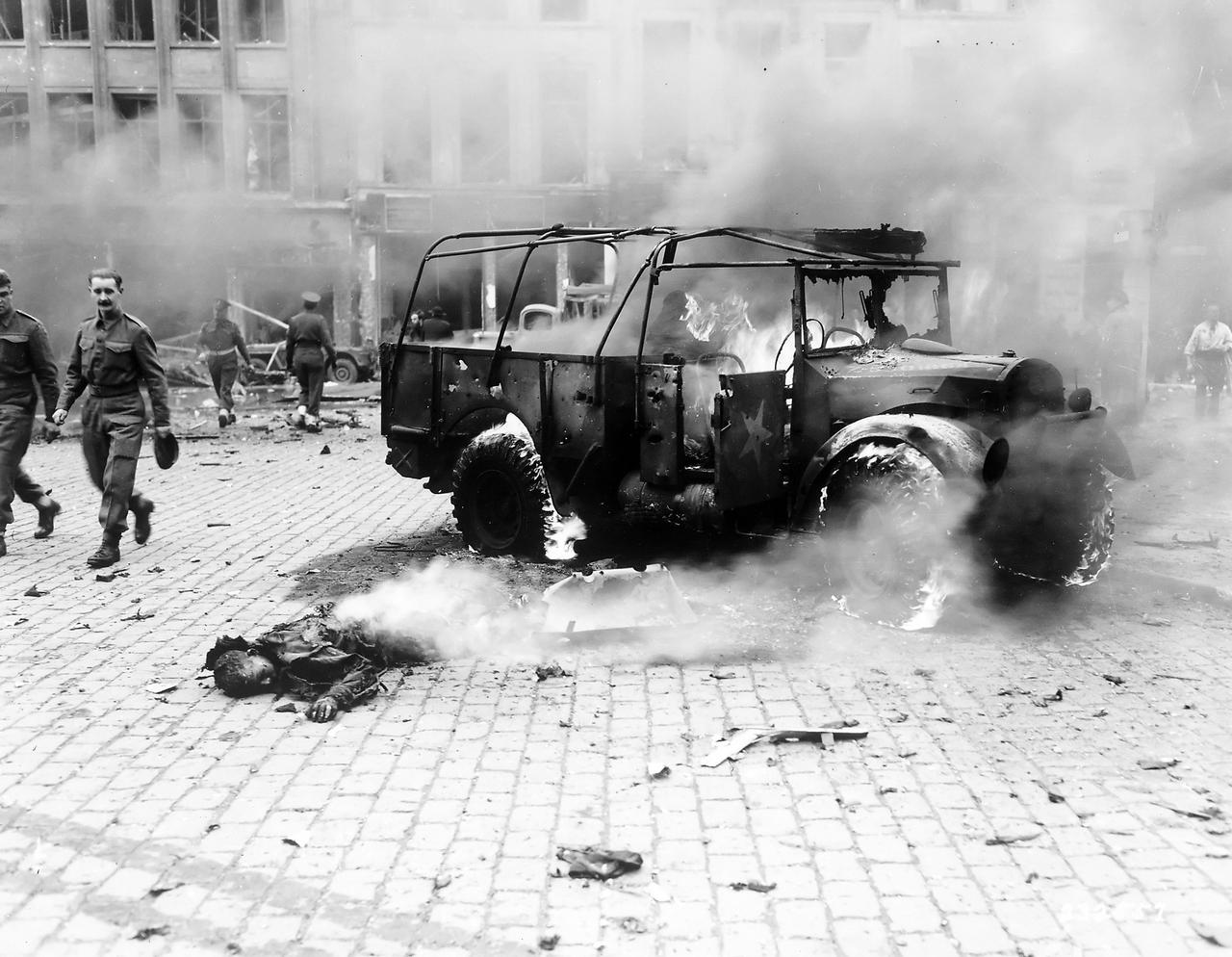
Antwerp during World War II
We are still standing before the monument dedicated to the victims of the wars, but this story is about the Second World War and Antwerp’s role in that conflict.
Antwerp’s port was already one of the most important in the world. Due to its strategic location, it became a major target in May 1940. During the first German air raids, the port was heavily damaged, and in just 18 days, about 6,000 civilians lost their lives. After Belgium’s surrender, Antwerp fell under German occupation, and the creation of “Greater Antwerp” further tightened German control.
In 1942, the situation worsened with the introduction of forced labor, leading to protests and unrest in the city. Meanwhile, the Allies bombed German factories in and around Antwerp, causing further casualties and destruction.
In 1944, the tide turned. After the Allied landings in Normandy, Antwerp’s port was captured, a crucial victory as it became a key supply line for the liberation of Europe. Yet the city remained under threat. The Germans launched heavy counterattacks, including V-1 flying bombs and V-2 rockets. These bombardments killed around 3,000 people and injured or displaced thousands more.
After liberation, the port was restored and again played a vital role in supplying the front. Antwerp showed resilience and rebuilt itself after the war’s devastation.
Any feedback for this story?