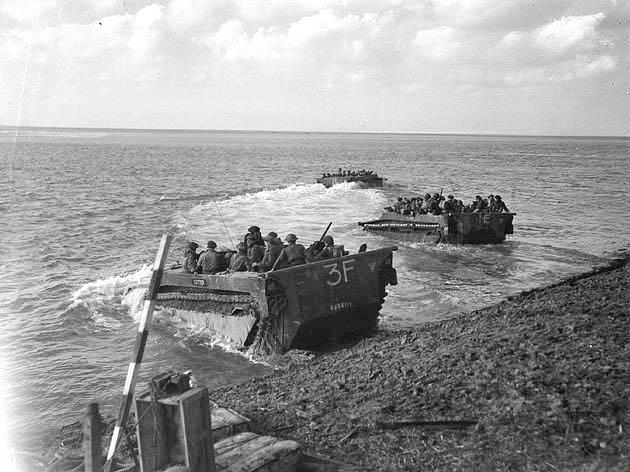
Battle of the Scheldt
We stand on the banks of the Scheldt, where in the autumn of 1944 the Battle of the Scheldt raged. Although Antwerp had been liberated on September 4, its port remained unusable. Access to the city ran through the Western Scheldt, still firmly in German hands. As long as the estuary wasn’t cleared, no Allied supply or ammunition ships could reach the city.
The Canadian First Army was tasked with opening the Scheldt. Together with British, Polish, French, Norwegian, and Belgian units, they launched a tough campaign in October. The Germans had flooded the land, built bunkers, and heavily fortified strategic positions. Amphibious landings at Breskens and Walcheren were needed to reclaim the area piece by piece.
After weeks of fierce fighting, the Scheldt estuary was finally secured on November 8. Three weeks later, on November 28, the first Allied supply ship reached Antwerp. From then on, the port became a vital lifeline for the Allied advance into Germany. Millions of tons of food, fuel, and equipment flowed through Antwerp to the front lines.
The Battle of the Scheldt was costly, but without this victory the liberation of Western Europe would have been far slower. For Antwerp, it meant the city was not only freed but became a key strategic hub in the final stages of the war.
Any feedback for this story?