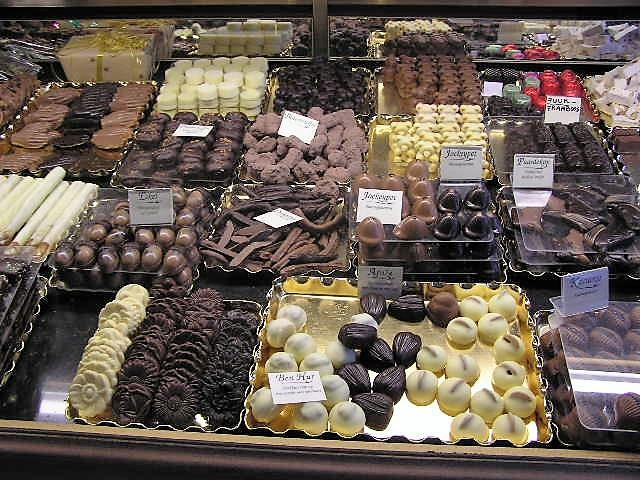
Belgian Chocolate
Chocolate made Belgium world-famous, although the country neither discovered the treat nor was the first to mass-produce it. The earliest record of chocolate in Belgium dates back to 1635, during the Spanish occupation, when chocolate was imported from South America. At first, it was only available to the nobility and upper class, who saw it as a luxury product. It would take many centuries before chocolate became accessible to everyone.
Switzerland also discovered its love for chocolate around the same time. The mayor of Zurich, Henry Escher, brought it back home and introduced it to his people. This marked the beginning of Switzerland’s journey to becoming one of the leading chocolate countries in the world.
After the end of the occupation in the early 18th century, Belgium began seeking its own supply of cocoa beans and later established a reliable trade with its African colony, then called the Belgian Congo (now the Democratic Republic of the Congo). The 19th century saw numerous innovations in chocolate production across Europe. In 1828, the Netherlands produced cocoa as a powder, while France in 1836 condensed it into a bar. In 1876, Swiss giant Nestlé began mixing chocolate with milk powder.
Belgium soon became a master of chocolate, which heavily influenced its economy. By the 1960s, the country was exporting more chocolate than it imported, while the world experienced a boom in luxurious Belgian chocolates. To honor this history, Antwerp is home to Chocolate Nation, located near the Central Station, on the site of Belgium’s first chocolate factory, opened in 1831.
Any feedback for this story?