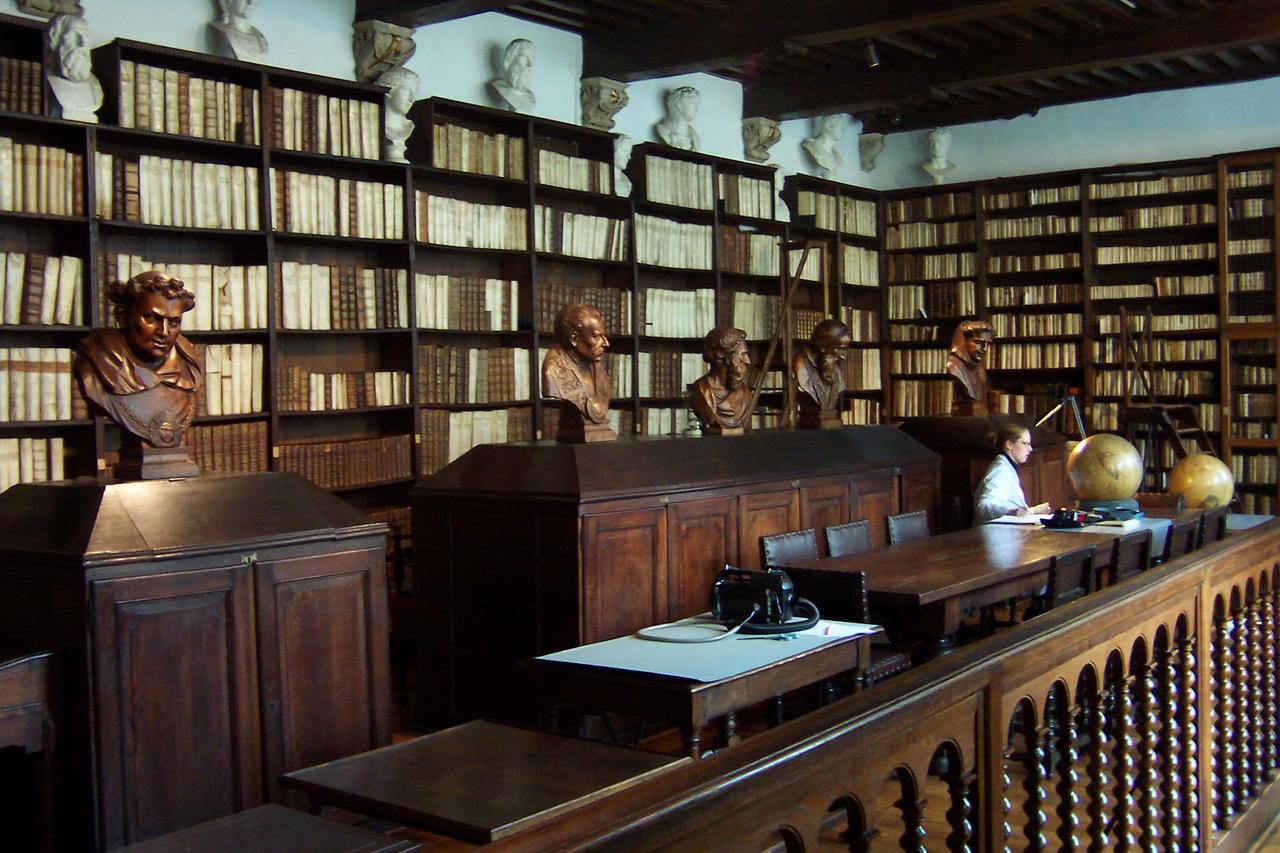
Plantin-Moretus Museum
The building you're standing in front of has been a centre of ideas since the 1500s. This is the Plantin-Moretus Museum, and long before it was a museum, it was one of the most influential printing houses in the Western world.
Christophe Plantin set up his press here in Antwerp during a period when printed books were still changing everything. He was a humanist at heart, deeply interested in knowledge and language, and his ambitions matched that curiosity. In 1568, he produced the Plantin Polyglot Bible, an extraordinary eight-volume work that printed religious texts side by side in Hebrew, Aramaic, Greek, and Syriac. It was a scholarly achievement that few publishers anywhere could have pulled off.
When Plantin died, his daughter Martina kept the business running under the Plantin Press name, and the family held on to it for generations. Inside today, you can see original documents connected to the humanist Justus Lipsius and artworks by Peter Paul Rubens, alongside what are considered the two oldest printing presses in existence.
In 2005, UNESCO recognised the museum as a World Heritage Site, one of the very few museums to receive that status. The building, the presses, the papers, it all survived. Which says something about the durability of good ideas, and apparently, of very well-built furniture.
Any feedback for this story?