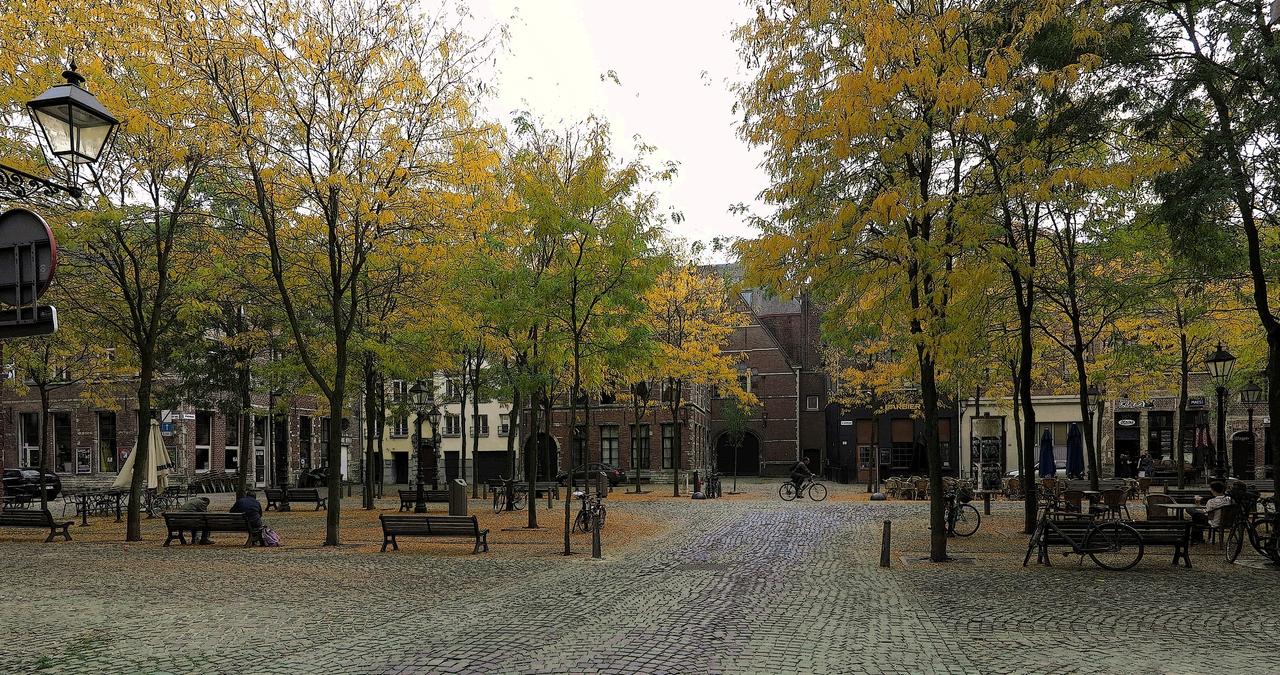
The City Weigh House
Today, stepping onto the Stadswaag square is like walking into a piece of Antwerp’s layered history. In 1548, urban planner Gilbert van Schoonbeke built a new weigh house here, right in the center of a square he designed himself. A year earlier, he had purchased the land from the city, including an arsenal, carpenter’s house, and an old city depot known as 'de houten Eeckhof'. All were demolished. In their place rose a grand building: the Nieuwe Waag.
The weigh house brought economic vitality to the area. Merchants settled nearby, building warehouses around the square. Goods were weighed on the ground floor, while the ornate upper halls were rented out for weddings and celebrations. In the 16th century, when Antwerp was at its economic peak, there was a real need for such spacious venues.
Over time, the weigh house lost its original function. In 1648, the upper floor became a surgical training room, and later a civil court. In 1819, the city sold the building, which became a storage facility. Then disaster struck: in 1873, lightning hit the waag, which burned to the ground in a matter of hours. Only one wall remained — the one with the Madonna statue. The city transformed the site into a public square.
The 20th century left its mark too: in 1914, a zeppelin bomb landed here. By the 1960s, the square became a cultural hotspot, known for jazz cafés and experimental theatre. Today, the Stadswaag remains a space with deep historical roots.
Any feedback for this story?