The Fall of Antwerp
We are now standing on the site where Antwerp’s old citadel once stood. This fortress was built in 1567 by order of the Duke of Alva as a symbol of Spanish power after the Iconoclast Fury. From this citadel, the Spaniards kept the city under control and prepared new campaigns. What now looks like an ordinary urban area was once a heavily guarded stronghold that inspired fear.
From here, Alexander Farnese, Duke of Parma, set out in 1584 to begin the siege of Antwerp. At that time, Antwerp was a wealthy, densely populated city and an important stronghold of resistance against Spanish rule. Farnese knew the only way to break the city was to cut it off completely from the outside world. He built forts around Antwerp and eventually blocked the Scheldt River, the city’s lifeline.
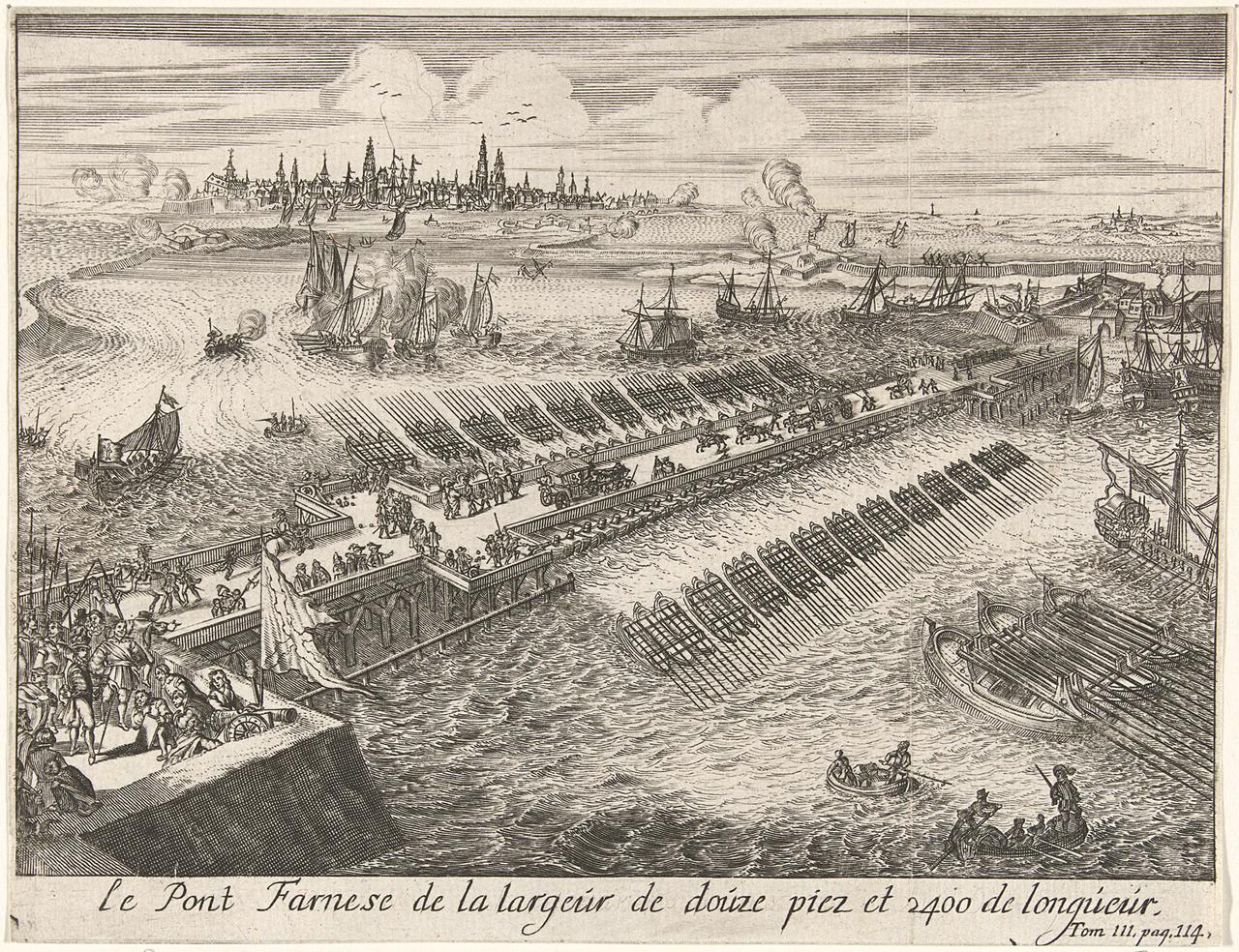
The most impressive construction of the siege was Parma’s ship bridge: a massive bridge made of ships chained together, reinforced with cannons and wooden palisades. This bridge cut Antwerp off from any aid and supplies coming via the river. Attempts from the north to break the blockade, such as breaching dikes to flood the Spanish positions, failed.
Meanwhile, the city grew weaker due to hunger and constant bombardments. In August 1585, Antwerp was forced to surrender. The population was given a harsh choice: convert to Catholicism or leave. Around 40,000 people abandoned the city.
Any feedback for this story?