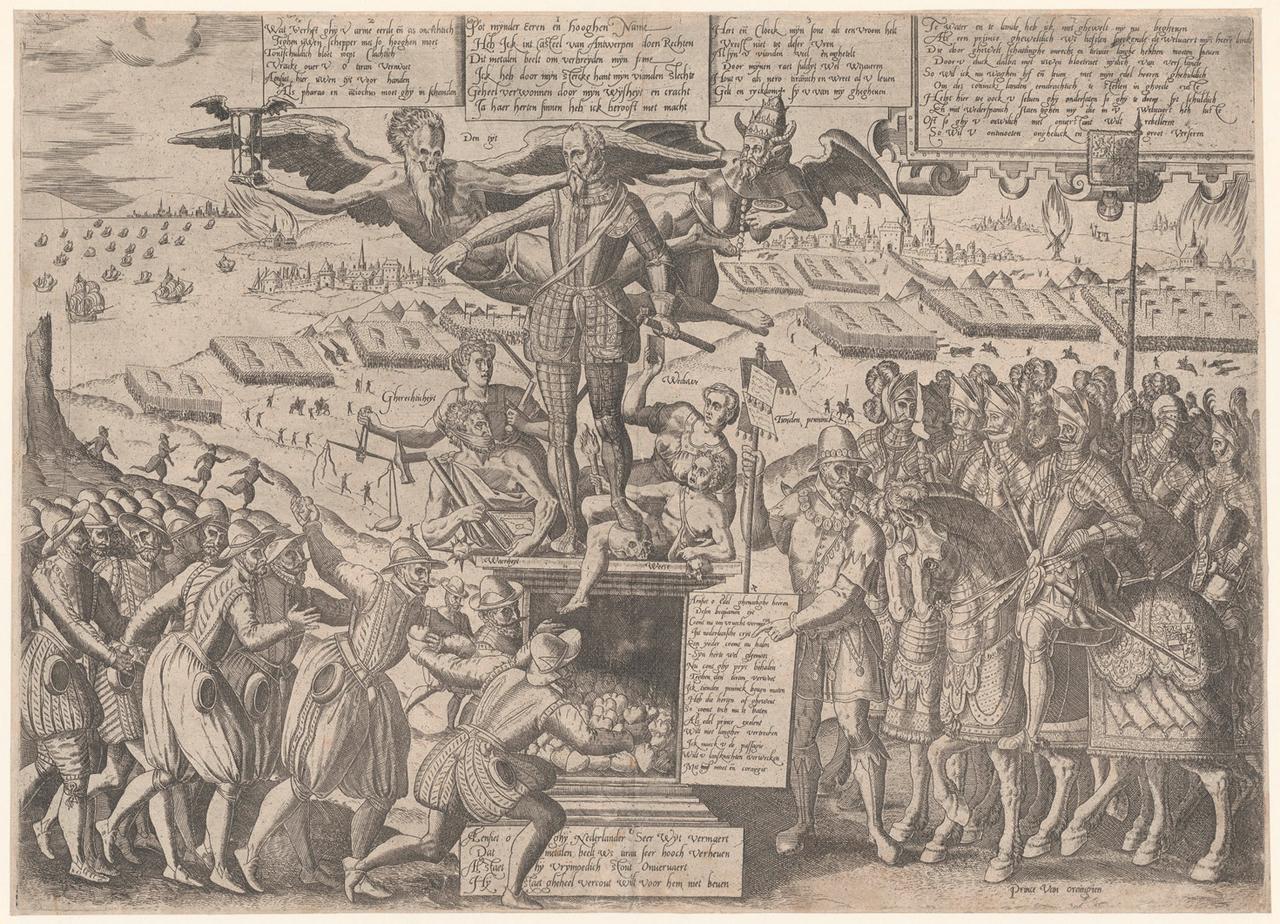
The statue of Alva
Many people at the time, both in Belgium and in the Netherlands, were not happy with the Duke of Alba. Fernando Álvarez de Toledo, better known as the Duke of Alba, was sent to the Low Countries in 1567 by King Philip II to restore order after the Iconoclasm. But instead of bringing peace, he became infamous for his harsh and merciless rule.
He established the notorious Council of Troubles – mockingly called the Blood Council – which condemned thousands of people for heresy and rebellion. He introduced new taxes, including the hated “tenth penny,” and used brutal force to crush any resistance. His actions made him a symbol of Spanish oppression in the Low Countries.
To emphasize his power, Alba ordered the construction of the imposing citadel in Antwerp, not to protect the city, but to keep its citizens under control. In the heart of that fortress, he even had a statue of himself erected, showing him as a triumphant ruler placing his foot on a defeated enemy – a clear message of dominance.
But this display of arrogance only fueled more anger. After the Spanish Fury and the uprisings of 1576, the statue was torn down in 1577 and melted, a symbolic act of defiance against his regime.
Although he later returned to Spain, his name remained forever linked to terror and oppression. To this day, the Duke of Alba is remembered as one of the most hated figures in the history of the Low Countries.
Any feedback for this story?