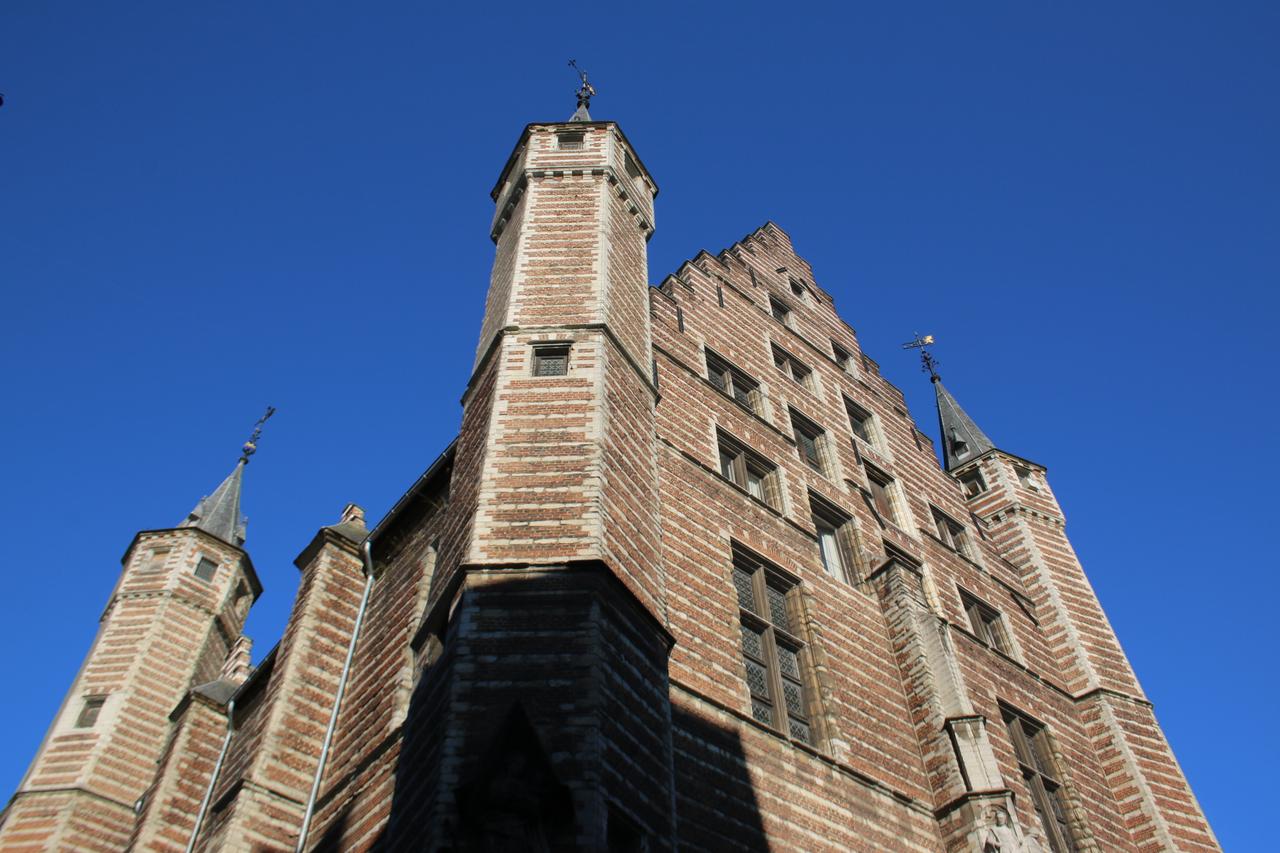
Vleeshuis Museum
Long before the current Vleeshuis added its silhouette to the Antwerp skyline, the city already had a meat hall. In 1250, at the corner of today’s Krabbenstraat and Kuipersstraat near the fortress Het Steen, a building was constructed specifically for selling slaughtered animals. This first Vleeshuis laid the foundation for the central role of the meat trade in Antwerp.
Between 1501 and 1504, the new Vleeshuis was erected on Vleeshouwersstraat, commissioned by the butchers' guild and designed by Herman and Domien de Waghemakere. It was an impressive late-Gothic building with space for 62 meat stalls and its own chapel, symbolizing the power and wealth of Antwerp’s butchers during the city's golden age.
After the guilds were abolished in 1796 during the French occupation, the building lost its original function. It was sold, then repurchased by the butchers and rented out. In 1841, wine merchant Peyrot acquired it, partitioned the grand hall, and rented out spaces to artists and theatre groups.
The city of Antwerp purchased the building in 1899 and had it restored by architect Alexis Van Mechelen. In 1913, it reopened as the Museum of Antiquities and Applied Arts, with a varied collection. From the 1970s onward, music gained prominence, and since 2006, the museum has presented itself as “Sound of the City”, dedicated to Antwerp’s musical heritage.
Any feedback for this story?