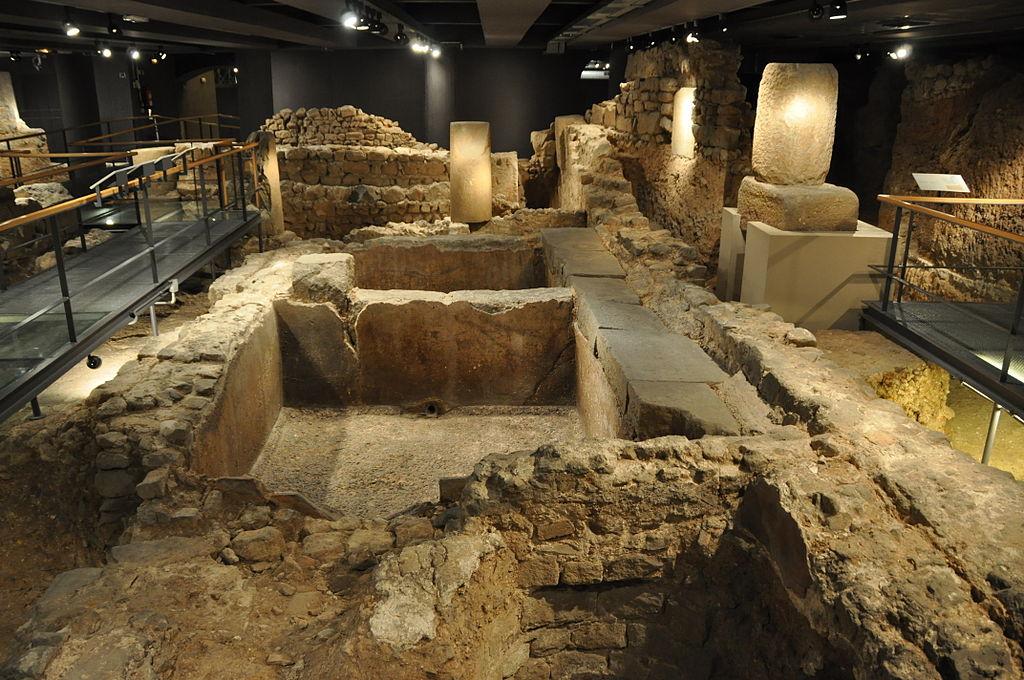
Archaeological excavations at Plaça del Rei and elsewhere
You are standing above one of Europe's most extraordinary archaeological discoveries, where more than 4,000 square meters of ancient Roman city life lies perfectly preserved beneath your feet. In the historic square of Plaça del Rei, surrounded by medieval palaces and Gothic towers, workers in 1931 stumbled upon something nobody expected when they relocated a 16th century palace stone by stone. As builders laid new foundations for Casa Padellàs at its new location, they broke through to an entire forgotten world.
Roman streets emerged from the earth, complete with shops, a 2nd century laundry where residents once washed their clothes, wine production facilities, and the oldest Christian structures in the city dating from the 4th to 8th centuries. This was Barcino, the Roman colony founded between 15 and 13 BC by Emperor Augustus. The excavations continued until the Spanish Civil War interrupted the work.
When they resumed, archaeologists uncovered layer after layer of history: Roman buildings from the 1st century BC, Visigothic remains from the 7th century, and medieval structures from the 13th century. In 1943, these discoveries became the foundation of the city's History Museum. Visitors now walk the actual streets where Roman soldiers, merchants, and families lived 2,000 years ago. The site represents the largest Roman excavation outside Rome itself.
Any feedback for this story?