Castellers
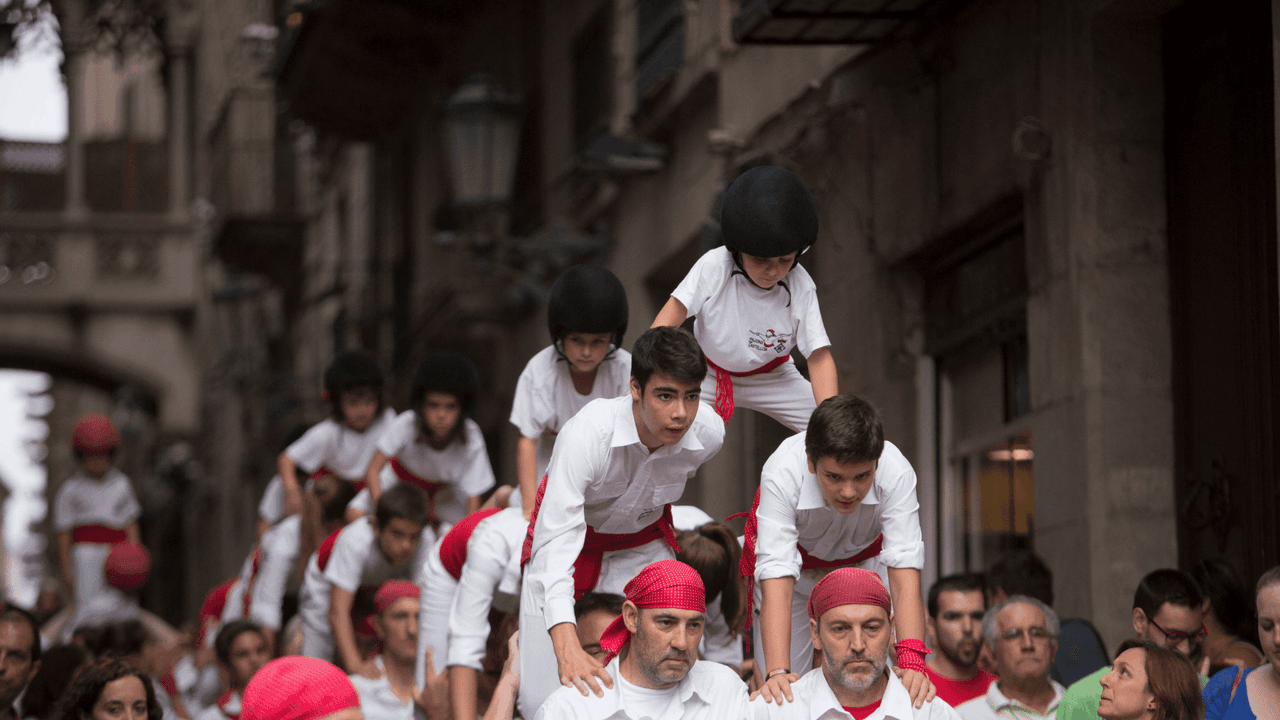
In the heart of the Gothic Quarter, at Plaça de Sant Jaume, humans stack themselves up to 10 stories high while a small child climbs to the very top. These are the Castellers, teams of people who build castells, human towers that defy gravity and test the limits of teamwork. This extraordinary tradition began in the late 1700s in the town of Valls, near Tarragona, when a folk dance evolved into something far more ambitious.
By 1801, building these living towers had become a defining part of Catalan culture. The engineering is precise. The pinya, a dense crowd at ground level, forms the foundation and acts as a safety net. Above this, castellers climb onto each other's shoulders to create the tronc, the tower's body. The strongest members bear the weight at the bottom while lighter climbers ascend higher. At the summit, children as young as 5 form the pom de dalt, raising one hand to signal success before the tower is carefully dismantled.
In 2010, UNESCO recognized castells as Intangible Cultural Heritage of Humanity. Over 100 teams now perform across Catalonia, with La Mercè festival in September showcasing the most spectacular displays. Each team wears its own color: Castellers de Barcelona in red, others in blue or green, all following the same motto of strength, balance, courage and common sense.
Any feedback for this story?