Christopher Columbus
This towering 60 meter column standing at the end of the famous Rambla promenade marks one of history's most pivotal moments. The bronze figure pointing toward the sea represents Christopher Columbus, the Genoese explorer whose 1492 voyage connected two worlds that had existed separately for millennia. Columbus spent years seeking funding for his westward route to Asia.
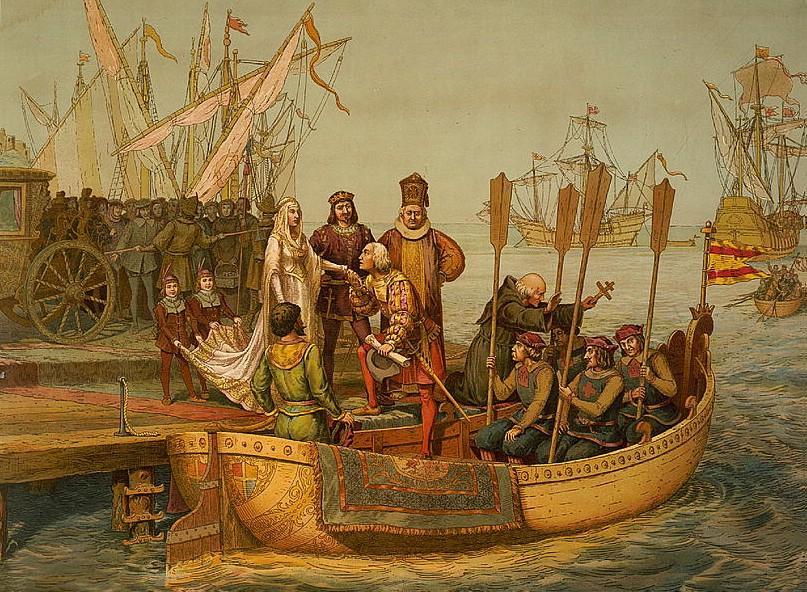
After rejections from Portugal, Genoa, and Venice, Spanish monarchs Ferdinand II and Isabella I finally agreed to sponsor his expedition in 1492, shortly after their conquest of Granada. They promised him the title Admiral of the Ocean Sea and ten percent of all wealth discovered if he succeeded.
On August 3, 1492, Columbus departed from Palos with three ships: the Niña, the Pinta, and the Santa María. His crew of 87 men sailed for over two months before sighting land on October 12, 1492. They had reached an island in the Bahamas, which Columbus named San Salvador, believing he had arrived in Asia. In March 1493, Columbus returned to Spain and came to this port city to report his findings to the Catholic Monarchs. That meeting in this very location established this Mediterranean harbor as a significant point in the Age of Exploration. The monument was erected in 1888 for the Universal Exposition.
Any feedback for this story?