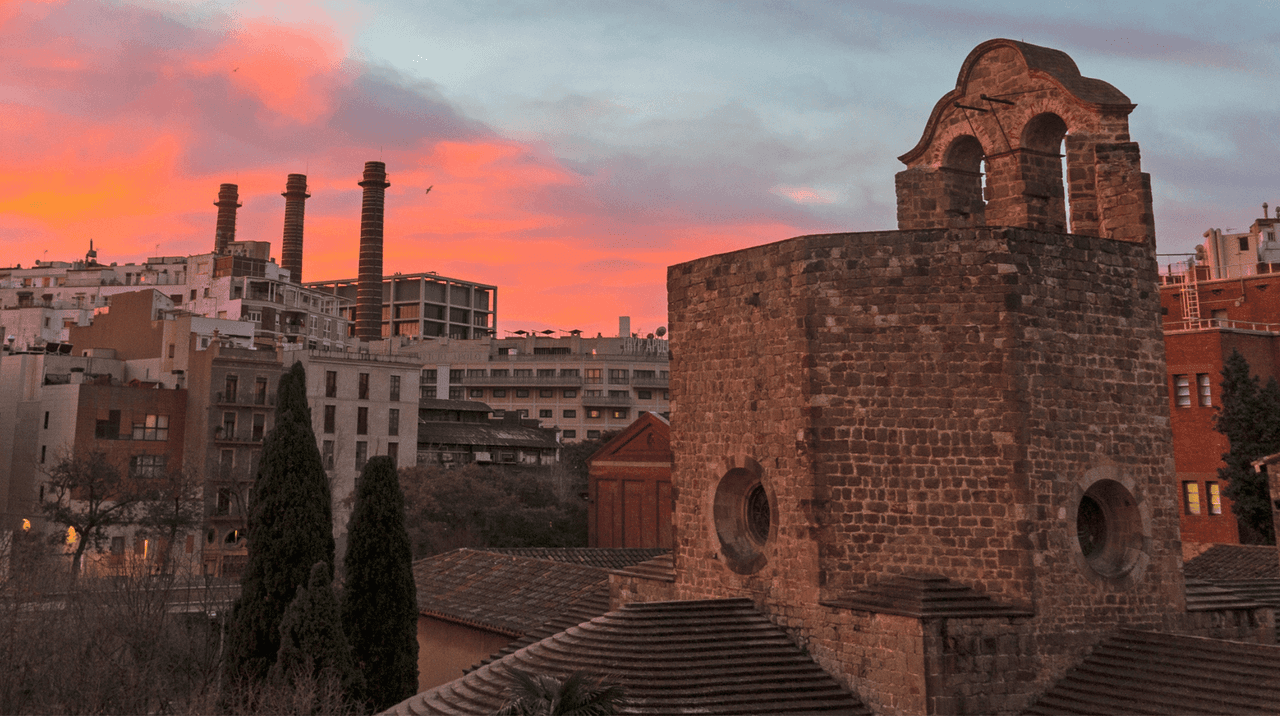
Cloister of Sant Pau del Camp
You are in the heart of the Raval district, standing before a cloister that exists nowhere else in Europe. The Monastery of Sant Pau del Camp, meaning Saint Paul of the Fields, was built when this densely packed neighborhood was nothing but open countryside stretching beyond the old city walls. Tucked along Carrer de Sant Pau near the bustling Rambla del Raval, this ancient Benedictine monastery was founded around 911 by Count Guifré II Borrell of the House of Barcelona.
His burial stone, discovered centuries later in 1596, confirmed that this was already a prestigious site when he died. But in 985, the monastery met a violent end when the troops of Al-Mansur swept through and destroyed it completely during their raids across the region. For over a century, the ruins sat abandoned. Then in 1096, nobles Geribert Guitard and Rotlendis stepped forward with their wealth to rebuild everything from the ground up, breathing new life into the monastery.
The real treasure here is the 13th century cloister. Its lobular arches curve into three and five lobed shapes, a design showing unmistakable Moorish influence that makes this the only Romanesque cloister of its kind across the entire continent. Twin columns hold up 48 intricately carved capitals telling biblical stories through stone: Adam and Eve beside the serpent, mythical beasts, monsters, and elaborate plant designs that have survived centuries of upheaval in what remains the oldest church building still standing in the city.
Any feedback for this story?