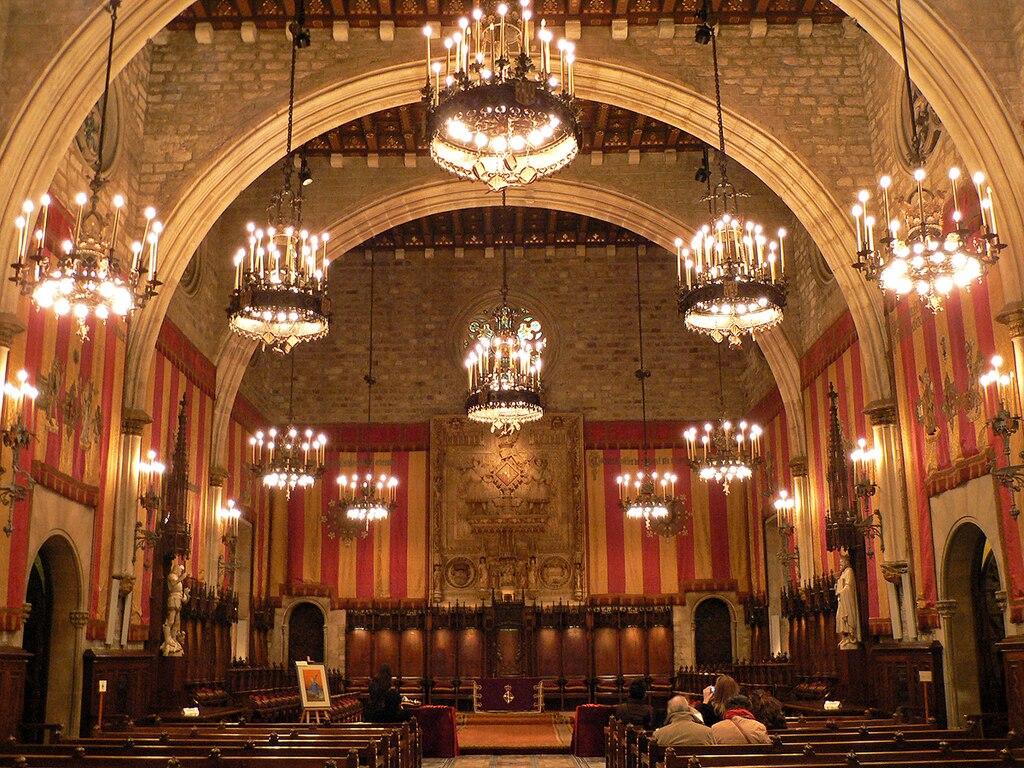
Consell de Cent
Right here, where the ancient square meets the Gothic Quarter, one hundred citizens once controlled the fate of an entire city. The Consell de Cent, meaning Council of One Hundred, was the powerful municipal government that ruled from 1249 until 1714, making decisions that shaped everything from trade to education. At the heart of Plaça Sant Jaume stands the building where this institution met for centuries.
King James I created the council in 1249, granting wealthy merchants and civic leaders unprecedented authority over local affairs. They gathered in the stunning Saló de Cent, a Gothic hall constructed by master builder Pere Llobet in 1369, its wooden beams and stone arches witnessing hundreds of crucial debates. The council's power was extraordinary.
When King Martin the Humane tried to establish a medical school in 1401, council members boldly rejected his decree, claiming it invaded their jurisdiction. This defiance ultimately led to founding the University of Barcelona in 1450. The council even selected rulers, choosing Peter V of Aragon as Count of Barcelona in 1464. The Siege of Barcelona in 1714 brought an abrupt end. King Philip V abolished the council through the Decretos de Nueva Planta, ending nearly five centuries of local self-governance and transferring all power to the crown.
Any feedback for this story?