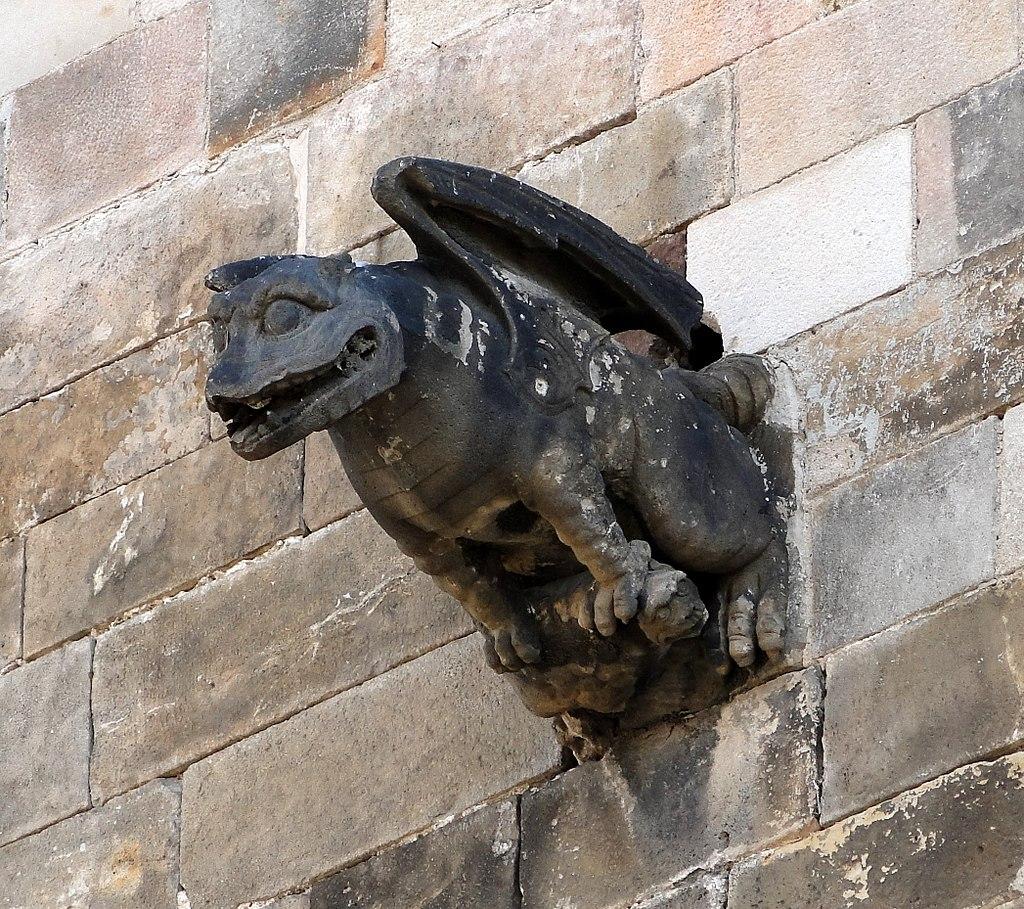
Gargoyles
These stone creatures were originally created in 1298 to solve a critical problem: how to protect massive stone buildings from rainwater destruction. At the Cathedral of the Holy Cross and Saint Eulalia in the Gothic Quarter, over 200 gargoyles perch along the roofline, each one serving as a functional waterspout. The word gargoyle comes from the French gargouille, meaning throat, describing exactly what these sculptures do.
They channel rainwater through their open mouths, projecting it far from the cathedral walls to prevent erosion and structural damage. Medieval architects discovered that dividing rainfall across dozens of outlets was far more effective than using a few large drains. Without gargoyles, water would cascade down stone walls, seeping into mortar and causing the building to crumble over time. This ingenious system has protected the cathedral for over seven centuries.
The sculptors transformed this practical necessity into art. Among the dragons and demons, you will find a bull, a unicorn, and even an elephant, creatures that medieval Europeans found both fascinating and terrifying. Each gargoyle was hand carved, its grotesque face meant to ward off evil spirits while its elongated neck formed the perfect waterspout. These guardians still function today, protecting one of the finest examples of Catalan Gothic architecture from the elements.
Any feedback for this story?