Ildefons Cerdà and his plan
The grid of streets you see around you was designed by a man who died penniless, never paid a single peseta for what became his greatest masterpiece. Across this district of wide avenues and octagonal blocks stands the revolutionary vision of Ildefons Cerdà, a civil engineer who in 1859 created the Eixample expansion plan. He invented the Spanish word urbanización and designed something unprecedented: a scientifically planned city for equality, health, and movement.
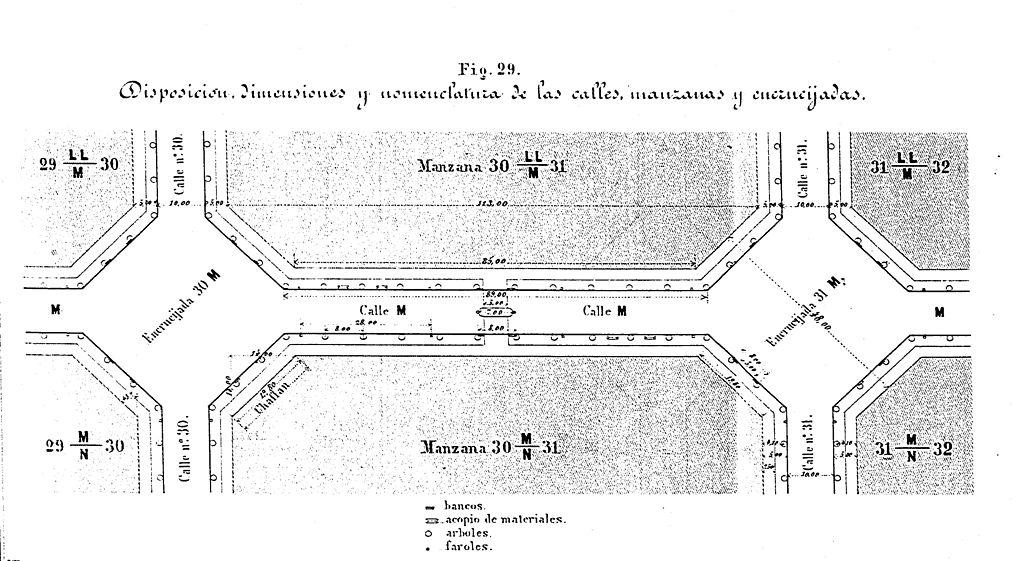
Cerdà studied the medieval quarters where mortality rates revealed a brutal reality. Working class residents died at age 23 on average, while those from better social classes reached only 36. Population density had hit 1,500 people per hectare. Cholera epidemics swept through cramped, sunless streets where sewage ran openly. His solution was radical. Each block would measure 113 by 113 meters with corners cut at 45 degrees to improve traffic flow and sunlight.
Streets would be 20 meters wide with space for pedestrians, carriages, future railways, gas lines, and modern sewers. Schools, markets, and hospitals would be distributed evenly to serve everyone equally. Property speculators ignored his plans for gardens and low buildings. They constructed dense blocks that filled courtyards meant for greenery. Cerdà spent his entire family fortune fighting for his vision and died heavily indebted in 1876.
Any feedback for this story?