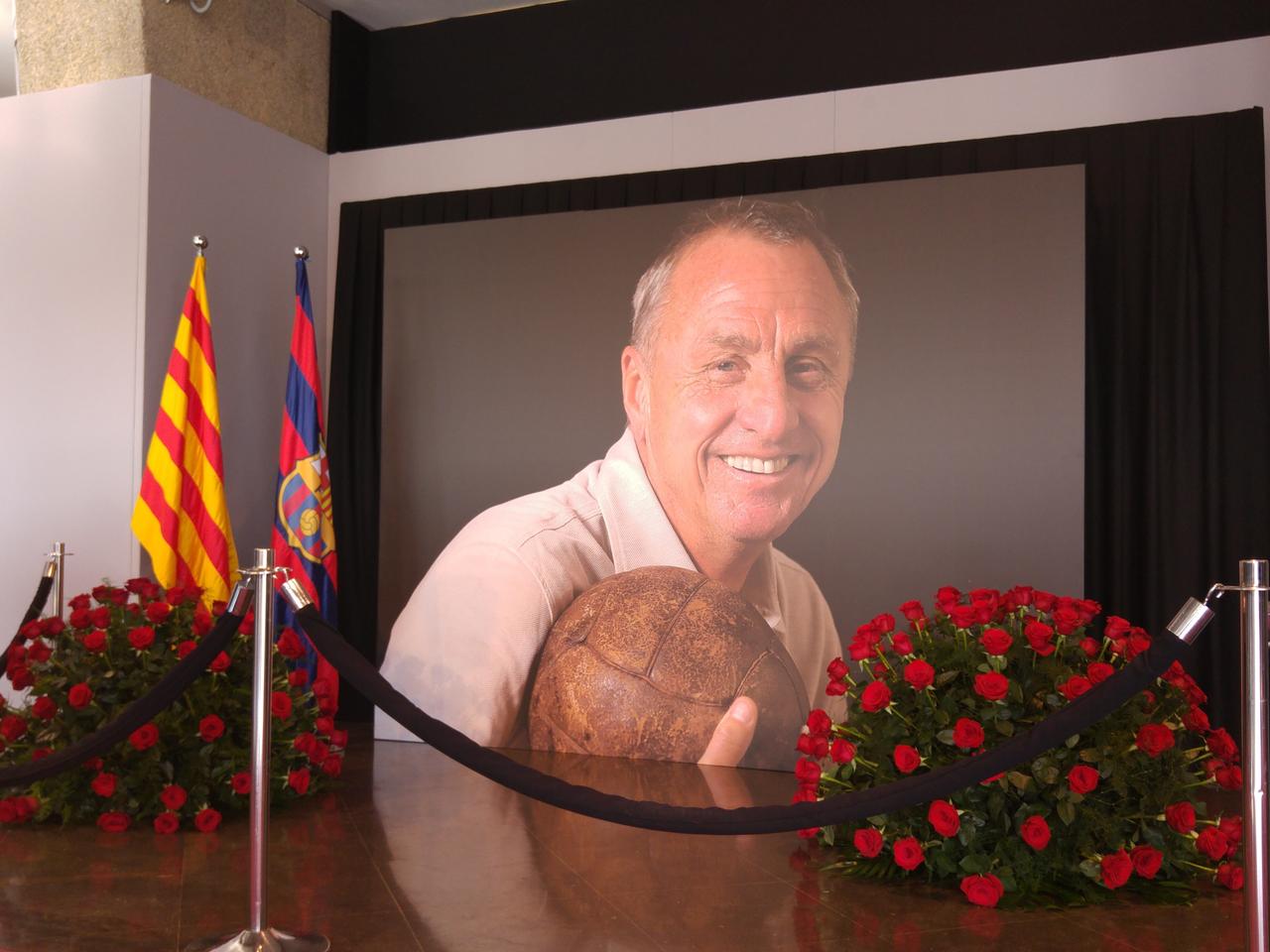
Johan Cruyff
Look at that statue for a moment. Johan Cruyff, The Flying Dutchman, stands here not just as a footballer but as someone who shaped an entire city's identity. When Ajax tried to sell him to Real Madrid, Cruyff refused flat out. He told them either he goes to Barcelona or he retires on the spot. The club paid a world record fee of nearly two million dollars, and in his very first season, 1973 to 1974, he delivered the league title Barcelona hadn't seen in 14 years. Supporters immediately called him El Salvador. The Saviour.
What made him different was that he understood what this club actually meant. While Franco's regime still banned Catalan names, Cruyff named his son Jordi, after Catalonia's patron saint. For the people here, that gesture said everything.
When he returned as manager in 1988, he inherited a squad in open revolt. He cleared out 17 players in a single day and built from scratch using young, hungry talent. He quit smoking after a cancer diagnosis in 1991 and replaced cigarettes with lollipops on the touchline, becoming one of football's most recognisable sights.
He won four consecutive league titles and the European Cup at Wembley in 1992, lollipop in hand.
When Cruyff passed away in 2016, fans in both Barcelona and Amsterdam brought Chupa Chups lollipops to the memorial sites. Somehow, that feels exactly right.
Any feedback for this story?