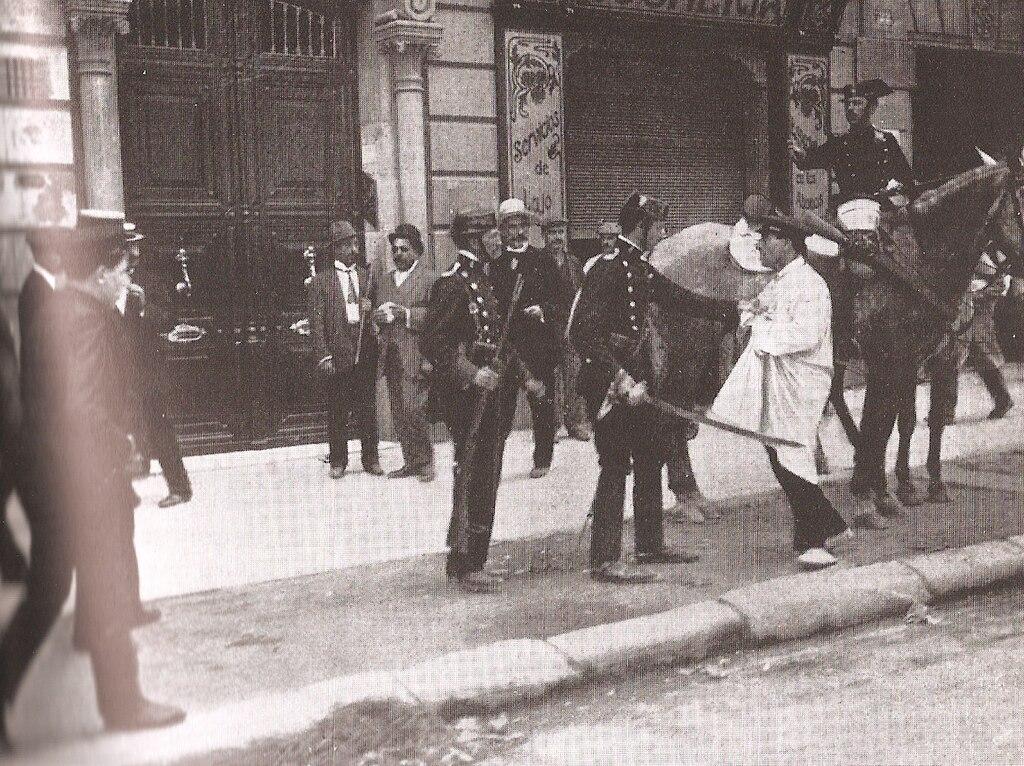
La Setmana Tràgica
In July 1909, a workers' protest against an unjust war exploded into seven days of fire and bloodshed known as the Tragic Week, forever marking this place as the Rose of Fire. At the historic port where ships have departed for centuries, desperate families gathered as their fathers and husbands were forced onto vessels bound for Morocco. The government had called up reservists for a colonial war, but only working class men served.
Wealthy families could pay 6,000 reales for exemption, a fortune that laborers earning barely enough to feed their children could never afford. On July 26, workers declared a general strike. Within hours, the streets filled with barricades made from cobblestones and furniture. What began as an antiwar movement transformed into an anticlerical uprising.
Crowds saw the Catholic Church as an ally of the rich and powerful. Over seven days, 80 religious buildings burned while the city became completely isolated from the outside world. The Spanish army crushed the revolt with brutal force. Between 75 and 150 civilians died. Authorities arrested over 1,700 people. Five were executed, including educator Francesc Ferrer i Guàrdia. His death sparked worldwide protests and brought down the conservative government in Madrid.
Any feedback for this story?